
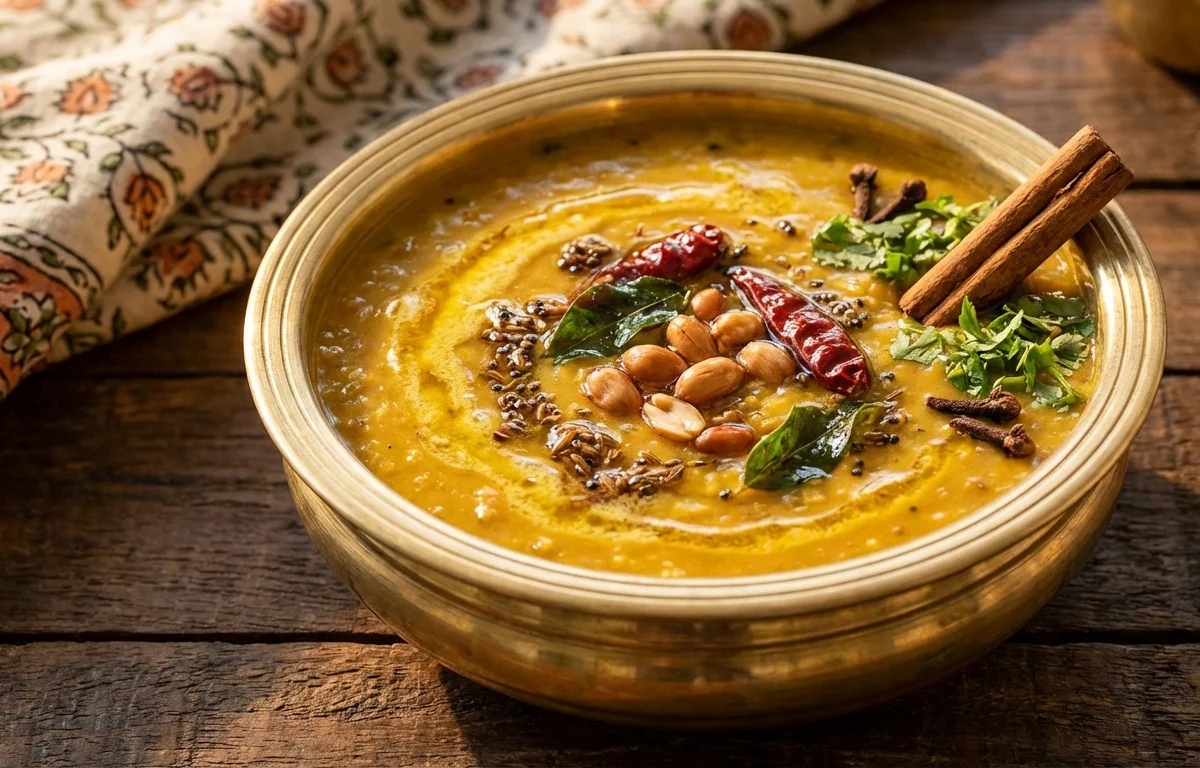
Gujarati Dal
Mildly sweet-sour toor dal Gujarati style — light, comforting.
For 3 servings
3 steps. 22 minutes total.
- 1
Step 1
- a.Rinse the toor dal thoroughly until the water runs clear
- b.Combine the dal, water, and turmeric in a pressure cooker
- c.Cook for 3 whistles or until the lentils are completely soft
TIPSoaking the dal for 20 minutes before cooking ensures a creamier texture. - 2
Step 2
- 3
Step 3
- a.Heat ghee in a small tempering pan over medium heat
- b.Add the cumin seeds and wait for them to crackle and turn golden
- c.Pour the hot tempering immediately into the dal and cover with a lid
TIPKeep the lid closed for a minute after tempering to trap the aromatic oils.
What to keep in mind.
6 tips from the recipe — small details that make a real difference to the final dish.
- 1For the most authentic sweet and sour taste, do not skip the jaggery and kokum. They are key to the dal's unique flavor profile.
- 2Whisking the dal thoroughly after pressure cooking is crucial for a smooth, non-grainy texture. An immersion blender is a great tool for this.
- 3Gujarati dal is traditionally thin and soupy. Don't be afraid to add enough hot water to reach the desired consistency.
- 4Using ghee for the tempering (tadka) provides a richer, more authentic flavor than oil.
- 5The dal thickens as it cools. Add a little hot water while reheating to restore its original consistency.
- 6For a variation, you can add vegetables like drumsticks (saragvo) or yam (suran) while pressure cooking the dal.
Adapt it for your goals.
Vegetable Addition
Add 1/2 cup of chopped vegetables like drumsticks, yam, or pumpkin to the pressure cooker along with the dal for a more wholesome dish.
Sourness AgentSourness Agent
If kokum is unavailable, substitute with 1 tablespoon of tamarind paste (soaked in 1/4 cup warm water and strained) or 2 tablespoons of fresh lemon juice. Add lemon juice at the very end, after turning off the heat, to preserve its flavor.
Jain VersionJain Version
This recipe is naturally onion and garlic-free. To make it fully Jain-friendly, you can omit the ginger and tomato.
SweetenerSweetener
If you don't have jaggery, you can use 1 to 1.5 tablespoons of sugar as a substitute, though jaggery provides a more traditional and earthy sweetness.
Why this is on our healthy list.
Rich in Plant-Based Protein
Toor dal is an excellent source of protein, which is essential for muscle repair, building tissues, and overall body function, making it a great choice for vegetarians and vegans.
High in Dietary Fiber
The lentils and peanuts provide significant dietary fiber, which aids digestion, prevents constipation, promotes gut health, and helps in maintaining stable blood sugar levels.
Anti-inflammatory Properties
Spices like turmeric (containing curcumin) and ginger have powerful natural anti-inflammatory and antioxidant properties, which can help reduce inflammation and oxidative stress in the body.
Good Source of Iron
Toor dal is a good source of iron, a mineral vital for the formation of hemoglobin, which carries oxygen in the blood. Adequate iron intake helps prevent anemia and maintains energy levels.
Frequently asked questions
One serving of Gujarati Dal (approximately 1 cup or 245g) contains around 275-300 calories. This is an estimate and can vary based on the exact quantities of ghee, jaggery, and peanuts used.