
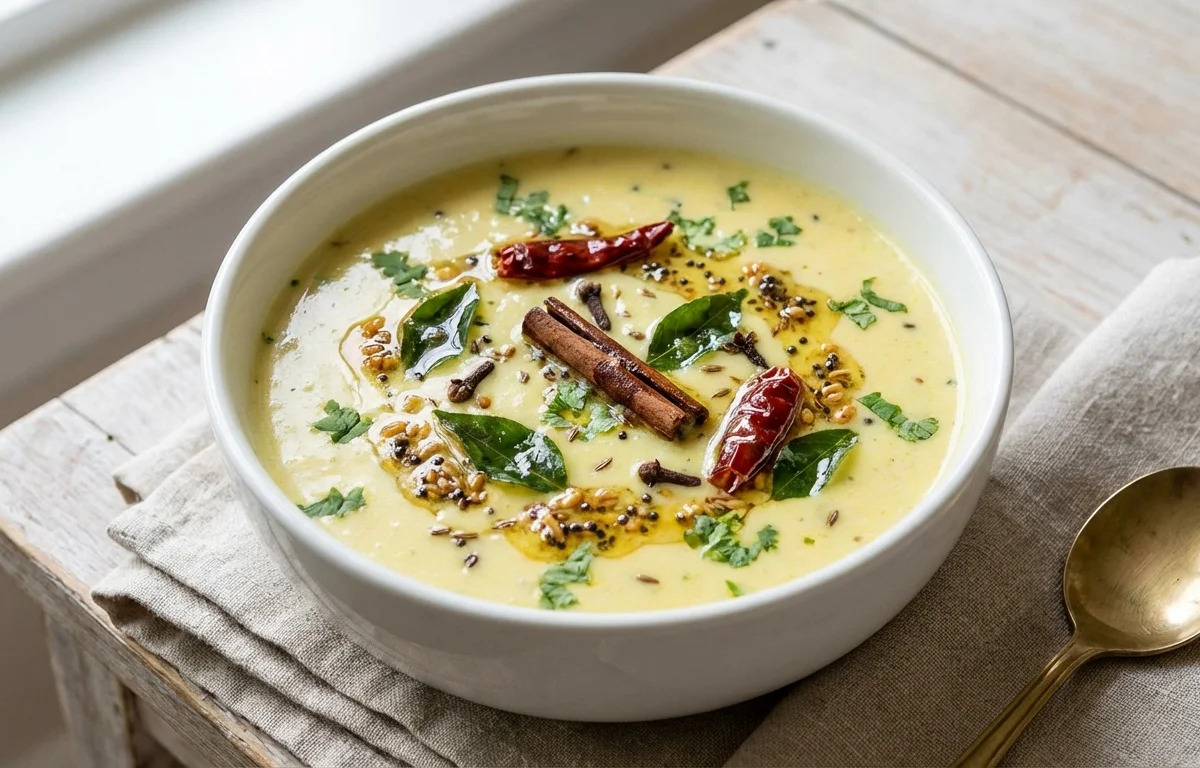
Bhatia Kadhi
A unique Gujarati kadhi from the Bhatia community, this version gets its creamy texture from ground moong dal instead of besan. It’s a delightful sweet and tangy curry, perfect with steamed rice.
For 4 servings
Soak the Dal
- Wash the yellow moong dal under running water until the water runs clear.
- Soak the dal in 2 cups of water for at least 3-4 hours, or up to 6 hours. This step is crucial for a smooth texture.
- After soaking, drain the water completely using a fine-mesh sieve.
Prepare the Kadhi Base
- In a blender, combine the drained moong dal, chopped ginger, and green chilies.
- Add 3-4 tablespoons of water and grind to a very fine, smooth paste. Scrape down the sides to ensure there are no coarse bits.
- In a large, heavy-bottomed pot, whisk the curd until it is smooth and lump-free.
- Add the prepared moong dal paste and 3 cups of water to the whisked curd. Whisk vigorously until the paste is fully incorporated and the mixture is uniform.
Cook the Kadhi
- Place the pot on medium heat. Add the turmeric powder, salt, grated jaggery, kokum, and chopped cluster beans.
- Stir continuously while bringing the mixture to a gentle boil. This prevents the curd from splitting and the dal from sticking. This should take about 5-7 minutes.
- Once it starts boiling, reduce the heat to low. Let the kadhi simmer for 15-20 minutes, stirring occasionally.
- The kadhi is cooked when the raw smell of the dal is gone and it has thickened slightly. If it becomes too thick, add up to 1 cup of hot water to adjust the consistency.
Prepare the Tempering (Vaghar)
- While the kadhi is simmering, heat ghee in a small tempering pan (tadka pan) over medium heat.
- Add the mustard seeds and let them splutter completely.
- Add the cumin seeds, fenugreek seeds, cloves, cinnamon stick, and broken dried red chilies. Sauté for about 30 seconds until fragrant.
- Turn off the heat and immediately add the curry leaves and asafoetida. Be cautious as they will splutter.
Finish and Serve
- Carefully pour the hot tempering over the simmering kadhi. It will sizzle loudly.
- Stir gently to mix the tempering into the kadhi. Let it simmer for another 2 minutes for the flavors to meld.
- Turn off the heat, garnish with freshly chopped coriander leaves.
- Let the kadhi rest for 5-10 minutes before serving. Serve hot with steamed basmati rice or khichdi.
What to keep in mind.
6 tips from the recipe — small details that make a real difference to the final dish.
- 1For the smoothest kadhi, ensure the moong dal is ground to a very fine paste without any grit.
- 2Always mix the dal paste and curd with cold water before heating to prevent the curd from splitting.
- 3Stir the kadhi continuously until it comes to a boil to avoid lumps and sticking at the bottom.
- 4Use room temperature, slightly sour curd for the best tangy flavor and to minimize the risk of curdling.
- 5The kadhi will thicken as it cools. Adjust with a little hot water when reheating if necessary.
- 6Adjust the amount of jaggery and kokum to achieve your preferred balance of sweet and tangy flavors.
Adapt it for your goals.
Vegan
To make a vegan version, use a plant-based yogurt (like almond or soy) and replace ghee with a neutral vegetable oil or coconut oil for tempering.
No VegetableNo Vegetable
You can omit the cluster beans entirely for a plain kadhi. The flavor will still be delicious.
Different VegetablesDifferent Vegetables
Instead of cluster beans, you can add other vegetables like green peas, chopped drumsticks, or even small pieces of potato.
Spicier VersionSpicier Version
Increase the number of green chilies in the paste or add a pinch of red chili powder to the kadhi while it's cooking for extra heat.
Why this is on our healthy list.
Rich in Protein
The combination of moong dal and curd makes this dish a great source of plant-based protein, essential for muscle repair and overall body function.
Promotes Gut Health
Curd is a natural probiotic that supports a healthy gut microbiome. Additionally, spices like ginger and asafoetida aid digestion and reduce bloating.
Naturally Gluten-Free
This recipe is made with lentils and yogurt, making it an excellent and flavorful option for those with gluten intolerance or celiac disease.
Balanced Flavors and Nutrition
The kadhi offers a balanced profile of macronutrients and the traditional sweet, sour, and savory flavors, making it both nutritious and satisfying.
Frequently asked questions
Yes, Bhatia Kadhi is quite healthy. It's rich in protein from moong dal and probiotics from curd, which is great for gut health. It's also gluten-free and relatively low in fat. The use of spices like ginger and turmeric adds anti-inflammatory benefits.