
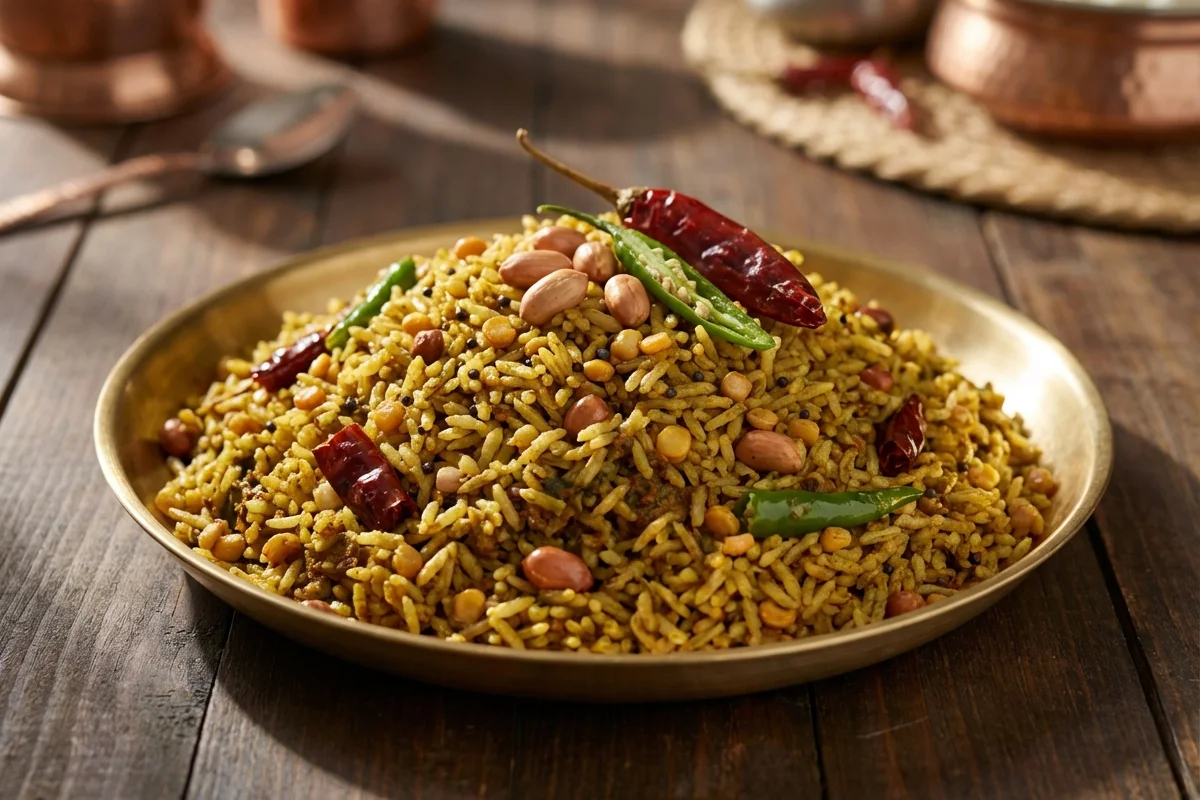
Gongura Pulihora
A tangy and spicy rice dish from Andhra cuisine, where cooked rice is tossed with a flavorful paste of gongura (sorrel leaves) and a traditional tempering. It's a festival favorite known for its unique sour taste and vibrant flavor.
For 4 servings
Cook the Rice
- Wash the sona masuri rice thoroughly under running water until the water runs clear.
- Cook the rice with 3 cups of water in a pressure cooker (2 whistles on high heat) or in a pot until each grain is separate and cooked through.
- Once cooked, immediately spread the rice on a large plate or tray. Drizzle 1 teaspoon of sesame oil over it and gently fluff with a fork. Let it cool down completely to prevent it from becoming mushy when mixed.
Prepare the Gongura Paste
- Heat 1 tablespoon of sesame oil in a pan over medium heat.
- Add the slit green chilies and sauté for 30 seconds.
- Add the packed gongura leaves to the pan. Sauté for 5-7 minutes, stirring occasionally, until the leaves wilt completely, change color, and become mushy.
- Turn off the heat and allow the mixture to cool down completely.
- Transfer the cooled gongura and chili mixture to a grinder or blender. Blend into a coarse paste without adding any water.
Prepare the Tempering and Cook the Paste
- In the same pan, heat the remaining sesame oil over medium heat.
- Add the mustard seeds and let them splutter.
- Add the chana dal, urad dal, and peanuts. Fry for 2-3 minutes, stirring continuously, until they turn light golden and aromatic.
- Add the broken dried red chilies and curry leaves. Sauté for another 30 seconds.
- Lower the heat, add the hing, and immediately add the ground gongura paste to the pan.
- Add the turmeric powder and salt. Mix everything well and cook for 3-4 minutes, stirring constantly, until the paste thickens and oil begins to separate from the sides.
Combine and Serve
- Turn off the heat. Add the cooled, cooked rice to the pan with the gongura mixture.
- Gently mix everything together, ensuring the gongura paste evenly coats every grain of rice without breaking them.
- Let the Gongura Pulihora rest for at least 20-30 minutes to allow the flavors to meld beautifully.
- Serve at room temperature or slightly warm with papad, raita, or a simple potato fry.
What to keep in mind.
6 tips from the recipe — small details that make a real difference to the final dish.
- 1Ensure the rice is completely cool before mixing; warm rice will break and turn mushy.
- 2Use sesame oil for the most authentic Andhra flavor and aroma.
- 3The sourness of gongura leaves can vary. Adjust the quantity of leaves or salt to balance the taste.
- 4Do not add any water while grinding the gongura paste. This ensures a thick consistency and a longer shelf life for the paste.
- 5For extra crunch, you can roast the peanuts separately and add them at the end before serving.
- 6The prepared gongura paste (before mixing with rice) can be stored in an airtight container in the refrigerator for up to a week.
Adapt it for your goals.
Add Garlic
For a pungent flavor, sauté 4-5 cloves of chopped garlic along with the green chilies when preparing the gongura paste.
Use MilletsUse Millets
Replace the rice with cooked and cooled millets like foxtail millet or little millet for a healthier, gluten-free alternative.
Spicier VersionSpicier Version
Increase the number of green and red chilies, or add 1/2 teaspoon of red chili powder along with the turmeric powder for extra heat.
With OnionsWith Onions
Sauté one finely chopped onion until golden brown before adding the tempering ingredients for a slightly sweeter and more complex flavor base.
Why this is on our healthy list.
Rich in Iron
Gongura leaves are an excellent plant-based source of iron, which is essential for producing hemoglobin and preventing anemia.
Boosts Immunity
The high content of Vitamin C in sorrel leaves helps strengthen the immune system and protect the body against common infections.
Aids Digestion
The dietary fiber from the gongura leaves, dals, and peanuts promotes healthy digestion and can help prevent constipation.
Good Source of Antioxidants
Gongura is rich in antioxidants that help fight free radicals in the body, potentially reducing the risk of chronic diseases.
Frequently asked questions
Gongura, also known as sorrel leaves or 'pulicha keerai', is a leafy green vegetable popular in Andhra Pradesh. It is known for its distinct tangy and sour taste, which is the star flavor of this dish.