
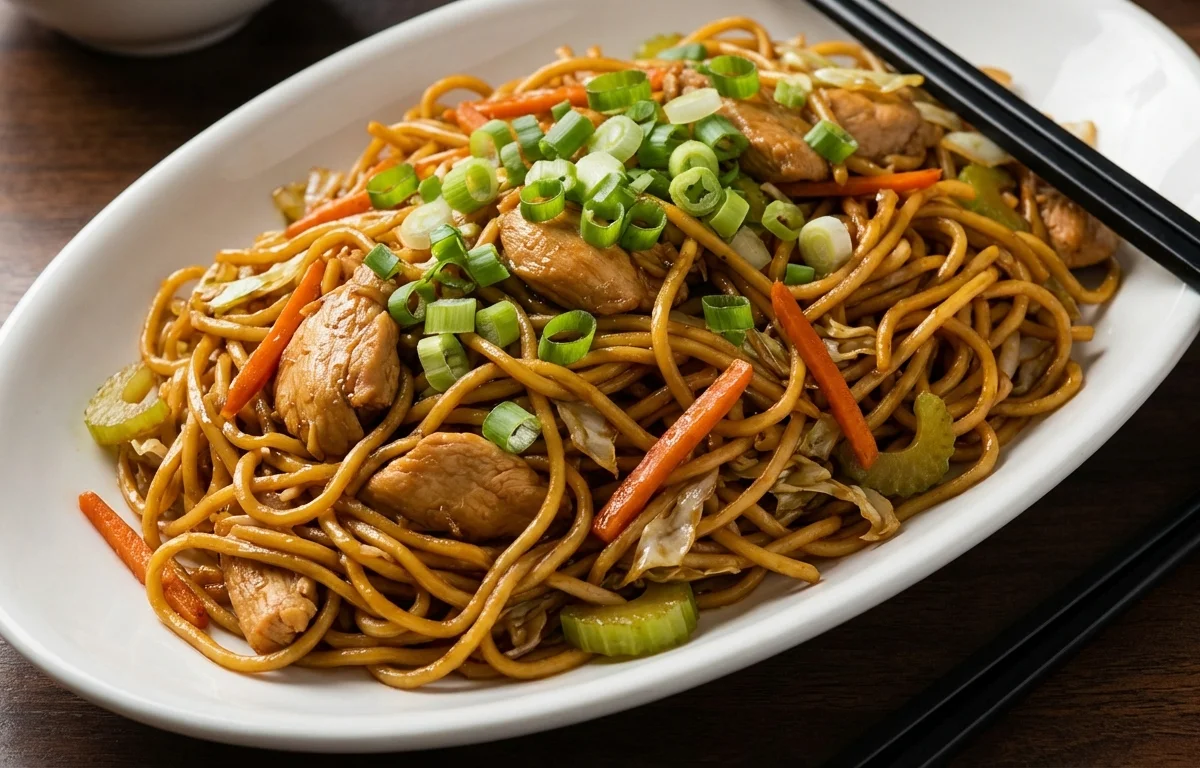
Chicken Chow Mein
Tender chicken and crisp vegetables tossed with savory noodles in a classic sauce. This Chinese-American takeout favorite is incredibly easy to make at home and ready in under 30 minutes. Perfect for a quick weeknight dinner.
For 4 servings
4 steps. 15 minutes total.
- 1
Step 1
- a.Prepare Noodles, Sauce, and Chicken
- b.Cook the chow mein noodles according to package directions until al dente. Drain immediately and rinse with cold water to stop the cooking process and prevent sticking. Set aside.
- c.In a small bowl, whisk together all the sauce ingredients: 3 tbsp soy sauce, oyster sauce, sesame oil, sugar, and chicken broth. Set aside.
- d.In a separate medium bowl, combine the sliced chicken with 1 tbsp soy sauce, 1 tsp cornstarch, and white pepper. Toss to coat evenly and let it marinate for at least 10 minutes.
- 2
Step 2
- a.Cook the Chicken
- b.Heat 1 tablespoon of vegetable oil in a large wok or skillet over high heat until it shimmers.
- c.Carefully add the marinated chicken in a single layer, ensuring not to crowd the pan. Cook for 2-3 minutes per side until golden brown and cooked through (internal temperature of 165°F / 74°C).
- d.Remove the chicken from the wok and set aside on a plate.
- 3
Step 3
- a.Stir-Fry Vegetables
- b.Add the remaining 2 tablespoons of oil to the same wok over high heat.
- c.Add the minced garlic and grated ginger, and stir-fry for about 30 seconds until fragrant.
- d.Add the sliced onion, carrots, and celery. Stir-fry for 2-3 minutes until they are crisp-tender.
- e.Add the shredded cabbage and stir-fry for another 1-2 minutes until it just begins to wilt.
- 4
Step 4
- a.Combine and Serve
- b.Return the cooked chicken to the wok with the vegetables.
- c.Add the cooked noodles to the wok. Give the sauce a final whisk and pour it over everything.
- d.Using tongs, toss everything together quickly and continuously for 1-2 minutes, until the noodles and vegetables are well-coated and everything is heated through.
- e.Garnish with sliced green onions and serve immediately for the best texture.
What to keep in mind.
6 tips from the recipe — small details that make a real difference to the final dish.
- 1Mise en place is key! Have all your ingredients chopped, measured, and ready to go before you start cooking. Stir-frying is a very fast process.
- 2Use a very hot wok or skillet. High heat is essential for achieving the characteristic 'wok hei' (breath of the wok) flavor and keeping vegetables crisp.
- 3Don't overcook the noodles initially. They will cook further when tossed in the sauce, so aim for al dente.
- 4For crispier noodles, pan-fry the boiled and drained noodles in a bit of oil until golden brown on both sides before adding them to the stir-fry.
- 5To control sodium, use low-sodium soy sauce and chicken broth.
- 6Avoid crowding the pan. If your wok isn't large enough, cook the chicken and vegetables in batches to ensure they stir-fry properly rather than steam.
Adapt it for your goals.
Protein Swap
Substitute the chicken with thinly sliced beef, pork, shrimp, or pressed tofu for a vegetarian option. Adjust cooking times accordingly.
Vegetable Add insVegetable Add-ins
Incorporate other vegetables like sliced bell peppers, mushrooms, snow peas, or bean sprouts. Add bean sprouts at the very end as they cook quickly.
Spicy VersionSpicy Version
Add 1-2 teaspoons of sriracha, chili garlic sauce, or a pinch of red pepper flakes to the sauce for a spicy kick.
Noodle TextureNoodle Texture
For a softer, chewier dish, use lo mein noodles instead of chow mein noodles. The sauce and cooking process remain the same.
Why this is on our healthy list.
Excellent Source of Lean Protein
The chicken breast provides high-quality lean protein, which is essential for muscle building, repair, and helps keep you feeling full and satisfied.
Packed with Vegetables
This dish is loaded with carrots, cabbage, celery, and onions, offering a good source of fiber, vitamins (like Vitamin C and K), and essential minerals.
Provides Sustained Energy
The carbohydrates from the noodles offer a quick and effective source of energy to fuel your body and brain throughout the day.
Frequently asked questions
The main difference is in the noodle preparation. In Chow Mein, the noodles are often fried to be crispy. In Lo Mein, the noodles are boiled and then simply tossed with the sauce and ingredients, resulting in a softer texture. This recipe is a common 'stir-fried' chow mein, which is less crispy than deep-fried versions but distinct from lo mein.