
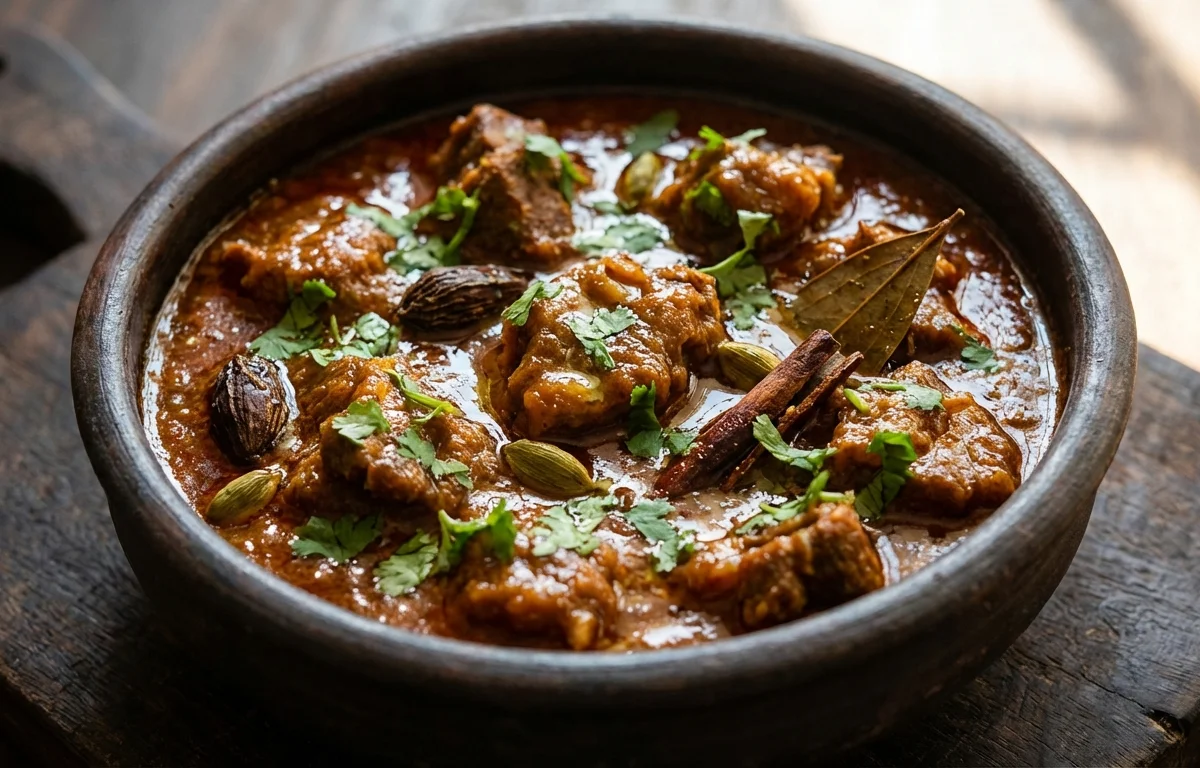
Seyal Gosht
A classic Sindhi curry where tender mutton is slow-cooked in a rich, aromatic gravy of onions, tomatoes, and yogurt. This hearty dish is perfect for a comforting family meal, best enjoyed with fresh rotis.
For 4 servings
Sauté Aromatics and Onions
- Heat oil in a pressure cooker over medium heat. Once hot, add the whole spices: bay leaf, cinnamon stick, green cardamoms, and cloves.
- Sauté for about 30 seconds until they become fragrant.
- Add the sliced onions and fry, stirring frequently, for 10-12 minutes until they turn a deep golden brown. This step is crucial for the authentic 'Seyal' flavor.
Brown the Mutton
- Add the ginger-garlic paste and slit green chillies. Sauté for 1 minute until the raw aroma disappears.
- Increase the heat to high, add the mutton pieces, and sear on all sides for 5-7 minutes until well-browned. This locks in the juices.
Build the Masala Base
- Reduce the heat to medium-low. Add the powdered spices: turmeric powder, red chilli powder, coriander powder, and salt. Stir for 30 seconds.
- Add the tomato puree and cook for 5-6 minutes, stirring occasionally, until the masala thickens and you see oil separating at the edges.
- Turn the heat to the absolute lowest setting. Add the whisked curd and stir continuously for 2-3 minutes to prevent it from curdling and ensure it's well incorporated.
Pressure Cook to Tenderness
- Pour in 1.5 cups of hot water and stir well, scraping any bits stuck to the bottom of the cooker.
- Secure the lid of the pressure cooker. Cook on high heat until the first whistle.
- After the first whistle, reduce the heat to medium-low and cook for 20-25 minutes, or until the mutton is tender.
- Turn off the heat and allow the pressure to release naturally. Do not force open the lid.
Finish and Serve
- Carefully open the cooker. Check the consistency of the gravy. If it's too thin, simmer it uncovered for 5-7 minutes until it thickens to your liking.
- Check for seasoning and adjust salt if needed.
- Sprinkle the garam masala over the curry and stir gently.
- Garnish with freshly chopped coriander leaves and let it rest for 10 minutes before serving hot with roti, naan, or steamed rice.
What to keep in mind.
5 tips from the recipe — small details that make a real difference to the final dish.
- 1For the best flavor, make sure to brown the onions really well until they are a deep golden color.
- 2Searing the mutton on high heat before pressure cooking helps to lock in the juices and adds a rich flavor to the curry.
- 3Always add whisked, room-temperature yogurt on low heat and stir continuously to prevent it from splitting or curdling.
- 4Let the curry rest for at least 10-15 minutes before serving to allow the flavors to meld together beautifully.
- 5Use bone-in mutton for a more flavorful and richer gravy, as the bones release collagen and marrow during cooking.
Adapt it for your goals.
Vegetarian
Replace mutton with 500g of cubed potatoes (aloo) or a mix of vegetables like carrots, peas, and cauliflower. Reduce the pressure cooking time to about 5-7 minutes (1-2 whistles).
SpicierSpicier
Increase the number of green chillies to 4-5 and add 1/2 teaspoon of black pepper powder along with the other powdered spices for extra heat.
CreamierCreamier
For a richer, creamier gravy, stir in 2 tablespoons of fresh cream or cashew paste at the end of the cooking process, after you open the pressure cooker.
Why this is on our healthy list.
Rich in Protein
Mutton is a high-quality source of protein, essential for muscle building, tissue repair, and maintaining overall body function.
Boosts Iron Levels
This dish provides a significant amount of heme iron from the mutton, which is easily absorbed by the body and helps prevent anemia and boost energy levels.
Anti-inflammatory Spices
The use of spices like turmeric (containing curcumin), ginger, and garlic provides anti-inflammatory and antioxidant benefits, supporting overall health and immunity.
Frequently asked questions
One serving of Seyal Gosht (approximately 400g) contains around 480-520 calories, primarily from the mutton and oil. The exact count can vary based on the fat content of the mutton used.