
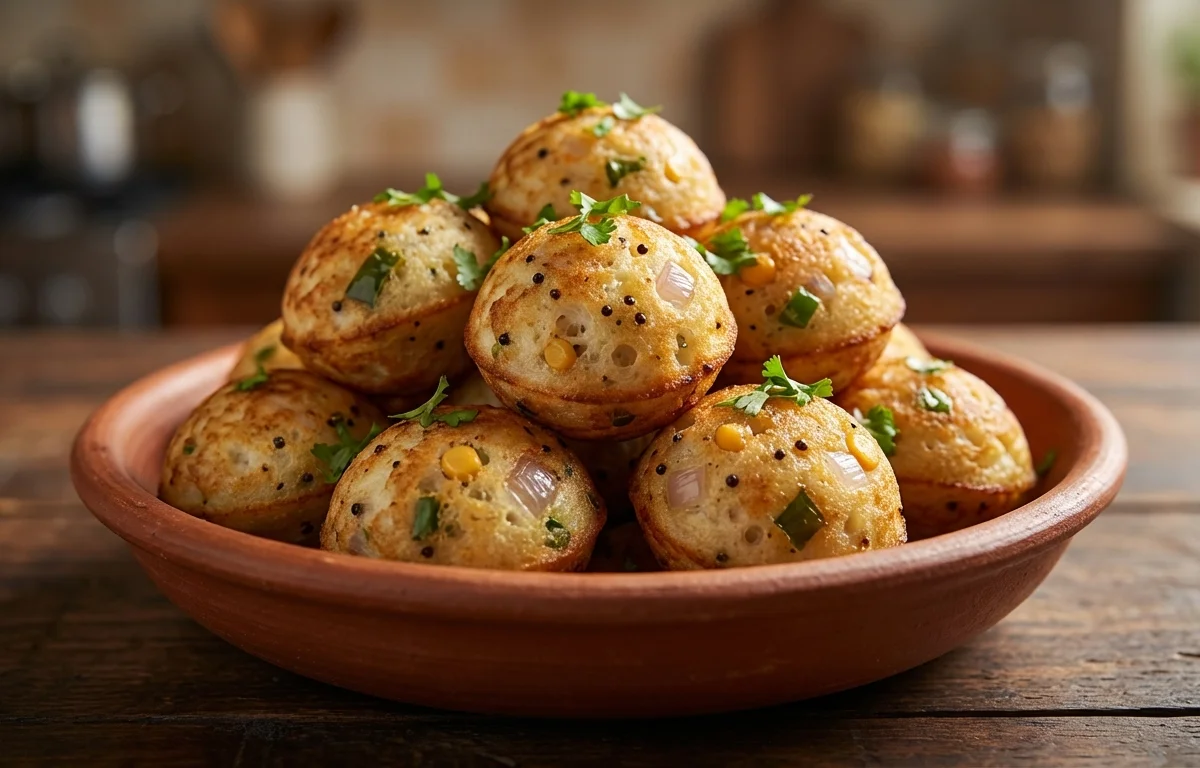
Chettinad Paniyaram
Crispy on the outside, soft and fluffy inside, these savory pan-fried dumplings are a Chettinad specialty. Made from a fermented rice and lentil batter and seasoned with a classic South Indian tempering, they are a perfect breakfast or snack.
For 4 servings
Soak Grains and Lentils
- In a large bowl, rinse the idli rice and raw rice together several times until the water runs clear. Cover with fresh water and soak for at least 4-5 hours.
- In a separate bowl, rinse the urad dal and fenugreek seeds. Cover with fresh water and soak for the same duration, 4-5 hours.
Grind the Batter
- Drain the soaked urad dal and fenugreek seeds. Using a wet grinder or a high-speed blender, grind them to a very smooth and fluffy batter, adding small amounts of cold water as needed. Transfer this batter to a large, deep bowl.
- Next, drain the soaked rice. Grind it to a slightly coarse, semolina-like texture, adding water as required. The consistency should be thick but pourable.
- Combine the ground rice batter with the urad dal batter in the large bowl. Add salt and mix thoroughly with your clean hands for about 2 minutes. This traditional method helps initiate the fermentation process.
Ferment the Batter
- Cover the bowl with a lid (do not seal it tightly) and place it in a warm, draft-free spot to ferment for 8 to 12 hours, or overnight. The batter should double in volume, become airy, and have a pleasant sour aroma.
Prepare the Tempering (Tadka)
- Heat 2 tbsp of sesame oil in a small pan over medium heat. Once hot, add the mustard seeds and let them splutter.
- Add the chana dal and sauté for about 30 seconds until it turns light golden.
- Add the finely chopped onion, green chillies, grated ginger, and curry leaves. Sauté for 3-4 minutes until the onions are soft and translucent.
- Turn off the heat and stir in the asafoetida. Let the tempering cool down slightly.
Finalize the Paniyaram Batter
- Gently mix the fermented batter. Do not overmix, as this will deflate the air pockets.
- Add the cooled tempering and the grated coconut to the batter. Mix gently until just combined. Check for salt and adjust if necessary.
Cook the Paniyaram
- Heat a paniyaram pan (appe pan) over medium heat. Add a few drops of oil into each mould.
- When the pan is hot, pour the batter into each mould, filling it up to 3/4 full.
- Cover the pan and cook on medium-low heat for 2-3 minutes, until the edges are golden brown and the top is set.
- Using a wooden skewer or a special paniyaram turning stick, carefully flip each one. Drizzle a little more oil around the edges if needed.
- Cook uncovered for another 2-3 minutes until the other side is golden, crisp, and cooked through.
- Remove the cooked paniyarams and repeat the process with the remaining batter.
Serve
- Serve the hot Chettinad Paniyaram immediately with your choice of chutney, such as coconut chutney, tomato chutney, or sambar.
What to keep in mind.
7 tips from the recipe — small details that make a real difference to the final dish.
- 1The batter consistency is crucial. It should be like a thick pancake batter, able to be poured but not runny.
- 2Do not overfill the moulds as the paniyarams will puff up while cooking.
- 3Cooking on medium-low heat ensures they are cooked through to the center without burning the outside.
- 4Using gingelly (sesame) oil provides the most authentic Chettinad flavor.
- 5You can make the batter in advance and store it in the refrigerator for up to 3 days. Bring to room temperature before making paniyarams.
- 6A wooden skewer or a dedicated paniyaram stick is the best tool to flip them without breaking.
- 7For extra soft paniyarams, you can add a handful of cooked rice or poha (flattened rice) while grinding the rice.
Adapt it for your goals.
Vegetable Paniyaram
Add 1/4 cup of finely chopped or grated vegetables like carrots, bell peppers, or cabbage to the batter along with the tempering for added nutrition and flavor.
Sweet Paniyaram (Inippu Paniyaram)Sweet Paniyaram (Inippu Paniyaram)
To make a sweet version, skip the savory tempering. Instead, add 1/2 cup of powdered jaggery, 1/4 cup of grated coconut, and 1/4 tsp of cardamom powder to the fermented batter.
Millet PaniyaramMillet Paniyaram
Replace the raw rice with an equal amount of foxtail millet or kodo millet for a healthier, gluten-free alternative. The soaking and grinding process remains the same.
Why this is on our healthy list.
Promotes Gut Health
The fermentation process breaks down complex starches and proteins, making the paniyarams easier to digest. It also introduces beneficial probiotics that support a healthy gut microbiome.
Good Source of Plant-Based Protein
Urad dal is a key ingredient and is rich in protein, which is essential for muscle repair, growth, and overall body function.
Provides Sustained Energy
The combination of rice and lentils offers a good source of complex carbohydrates, which provide a steady release of energy, keeping you full and active for longer.
Rich in Dietary Fiber
Lentils and the optional addition of vegetables contribute dietary fiber, which aids in digestion, helps regulate blood sugar levels, and promotes satiety.
Frequently asked questions
Yes, Chettinad Paniyaram can be a healthy dish. It is made from fermented rice and lentils, which are good for gut health. It provides a balance of carbohydrates and plant-based protein. Since it's shallow-fried with minimal oil in a special pan, it's a healthier alternative to deep-fried snacks.