
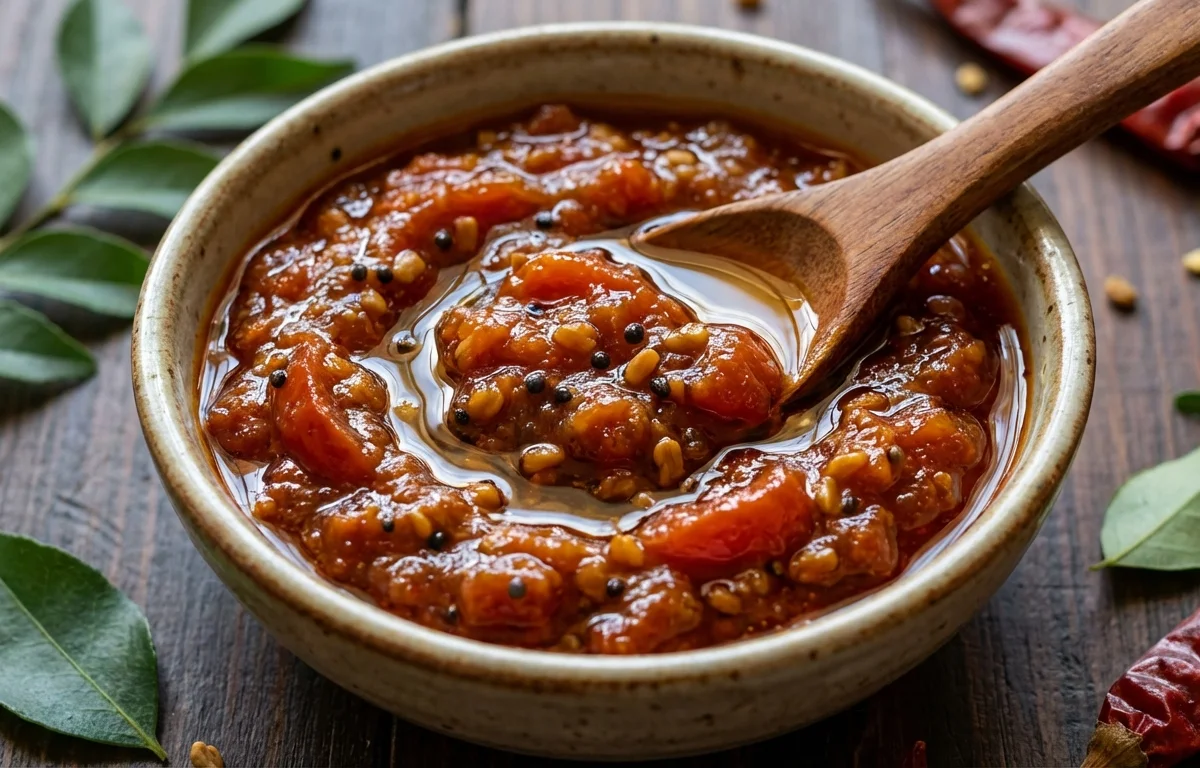
Tomato Pickle
A fiery and tangy South Indian condiment where ripe tomatoes are slow-cooked with aromatic spices and a generous amount of oil. This versatile pickle adds a burst of flavor to rice, dosa, or chapati.
For 16 servings
Preparation: Wash the tomatoes thoroughly and pat them completely dry with a kitchen towel. Any moisture can spoil the pickle. Finely chop the tomatoes and roughly chop the garlic cloves. Set aside.
Cook Tomatoes: Heat 1/4 cup of sesame oil in a wide, heavy-bottomed pan (kadai) over medium heat. Add the chopped tomatoes and cook, stirring occasionally, for about 15-20 minutes until they break down and become soft and mushy.
Add Spices: Once the tomatoes are pulpy, add the tamarind paste, salt, turmeric powder, and red chili powder. Mix everything thoroughly to combine.
Slow Cook the Pickle: Reduce the heat to low-medium and continue to cook the mixture. Stir frequently to prevent it from sticking to the bottom of the pan. Cook for about 20-25 minutes, until the mixture thickens into a paste and you see oil separating from the sides. This step is crucial for the pickle's shelf life.
Prepare the Tempering (Tadka): While the pickle is cooking, heat the remaining 1/2 cup of sesame oil in a separate small pan over medium heat. Add the mustard seeds and wait for them to splutter completely. Then, add the fenugreek seeds, broken dried red chilies, and hing. Sauté for 30 seconds. Finally, add the chopped garlic and fry until it turns light golden brown and fragrant.
Combine and Finish: Carefully pour the hot tempering over the cooked tomato mixture. Add the roasted fenugreek powder, roasted mustard powder, and optional jaggery. Stir everything together very well. Cook for another 2-3 minutes on low heat, then turn off the flame.
Cool and Store: Allow the tomato pickle to cool down completely to room temperature. Once cooled, transfer it to a clean, dry, and airtight glass jar. The pickle will taste even better after resting for a day.
What to keep in mind.
7 tips from the recipe — small details that make a real difference to the final dish.
- 1Ensure all utensils, spoons, and the storage jar are completely dry to prevent the pickle from spoiling.
- 2Use ripe, red, and firm tomatoes for the best flavor and texture. Avoid using overly soft or unripe tomatoes.
- 3Cooking the pickle until oil separates is crucial for its shelf life. Don't rush this step.
- 4Sesame oil (gingelly oil) gives the most authentic flavor and acts as a natural preservative.
- 5The flavor of the pickle enhances after resting for a day or two.
- 6Always use a clean, dry spoon to serve the pickle from the jar.
- 7For a milder pickle, use Kashmiri red chili powder which imparts a vibrant color with less heat.
Adapt it for your goals.
Aromatic Twist
Add 1 tablespoon of finely chopped ginger along with the garlic during the tempering for an extra layer of flavor.
Texture VariationTexture Variation
Use whole, peeled garlic cloves instead of chopped ones. They will soften during cooking and provide a different texture.
Milder VersionMilder Version
Reduce the amount of red chili powder by half and use a variety like Kashmiri chili powder for color without intense heat.
No SweetnessNo Sweetness
If you prefer a purely savory and tangy pickle, you can omit the jaggery completely.
Why this is on our healthy list.
Rich in Antioxidants
Tomatoes are an excellent source of lycopene, a powerful antioxidant that helps protect cells from damage and supports overall health.
Anti-inflammatory Properties
Ingredients like garlic, turmeric, and fenugreek seeds contain compounds known for their anti-inflammatory effects, which can help combat inflammation in the body.
Boosts Immunity
The blend of spices, particularly turmeric and garlic, has been traditionally used to support the immune system and help the body fight off infections.
Aids Digestion
Hing (Asafoetida) and fenugreek are known to aid digestion, reduce bloating, and improve gut health when consumed in small quantities.
Frequently asked questions
When stored correctly in a clean, dry, airtight glass jar, it can last for up to two weeks at room temperature and for several months in the refrigerator. The oil layer on top acts as a preservative.