
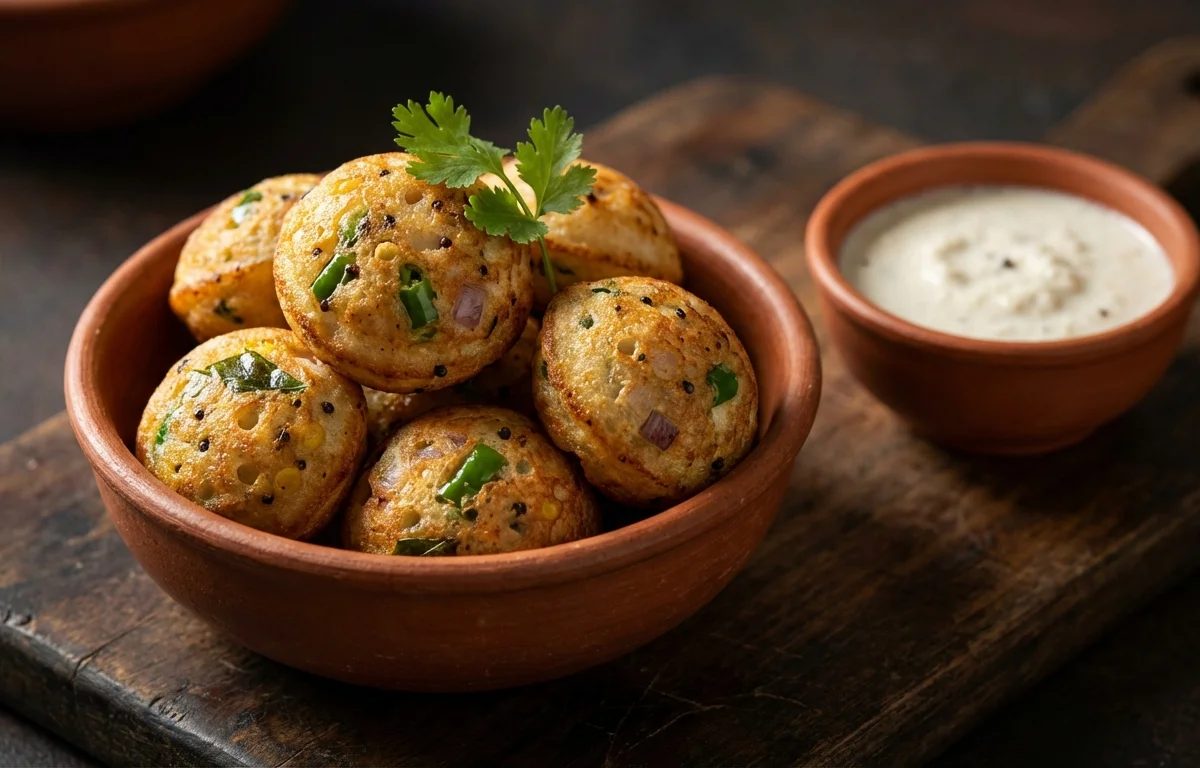
Kara Kuzhi Paniyaram
Crispy on the outside, soft and fluffy on the inside, these savory pan-fried dumplings are a South Indian classic. Made with a seasoned rice and lentil batter, they are perfect for breakfast or an evening snack.
For 4 servings
Prepare the Tempering (Tadka)
- Heat 2 tbsp of gingelly oil in a small pan over medium heat.
- Add the mustard seeds and allow them to splutter completely.
- Add the urad dal and chana dal. Sauté for about 1 minute until they turn light golden brown.
- Add the finely chopped onion, green chilies, grated ginger, and curry leaves. Sauté for 3-4 minutes until the onions become soft and translucent.
- Stir in the asafoetida, mix well, and turn off the heat. Allow the tempering to cool for a few minutes.
Combine Batter and Tempering
- In a large mixing bowl, take the idli batter.
- Pour the slightly cooled tempering mixture into the batter.
- Add the chopped coriander leaves and salt. Mix thoroughly until everything is well combined. The batter should have a thick, yet pourable consistency.
Cook the Paniyaram
- Heat a kuzhi paniyaram pan (appe pan) over medium heat.
- Add a few drops of oil into each mold of the pan.
- Once the pan is hot, carefully pour the prepared batter into each mold, filling them up to about 3/4 full.
- Cover the pan with a lid and cook on a medium-low flame for 2-3 minutes, or until the top surface looks cooked and the edges turn golden.
- Using a wooden skewer or a special paniyaram turning pick, gently flip each paniyaram.
- Drizzle a few more drops of oil around the edges if needed and cook the other side uncovered for another 1-2 minutes until golden brown and crisp.
- Repeat the process with the remaining batter.
Serve
- Once cooked, remove the paniyarams from the pan.
- Serve immediately while hot with your choice of coconut chutney, tomato chutney, or sambar.
What to keep in mind.
6 tips from the recipe — small details that make a real difference to the final dish.
- 1For the most authentic flavor, use well-fermented, slightly sour idli batter.
- 2Ensure the paniyaram pan is sufficiently hot before pouring the batter to achieve a crispy exterior.
- 3Cook on a consistent medium-low flame to ensure the paniyarams cook through evenly without burning.
- 4Do not overfill the molds; fill them only up to 3/4 as they will puff up during cooking.
- 5A non-stick paniyaram pan is recommended for beginners as it makes flipping easier and requires less oil.
- 6Leftover paniyarams can be stored in an airtight container in the refrigerator for up to 2 days. Reheat on a tawa or in the pan before serving.
Adapt it for your goals.
Vegetable Paniyaram
Enhance the nutritional value by adding 1/4 cup of finely chopped vegetables like carrots, bell peppers, beans, or corn to the batter.
Sweet Paniyaram (Inippu Paniyaram)Sweet Paniyaram (Inippu Paniyaram)
For a sweet version, prepare a batter with rice flour, jaggery, mashed banana, and a pinch of cardamom powder. Cook in the same pan with ghee.
Cheese PaniyaramCheese Paniyaram
Add a small cube of mozzarella or processed cheese into the center of each paniyaram after pouring the batter for a cheesy surprise.
Why this is on our healthy list.
Promotes Gut Health
The fermented rice and lentil batter is a natural source of probiotics, which support a healthy gut microbiome, improve digestion, and enhance nutrient absorption.
Good Source of Plant-Based Protein
The inclusion of urad dal and chana dal in the batter and tempering provides a decent amount of plant-based protein, which is essential for muscle repair, growth, and overall body function.
Provides Sustained Energy
Made from rice and lentils, paniyaram is rich in complex carbohydrates that provide a steady release of energy, making it an excellent choice for breakfast or a fulfilling snack.
Frequently asked questions
A well-fermented idli or dosa batter that is slightly sour yields the most authentic and flavorful paniyarams. You can use leftover batter that is a day or two old for the best results.