
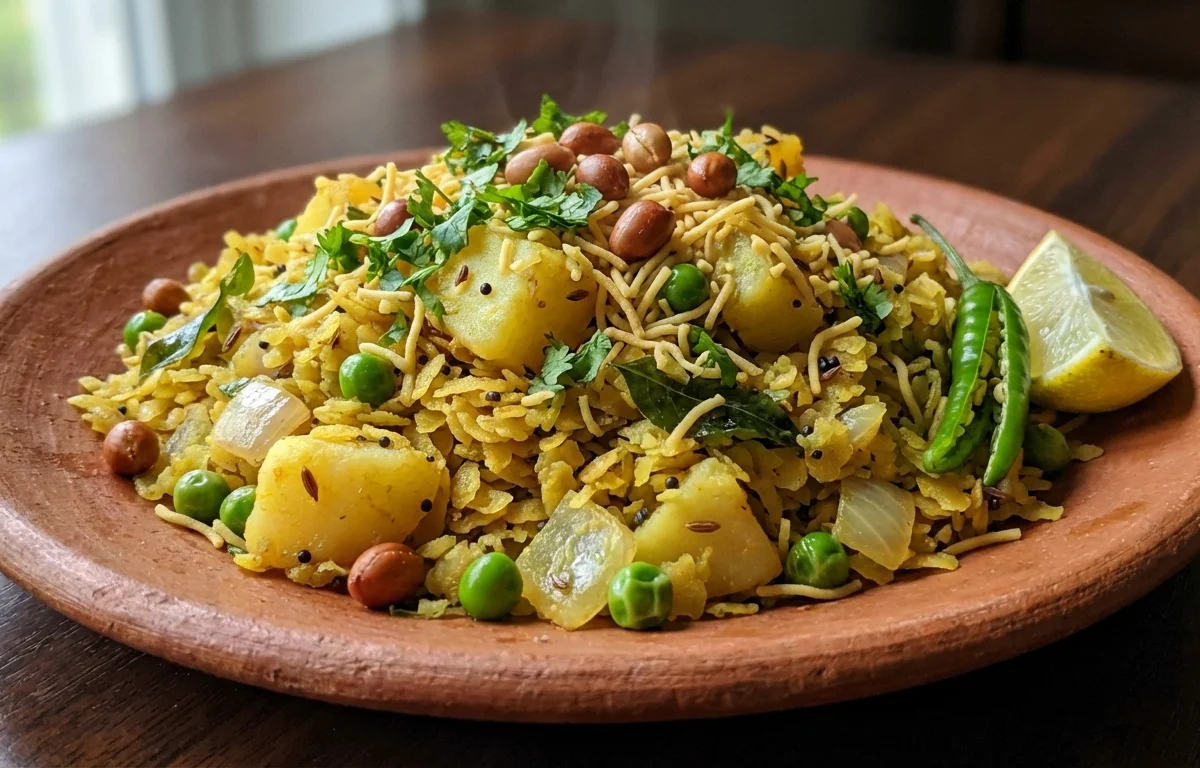
Vegetable Poha
A light Maharashtrian-style flattened-rice breakfast cooked with onion, peas, peanuts, and gentle spices, brightened with lemon and cilantro — a small handful of mung sprouts is added at the end as a regional touch.
For 2 servings
3 steps. 15 minutes total.
- 1
Step 1
- a.Place poha in a colander and rinse briefly under cool running water until just softened.
- b.Drain well and set aside so it can absorb moisture while you cook the tempering.
TIPAvoid over-soaking; the poha should be moist but firm to the touch to prevent mushiness. - 2
Step 2
- a.Heat the oil in a wide pan over medium heat.
- b.Add mustard seeds to crackle, then add cumin seeds and peanuts; saute 1 minute until peanuts are pale gold.
- c.Stir in onion, green chili, and ginger; cook 2 minutes until onion softens.
- d.Add potato cubes, green peas, turmeric, and 2 tbsp water; cover and cook 4 minutes until potato is fork tender.
TIPCut potato cubes into very small, uniform pieces to ensure they cook through quickly without burning the spices. - 3
Step 3
- a.Add the drained poha and salt; toss gently so the color is even and the poha is warmed through, about 2 minutes.
- b.Switch off the heat. Stir in mung bean sprouts and lemon juice while still hot so the sprouts soften slightly.
- c.Garnish with cilantro and serve immediately.
What to keep in mind.
6 tips from the recipe — small details that make a real difference to the final dish.
- 1Always use thick poha (jada poha). Thin poha will turn mushy and is not suitable for this recipe.
- 2The key to non-sticky poha is to rinse, not soak. Rinse just until the flakes are soft enough to be pressed between your fingers.
- 3Adding a teaspoon of sugar is a classic Maharashtrian touch that balances the savory and tangy flavors perfectly.
- 4For even cooking, ensure your potatoes are diced into small, uniform 1/4-inch cubes.
- 5Don't overcrowd the pan. Use a wide pan or kadai to allow the poha to cook evenly without clumping.
- 6Fluff the poha with a fork after rinsing and again after adding it to the pan to keep the flakes separate and light.
Adapt it for your goals.
Kanda Poha
A simpler version made primarily with onions (kanda) and without other vegetables like potatoes and peas.
Indori PohaIndori Poha
A popular street food style from Indore, which includes fennel seeds (saunf) in the tempering and is garnished with pomegranate arils and a special jeeravan masala.
Add More VegetablesAdd More Vegetables
Feel free to add other finely chopped vegetables like carrots, bell peppers, or green beans along with the potatoes.
With CoconutWith Coconut
For a coastal flavor, add 2-3 tablespoons of freshly grated coconut along with the coriander leaves at the end.
Why this is on our healthy list.
Provides Sustained Energy
Poha is rich in healthy carbohydrates, which are the body's primary source of fuel. It provides a steady release of energy, making it an ideal breakfast to start your day.
Excellent for Gut Health
Being light and easy to digest, poha doesn't cause bloating. The fiber from the added vegetables aids in maintaining a healthy digestive system and promoting regular bowel movements.
Good Source of Iron
The process of making flattened rice involves passing it through iron rollers, which fortifies it with iron. This helps in preventing iron deficiency and maintaining healthy hemoglobin levels.
Rich in Antioxidants
Ingredients like turmeric, curry leaves, and lemon juice are packed with antioxidants that help fight free radicals and reduce inflammation in the body.
Frequently asked questions
Yes, Vegetable Poha is considered a very healthy breakfast. It's light, easy to digest, and provides a good balance of carbohydrates for energy, fiber from vegetables, and protein from peanuts. It is also naturally low in fat.