
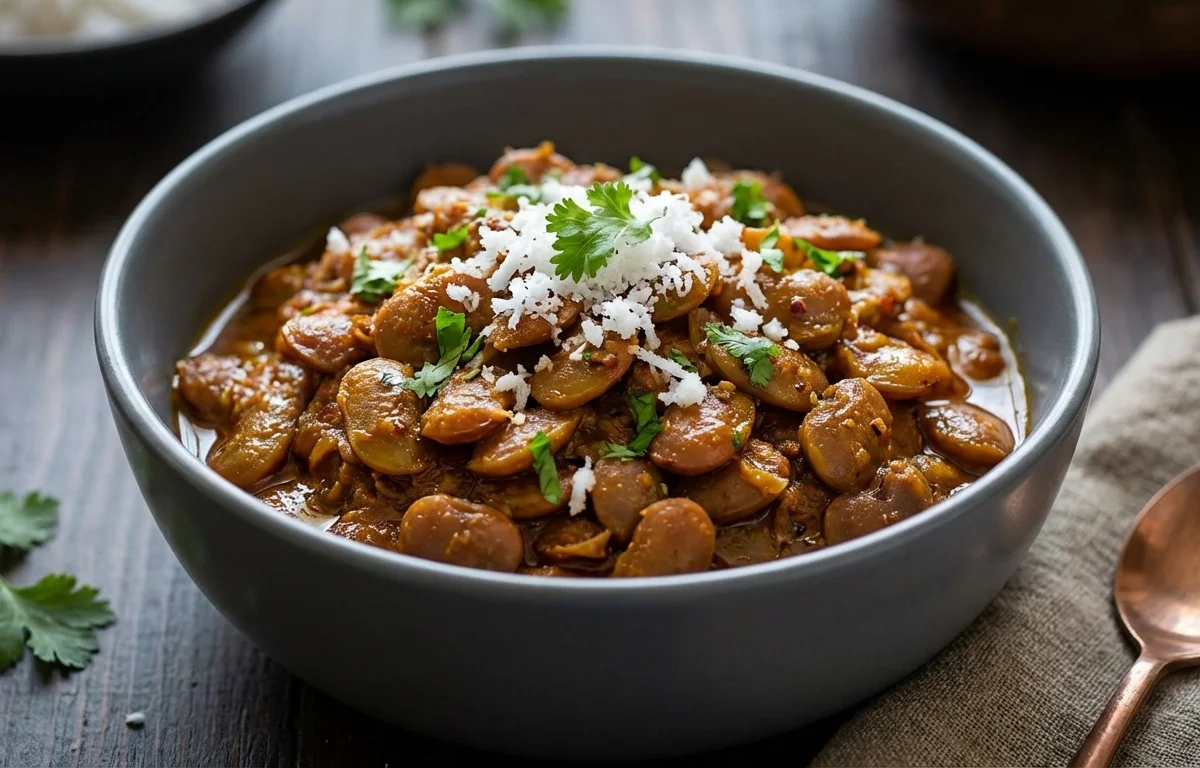
Valpapdichi Bhaji
A classic Maharashtrian stir-fry featuring tender flat beans cooked with coconut and a unique blend of spices. It’s a comforting, everyday dish that's both savory and slightly sweet, perfect with chapati or dal rice.
For 4 servings
7 steps. 20 minutes total.
- 1
Prepare the Beans: Wash the val papdi thoroughly
- a.Snap off the top and bottom ends, pulling down the sides to remove the tough strings. Chop the beans into 1-inch pieces and set aside.
- 2
Temper the Spices: Heat oil in a kadai or heavy-bottomed pan over medium heat
- a.Once hot, add the mustard seeds and allow them to splutter completely. Then, add the cumin seeds and hing, and sauté for about 30 seconds until fragrant.
- 3
Sauté Aromatics: Add the finely chopped onion to the pan
- a.Sauté for 3-4 minutes until it becomes soft and translucent.
- 4
Cook the Beans: Add the chopped val papdi to the pan
- a.Stir in the turmeric powder, red chili powder, goda masala, and salt. Mix well to ensure the beans are evenly coated with the spices.
- 5
Simmer until Tender: Pour in 1/4 cup of water, stir, and bring to a simmer
- a.Cover the pan with a lid and reduce the heat to low. Cook for 10-12 minutes, stirring occasionally. The beans should be tender but still retain a slight crunch. If the pan gets too dry, you can sprinkle a little more water.
- 6
Step 6
- a.Add Finishing Flavors: Once the beans are cooked, add the grated jaggery and tamarind paste. Stir gently and cook for another 2 minutes, allowing the sweet and tangy flavors to meld into the dish.
- 7
Garnish and Serve: Turn off the heat
- a.Stir in the freshly grated coconut and chopped coriander leaves. Mix well and let it rest for a minute. Serve Valpapdichi Bhaji hot with chapatis, bhakri, or as a side with dal and rice.
What to keep in mind.
5 tips from the recipe — small details that make a real difference to the final dish.
- 1For the best flavor and texture, use fresh, tender val papdi. Avoid beans that are too mature or tough.
- 2Destringing the beans is a crucial step to avoid a fibrous texture in the final dish.
- 3Goda masala is key to the authentic taste. If unavailable, a mix of garam masala and a pinch of cinnamon and clove powder can be a substitute, though the flavor will differ.
- 4A traditional technique is to place some water on the lid while the bhaji cooks. This creates steam inside the pan, helping the beans cook evenly without burning.
- 5Adjust the jaggery and tamarind to your personal preference for a perfect balance of sweet, sour, and spicy.
Adapt it for your goals.
Add Peanuts
Add 2 tablespoons of roasted and coarsely crushed peanuts along with the coconut for a nutty flavor and crunchy texture.
Add VegetablesAdd Vegetables
Incorporate small cubes of potato or small brinjals (eggplant) along with the val papdi for a more substantial dish. Adjust cooking time accordingly.
With GarlicWith Garlic
For a different flavor profile, add 2-3 cloves of minced garlic along with the onions.
Coastal StyleCoastal Style
Substitute Goda Masala with Malvani Masala for a spicy, coastal Maharashtrian twist.
Why this is on our healthy list.
Rich in Dietary Fiber
Val papdi is an excellent source of dietary fiber, which aids in digestion, promotes gut health, and helps in maintaining stable blood sugar levels.
Good Source of Plant-Based Protein
As a legume, flat beans provide a good amount of plant-based protein, essential for muscle repair and overall body function.
Anti-inflammatory Properties
The use of spices like turmeric and cumin lends anti-inflammatory and antioxidant properties to the dish, which can help combat oxidative stress in the body.
Provides Healthy Fats
Fresh coconut is a source of medium-chain triglycerides (MCTs), a type of healthy fat that can provide quick energy.
Frequently asked questions
Yes, it is a very healthy dish. Val papdi (flat beans) are rich in dietary fiber, vitamins, and minerals. The dish is plant-based, relatively low in fat, and the spices like turmeric offer anti-inflammatory benefits.