
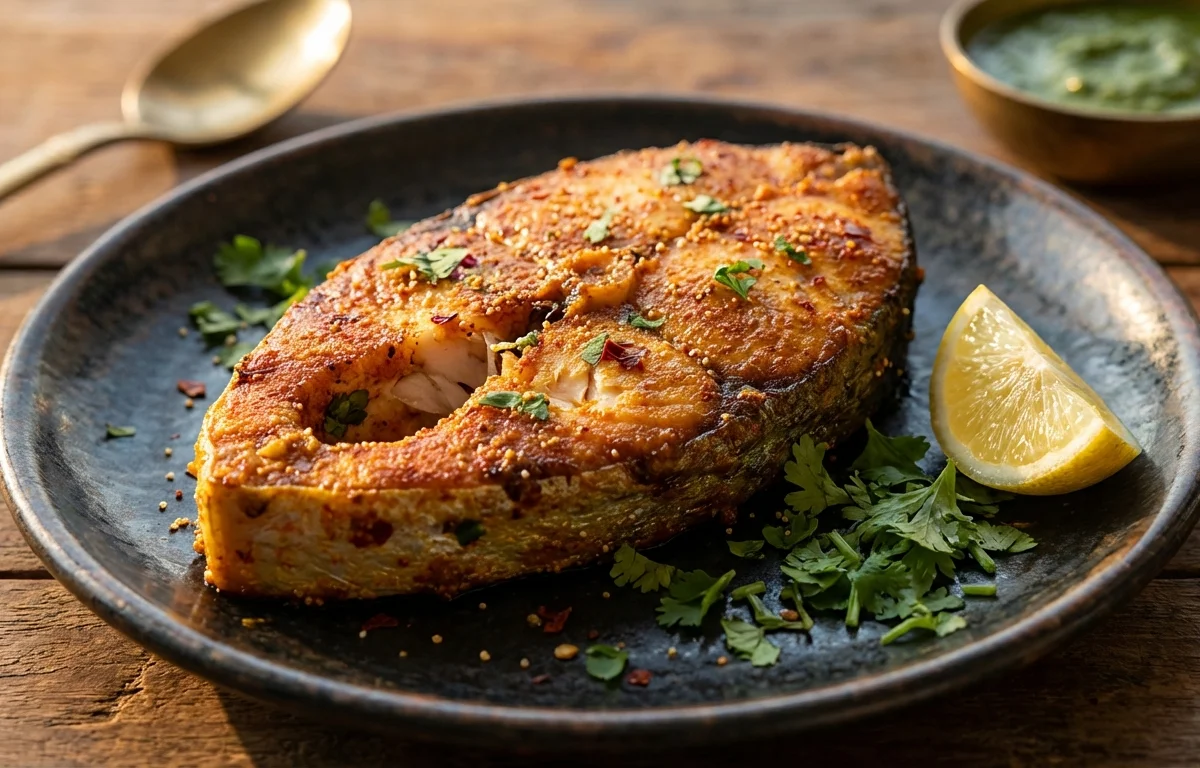
Tawa Surmai
Crispy, pan-fried King Mackerel steaks coated in a spicy Maharashtrian marinade and fine semolina. This classic recipe from the Konkan coast is quick to prepare and delivers an authentic burst of coastal Indian flavor, perfect as an appetizer or main course.
For 4 servings
Prepare the Fish
- Rinse the surmai steaks under cold water.
- Pat them completely dry with paper towels. This step is crucial for achieving a non-soggy, perfectly crisp fry.
- If the steaks are over an inch thick, make 2-3 shallow diagonal cuts on each side to help the marinade penetrate deeper.
Make the Marinade
- In a small bowl, combine the ginger-garlic paste, red chilli powder, turmeric powder, coriander powder, cumin powder, garam masala, lemon juice, rice flour, and salt.
- Mix well to form a thick, smooth paste. Add a teaspoon of water only if the paste is too dry to spread.
Marinate the Fish
- Generously rub the prepared marinade paste all over each fish steak, ensuring it gets into the cuts.
- Place the marinated fish in a container, cover, and refrigerate for at least 30 minutes, or up to 2 hours for deeper flavor.
Coat the Steaks
- Spread the rava (semolina) evenly on a flat plate or tray.
- Take each marinated fish steak and press it firmly into the rava, coating both sides completely. Gently shake off any excess.
Shallow Fry the Surmai
- Heat the oil in a wide, heavy-bottomed pan (tawa) or a non-stick skillet over medium heat. The oil should be hot but not smoking.
- Carefully place the coated fish steaks in the pan, ensuring not to overcrowd it. Fry in batches if necessary.
- Cook for 5-6 minutes on the first side, until the coating is golden brown and crisp.
- Gently flip the steaks and cook for another 4-5 minutes on the other side. The fish is done when it flakes easily with a fork.
Serve Hot
- Remove the fried fish from the pan and place it on a wire rack for a minute to drain excess oil and maintain crispiness.
- Serve immediately with sliced onions, lemon wedges, and a side of green chutney.
What to keep in mind.
5 tips from the recipe — small details that make a real difference to the final dish.
- 1Ensure the fish is at room temperature for about 10 minutes before frying for even cooking.
- 2The key to a crispy crust is maintaining a steady medium heat. Too high, and the rava will burn; too low, and the fish will absorb excess oil.
- 3Do not cover the pan while frying, as the steam will make the coating soggy.
- 4For an authentic Konkani touch, add 1 teaspoon of kokum agal (unsweetened kokum extract) to the marinade along with the lemon juice.
- 5Use a fish spatula for flipping to prevent the delicate steaks from breaking apart.
Adapt it for your goals.
Different Fish
This recipe works wonderfully with other firm-fleshed fish like Pomfret (Pamphlet), Mackerel (Bangda), or Indian Salmon (Rawas).
Spicier VersionSpicier Version
Add 1/2 teaspoon of black pepper powder and 1 finely chopped green chilli to the marinade for an extra kick of heat.
Air Fryer MethodAir Fryer Method
For a lower-oil version, preheat your air fryer to 200°C (400°F). Spray the coated fish with a little oil and air fry for 10-12 minutes, flipping halfway through, until golden and cooked.
Gluten Free CoatingGluten-Free Coating
Replace the rava (semolina) with coarse rice flour or chickpea flour (besan) for a gluten-free alternative.
Why this is on our healthy list.
Rich in Omega-3 Fatty Acids
Surmai is an excellent source of Omega-3s, particularly EPA and DHA, which are crucial for heart health, reducing inflammation, and supporting brain function.
Excellent Source of Lean Protein
This dish provides high-quality lean protein, essential for building and repairing tissues, muscle maintenance, and keeping you feeling full and satisfied.
Boosts Brain Health
The high concentration of DHA in King Mackerel is linked to improved cognitive function, memory, and a lower risk of age-related cognitive decline.
Frequently asked questions
Tawa Surmai can be a healthy choice as Surmai (King Mackerel) is rich in Omega-3 fatty acids and lean protein. This recipe uses shallow frying, which requires less oil than deep frying. To make it even healthier, you can pan-sear with minimal oil or use an air fryer.