
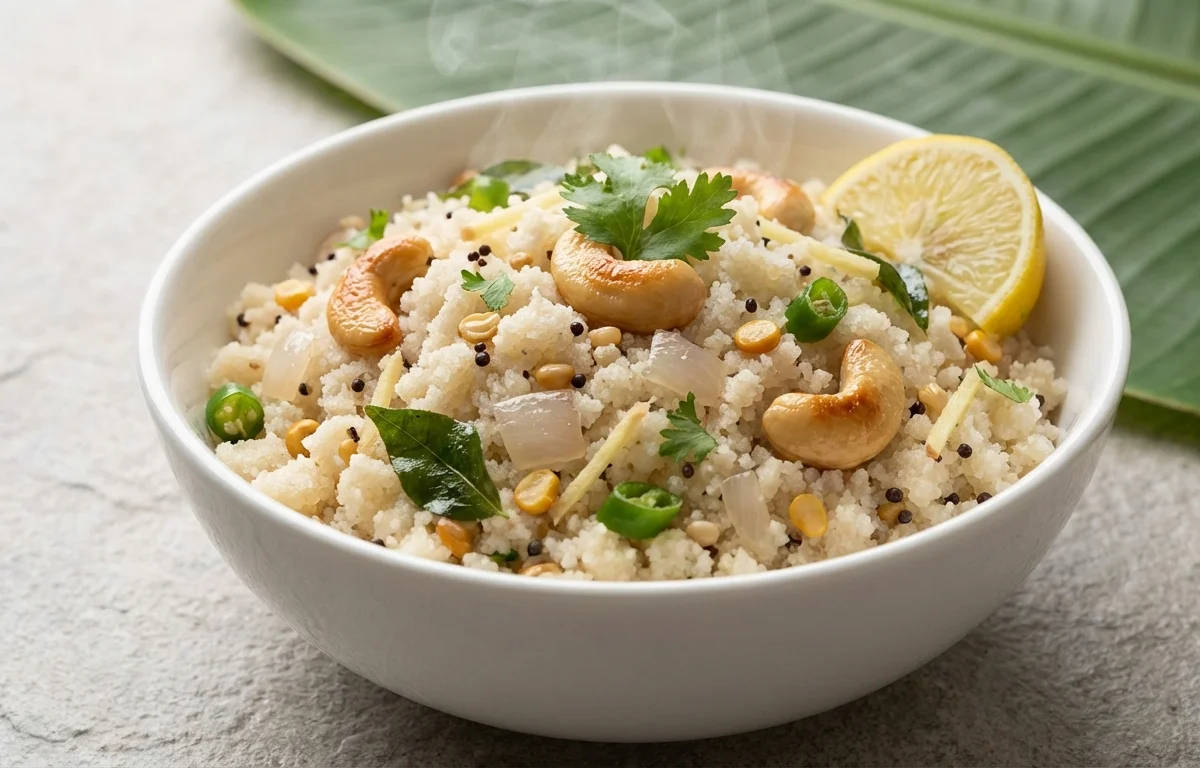
Suji Upma
A savory and fluffy breakfast porridge made from roasted semolina, tempered with classic South Indian spices. This beloved dish is quick, easy, and incredibly comforting, perfect for a wholesome start to your day.
For 4 servings
6 steps. 15 minutes total.
- 1
Step 1
- a.Roast the Suji (Semolina)
- b.Place a heavy-bottomed pan or kadai over low-medium heat.
- c.Add 1 cup of suji and dry roast, stirring frequently, for 5-7 minutes. The suji should become aromatic and feel light, but it should not change color.
- d.Once roasted, transfer the suji to a separate plate and set aside.
- 2
Step 2
- a.Prepare the Tempering (Tadka)
- b.In the same pan, heat 2 tbsp of ghee over medium heat.
- c.Add 1 tsp of mustard seeds and allow them to splutter completely.
- d.Add 1 tsp urad dal, 1 tsp chana dal, and 8 halved cashew nuts. Sauté for 1-2 minutes until the dals turn golden brown and fragrant.
- 3
Step 3
- a.Sauté Aromatics
- b.Add the finely chopped onion, 2 slit green chilies, 1 inch of grated ginger, and 10 curry leaves to the pan.
- c.Sauté for 3-4 minutes until the onions become soft and translucent.
- 4
Step 4
- a.Boil Water and Combine
- b.Pour 2.5 cups of water into the pan. Add 1 tsp of salt and 0.5 tsp of sugar. Increase the heat and bring the water to a rolling boil.
- c.Once boiling, reduce the heat to low. With one hand, pour the roasted suji in a slow, steady stream. With the other hand, stir continuously and vigorously to prevent lumps from forming.
- 5
Step 5
- a.Cook the Upma
- b.Once all the suji is incorporated, mix well. The mixture will thicken quickly.
- c.Cover the pan with a lid and cook on the lowest heat for 3-4 minutes, until all the water is absorbed and the suji is cooked through.
- 6
Step 6
- a.Rest, Garnish, and Serve
- b.Turn off the heat and let the upma rest, covered, for 5 minutes. This step is crucial for a fluffy texture.
- c.After resting, open the lid. Drizzle 1 tbsp of lemon juice and sprinkle 2 tbsp of chopped coriander leaves over the top.
- d.Gently fluff the upma with a fork to mix everything together. Serve hot with coconut chutney or sambar.
What to keep in mind.
6 tips from the recipe — small details that make a real difference to the final dish.
- 1Roasting the suji is the most important step for a non-sticky, fluffy upma. Don't skip it!
- 2The water-to-suji ratio is key. Use a 1:2.5 ratio (suji:water) for a soft, melt-in-the-mouth texture. For a more separate, grainy texture, use a 1:2 ratio.
- 3Always add suji to boiling water, not cold water, to ensure it cooks properly and doesn't become pasty.
- 4Stirring continuously while adding the suji is crucial to prevent lumps.
- 5For a richer taste, you can add an extra teaspoon of ghee on top before serving.
- 6To make a vegetable upma, add finely chopped carrots, peas, and beans along with the onions and sauté until tender.
Adapt it for your goals.
Vegetable Upma
Add 1/2 cup of mixed vegetables like finely chopped carrots, green beans, and peas along with the onions. Sauté until they are tender before adding water.
Tomato UpmaTomato Upma
Add 1 finely chopped medium tomato after the onions are translucent. Sauté until the tomatoes are soft and mushy before adding water.
Masala UpmaMasala Upma
Add a pinch of turmeric powder and 1/4 tsp of sambar powder or garam masala along with the onions for a spicier, more flavorful version.
Vegan UpmaVegan Upma
Simply replace the ghee with a neutral vegetable oil like sunflower or coconut oil to make the recipe fully vegan.
Why this is on our healthy list.
Provides Sustained Energy
Suji is rich in complex carbohydrates, which digest slowly and provide a steady release of energy, keeping you full and active for longer.
Good Source of Iron
Semolina is a good source of iron, an essential mineral for producing red blood cells and preventing anemia. A serving of upma can contribute to your daily iron intake.
Supports Digestive Health
The fiber content in suji and the added vegetables helps promote healthy digestion and regular bowel movements.
Frequently asked questions
Yes, Suji Upma can be a healthy breakfast choice. Suji (semolina) is a good source of carbohydrates for energy, protein, and iron. When prepared with minimal oil and loaded with vegetables, it becomes a balanced and nutritious meal.