
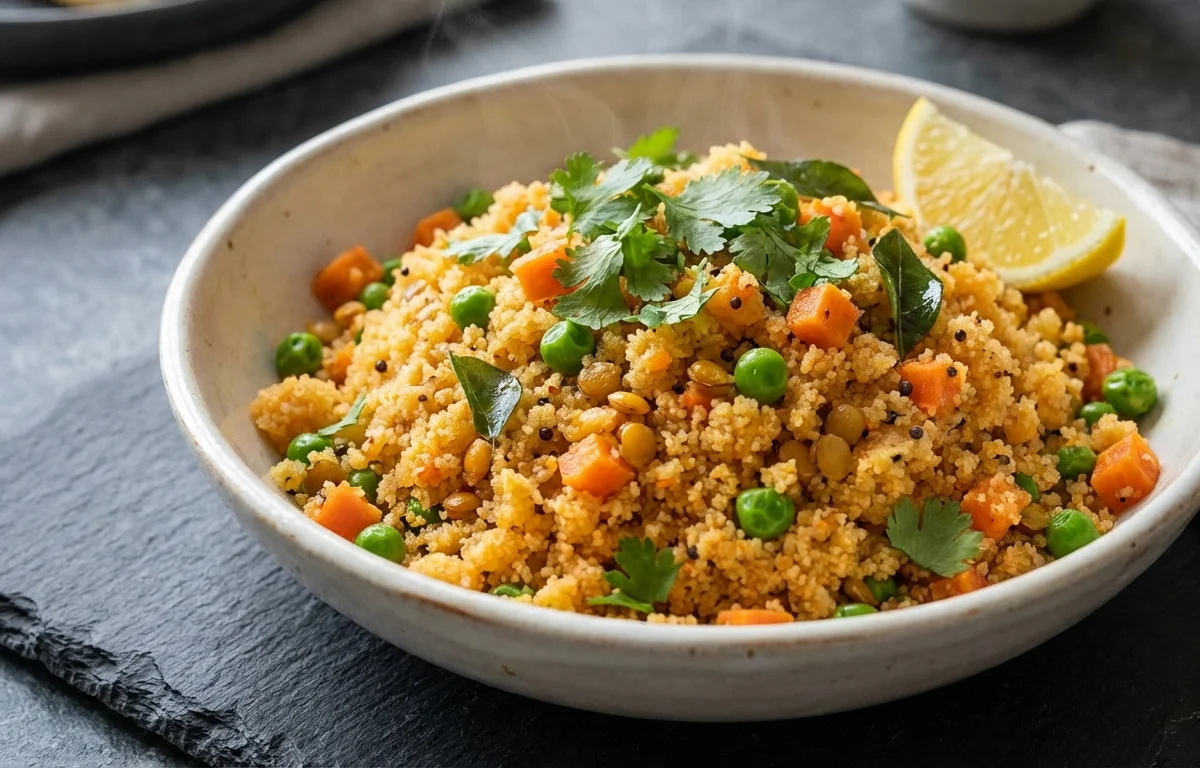
Masala Upma
A savory and spiced-up version of the classic South Indian breakfast! This hearty upma is loaded with colorful vegetables and aromatic spices, making for a quick, wholesome, and delicious meal to start your day.
For 4 servings
11 steps. 20 minutes total.
- 1
Step 1
- a.In a heavy-bottomed pan or kadai, dry roast the rava on low-medium heat for 4-5 minutes. Stir continuously until it becomes fragrant and turns a very light golden color, but does not brown. Transfer to a plate and set aside.
- 2
In the same pan, heat the oil over medium heat
- a.Add the mustard seeds and wait for them to splutter. Then, add the urad dal and chana dal. Sauté for about a minute until they turn golden brown and aromatic.
- 3
Add the curry leaves, slit green chilies, and grated ginger
- a.Sauté for 30 seconds until the curry leaves are crisp and the raw smell of ginger is gone.
- 4
Step 4
- a.Add the finely chopped onion and sauté for 3-4 minutes until they become soft and translucent.
- 5
Step 5
- a.Add the chopped tomato and cook for another 3-4 minutes until it turns soft and mushy.
- 6
Stir in the mixed vegetables, turmeric powder, and sambar powder
- a.Mix well and cook for 2-3 minutes, allowing the vegetables to slightly soften.
- 7
Pour in 2.5 cups of water, add salt and sugar
- a.Stir everything together and bring the mixture to a rolling boil.
- 8
Reduce the heat to low
- a.Slowly pour the roasted rava in a steady stream with one hand, while continuously stirring with the other hand to prevent any lumps from forming.
- 9
Step 9
- a.Keep stirring until the rava absorbs all the water and the mixture thickens considerably. Cover the pan with a lid and let it cook on the lowest possible heat for 4-5 minutes. This steaming step makes the upma fluffy.
- 10
Turn off the heat
- a.Add the ghee (if using), fresh lemon juice, and chopped coriander leaves. Give it a gentle mix. Let it rest, covered, for another 5 minutes before serving.
- 11
Step 11
- a.Fluff the upma with a fork and serve hot, either on its own or with coconut chutney or pickle.
What to keep in mind.
6 tips from the recipe — small details that make a real difference to the final dish.
- 1Roasting the rava is the most crucial step for a non-sticky, fluffy upma. Don't skip it!
- 2The standard water to rava ratio is 1:2.5 for a soft texture. For a drier, more crumbly upma, use a 1:2 ratio.
- 3Using hot water in step 7 helps cook the upma faster and prevents lumps.
- 4Stir continuously while adding the rava to the boiling water. This is key to a smooth, lump-free texture.
- 5For extra crunch and richness, add a tablespoon of roasted cashews or peanuts along with the tempering.
- 6Let the upma rest for 5-10 minutes after cooking. This allows the grains to steam fully and become perfectly fluffy.
Adapt it for your goals.
Tomato Upma
Increase the quantity of tomatoes to 2-3 and skip the other vegetables for a tangy tomato-flavored upma.
Rava KichadiRava Kichadi
Add a pinch of asafoetida (hing) with the tempering and use more ghee for a richer, more fragrant version often served at weddings.
With PeanutsWith Peanuts
Add 2 tablespoons of raw peanuts along with the chana dal and urad dal during tempering for an extra nutty crunch.
Spicier VersionSpicier Version
Add 1/4 teaspoon of red chili powder along with the turmeric and sambar powder for extra heat.
Why this is on our healthy list.
Provides Sustained Energy
Rava (semolina) is a good source of complex carbohydrates, which digest slowly and provide a steady release of energy, keeping you full and active for hours.
Rich in Fiber and Vitamins
The addition of various vegetables like carrots, peas, and beans makes this dish rich in dietary fiber, which aids digestion, and provides essential vitamins and minerals.
Good for Weight Management
Being high in fiber and protein, upma promotes a feeling of fullness, which can help prevent overeating and aid in weight management when consumed in appropriate portions.
Boosts Iron Levels
Semolina is a decent source of iron, an essential mineral for producing red blood cells and preventing anemia. A serving of upma can contribute to your daily iron intake.
Frequently asked questions
One serving of Masala Upma (approximately 1 cup or 225g) contains around 250-300 calories, depending on the amount of oil and ghee used.