
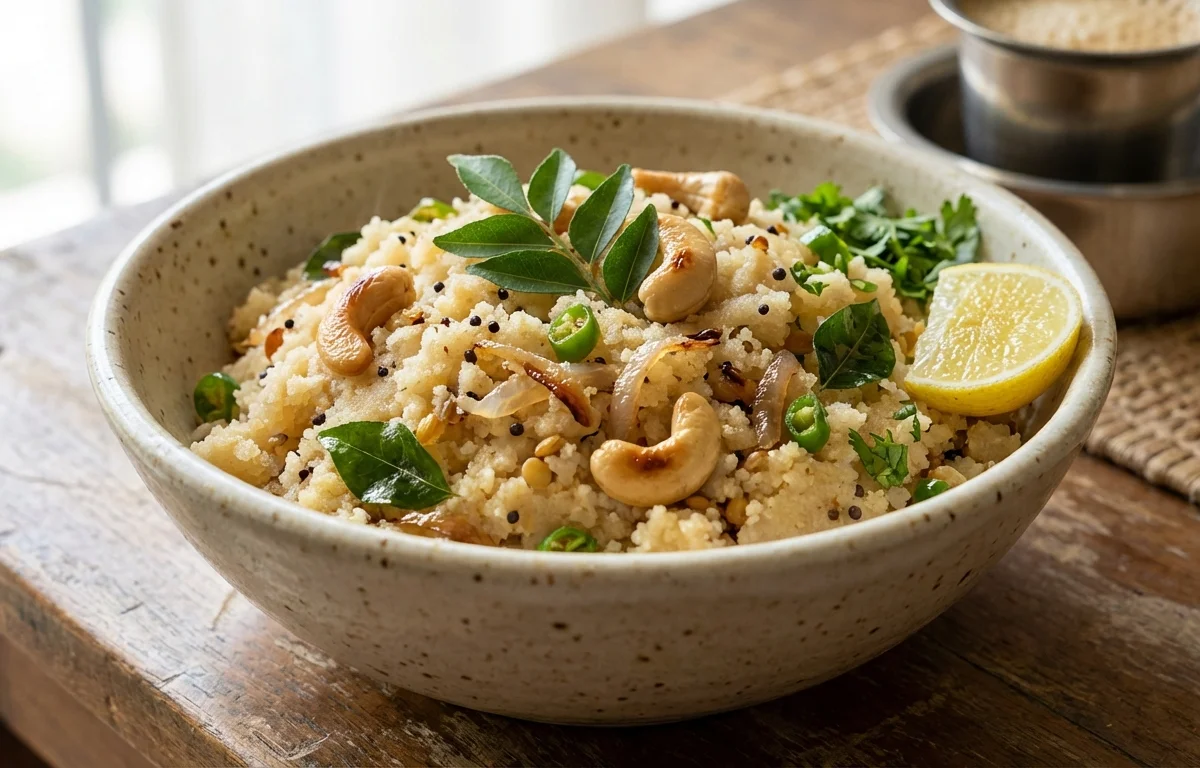
Sooji Upma
A quintessential South Indian breakfast, this savory porridge is made from roasted semolina and simple spices. It's light, fluffy, and comes together in under 25 minutes, perfect for a quick and wholesome meal.
For 4 servings
7 steps. 15 minutes total.
- 1
In a heavy-bottomed pan, dry roast the rava on low-medium heat for 5-7 minutes
- a.Stir continuously until it becomes aromatic and turns a very light golden color, ensuring it doesn't burn. Transfer to a plate and set aside.
- 2
Heat oil in the same pan over medium heat
- a.Add the mustard seeds and let them splutter. Then, add the urad dal, chana dal, and cashew nuts. Sauté for about a minute until the dals turn golden brown and cashews are lightly toasted.
- 3
Add the curry leaves, slit green chilies, and grated ginger
- a.Sauté for 30 seconds until fragrant. Then, add the finely chopped onion and sauté for 2-3 minutes until they become soft and translucent.
- 4
Pour 2.5 cups of water into the pan
- a.Add salt and sugar. Increase the heat and bring the water to a rolling boil.
- 5
Reduce the heat to low
- a.Slowly and carefully pour the roasted rava into the boiling water in a steady stream with one hand, while stirring continuously with the other to prevent any lumps from forming.
- 6
Keep mixing until the rava absorbs all the water and starts to thicken
- a.Cover the pan with a lid and let it cook on the lowest heat for 2-3 minutes. This steaming step makes the upma fluffy.
- 7
Turn off the heat
- a.Add the ghee, lemon juice, and chopped coriander leaves. Gently fluff the upma with a fork to mix everything well. Let it rest for 2 minutes before serving hot.
What to keep in mind.
6 tips from the recipe — small details that make a real difference to the final dish.
- 1Roasting the rava properly is the most crucial step for a non-sticky, fluffy upma.
- 2The 1:2.5 rava to water ratio gives a soft, porridge-like consistency. For a drier, more separate-grained upma, reduce water to 2 cups.
- 3Always add rava to boiling water, not the other way around, and stir constantly to avoid lumps.
- 4Don't skip the final touch of ghee and lemon juice; they add immense flavor and aroma.
- 5For a richer taste, you can perform the entire tempering process in ghee instead of oil.
- 6Using hot water in step 4 helps maintain the temperature and cooks the upma faster and more evenly.
Adapt it for your goals.
Vegetable Upma
Add 1/2 cup of finely chopped mixed vegetables like carrots, peas, and green beans along with the onions and sauté until they are tender before adding water.
Masala UpmaMasala Upma
Add 1/4 teaspoon of turmeric powder and a pinch of garam masala along with the onions for a vibrant color and spicier flavor.
Tomato UpmaTomato Upma
Sauté one finely chopped tomato after the onions turn translucent, until it becomes soft and mushy. This adds a tangy flavor to the upma.
Why this is on our healthy list.
Provides Sustained Energy
Semolina (rava) is a good source of complex carbohydrates, which digest slowly to provide a steady release of energy, keeping you full and active for longer periods.
Rich in Iron
Sooji is often enriched with iron, an essential mineral for producing red blood cells, preventing anemia, and boosting overall energy levels.
Good for Digestion
The fiber content in sooji, especially whole wheat sooji, along with the added ginger and curry leaves, can aid in digestion and promote a healthy gut.
Supports Nervous System
Semolina contains magnesium, phosphorus, and zinc, which are important minerals for maintaining the health and function of the nervous system.
Frequently asked questions
The key to a non-sticky, fluffy upma lies in two things: thoroughly roasting the rava until it's aromatic, and adding the rava to the boiling water slowly while stirring continuously.