
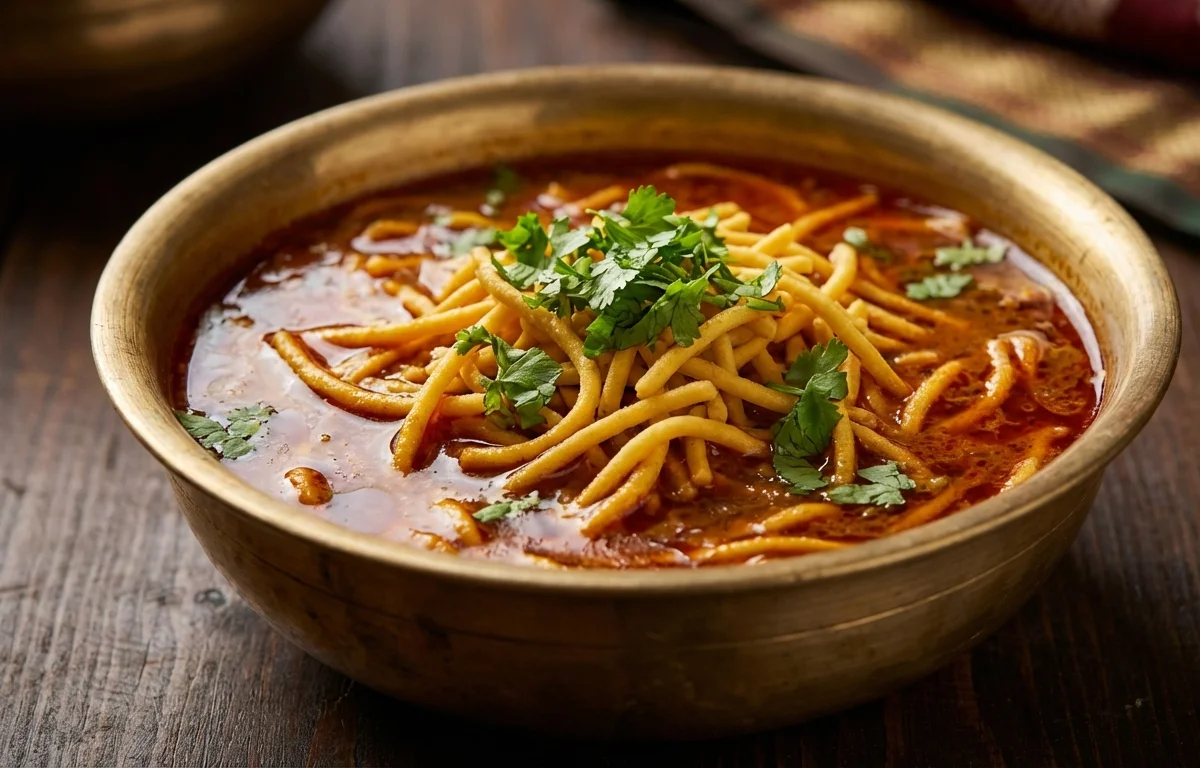
Shev Bhaji
A fiery and savory Maharashtrian curry made with a base of onion, tomato, and coconut, served with a generous topping of crispy chickpea flour noodles (shev). It's a rustic, flavorful dish best enjoyed with bhakri or chapati.
For 4 servings
3 steps. 30 minutes total.
- 1
Step 1
- a.Prepare the Masala Paste
- b.In a pan over low heat, dry roast the grated dried coconut for 2-3 minutes until it turns light brown and aromatic. Remove from the pan and set aside.
- c.In the same pan, heat 1 tbsp of oil. Add the roughly sliced onion and sauté for 5-7 minutes until it turns deep golden brown.
- d.Add the garlic cloves and ginger, and cook for another minute until fragrant.
- e.Allow the onion mixture to cool completely. Transfer the roasted coconut and the cooled onion-ginger-garlic mixture to a grinder. Add a few tablespoons of water and grind to a very smooth paste.
- 2
Step 2
- a.Cook the Bhaji (Gravy)
- b.Heat the remaining 2 tbsp of oil in a deep pan or kadai over medium heat. Add the mustard seeds and let them splutter.
- c.Add the cumin seeds and asafoetida, and sauté for 30 seconds.
- d.Add the finely chopped onion and cook for 3-4 minutes until it becomes soft and translucent.
- e.Add the ground masala paste. Sauté on medium-low heat for 5-6 minutes, stirring frequently, until the paste darkens in color and starts to release oil from the sides.
- f.Stir in the tomato puree and cook for another 4-5 minutes until the raw smell disappears and the mixture thickens.
- g.Add the turmeric powder, red chili powder, and goda masala. Mix well and cook for one minute to toast the spices.
- h.Pour in 3 cups of hot water, add salt and the optional jaggery. Stir everything together well.
- i.Bring the gravy to a rolling boil, then reduce the heat to low, cover the pan, and let it simmer for 10-12 minutes. This allows the flavors to meld and the gravy to develop a rich taste. The gravy should have a medium consistency, not too thick or too thin.
- 3
Step 3
- a.Assemble and Serve
- b.To serve, ladle the hot gravy into individual serving bowls.
- c.Just before serving, top each bowl generously with the thick shev. Do not mix it in.
- d.Garnish with freshly chopped coriander leaves.
- e.Serve immediately with jowar bhakri, chapati, or steamed rice to enjoy the crunchy shev.
What to keep in mind.
6 tips from the recipe — small details that make a real difference to the final dish.
- 1For the best flavor, use thick and spicy shev (often called 'Tikhat Shev' or 'Gathiya'). Thin shev will become soggy instantly.
- 2The key to a flavorful gravy is roasting the onion and coconut until they are well-browned. Do not rush this step.
- 3Always add the shev just before serving. If added earlier, it will absorb the gravy and lose its crunchiness.
- 4Using hot water for the gravy helps maintain the temperature and enhances the flavor and color of the final dish.
- 5Goda masala is essential for the authentic Maharashtrian taste. If unavailable, garam masala can be a substitute, but the flavor profile will differ.
- 6The gravy tends to thicken as it cools. When reheating, you may need to add a little hot water to adjust the consistency.
Adapt it for your goals.
With Vegetables
Add boiled and cubed potatoes or green peas to the gravy while it simmers for a more wholesome meal.
Creamier VersionCreamier Version
For a richer, restaurant-style gravy, add a paste of 8-10 soaked cashews along with the onion-coconut paste.
Spicier KickSpicier Kick
Add 1-2 slit green chilies along with the cumin seeds during the tempering process for extra heat.
Jain VersionJain Version
Omit the onion, garlic, and ginger. Use a base of tomato puree and add a pinch of asafoetida for flavor.
Why this is on our healthy list.
Source of Plant-Based Protein
The 'shev' is made from chickpea flour (besan), which provides a good amount of plant-based protein, essential for muscle repair and cell growth.
Rich in Antioxidants
The base of the curry includes onions, tomatoes, ginger, and garlic, along with spices like turmeric, which are all rich in antioxidants that help protect the body from cellular damage.
Aids Digestion
Spices used in the tempering, such as cumin seeds and asafoetida (hing), are traditionally known in Indian cuisine to stimulate digestive enzymes and prevent indigestion.
Frequently asked questions
It is crucial to use thick, spicy shev, often sold as 'Tikhat Shev' or 'Gathiya'. Thin varieties like nylon shev are not suitable as they will dissolve into the gravy immediately and become mushy.