
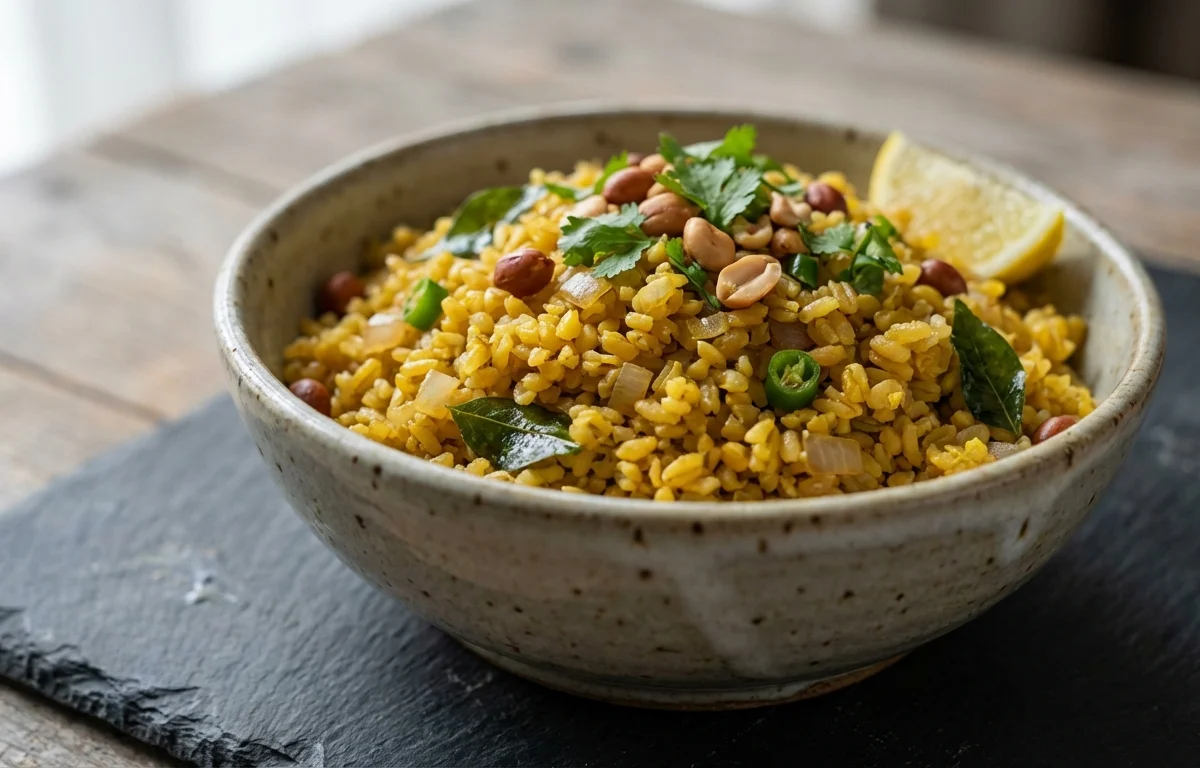
Sanza
A wholesome and savory Maharashtrian breakfast porridge made from roasted coarse broken wheat (dalia). Lightly spiced and packed with flavor from a classic tempering of mustard seeds, curry leaves, and green chilies, it's a perfect start to the day.
For 4 servings
8 steps. 20 minutes total.
- 1
In a heavy-bottomed pan, dry roast the dalia on low-medium heat for 5-7 minutes
- a.Stir frequently until it becomes fragrant and turns a light golden brown. This step is crucial for a nutty flavor and non-sticky texture. Transfer to a plate and set aside.
- 2
Heat oil in the same pan over medium heat
- a.Once hot, add the mustard seeds and let them splutter. Immediately add the cumin seeds, asafoetida, and curry leaves. Sauté for 30 seconds until aromatic.
- 3
Add the finely chopped onion, slit green chilies, and raw peanuts to the pan
- a.Sauté for 3-4 minutes until the onions soften and become translucent and the peanuts are lightly roasted.
- 4
Pour in the hot water, then add the turmeric powder and salt
- a.Stir well and bring the mixture to a rolling boil.
- 5
Reduce the heat to low
- a.Gradually pour the roasted dalia into the boiling water while stirring continuously with your other hand to prevent any lumps from forming.
- 6
Step 6
- a.Cover the pan with a tight-fitting lid and cook on low heat for 8-10 minutes, or until all the water is absorbed and the dalia is cooked through and tender.
- 7
Turn off the heat and let the Sanza rest, covered, for 5 minutes
- a.This allows the grains to steam further and become perfectly fluffy. After resting, gently fluff the Sanza with a fork.
- 8
Stir in the fresh lemon juice and garnish with finely chopped coriander leaves
- a.Serve hot.
What to keep in mind.
6 tips from the recipe — small details that make a real difference to the final dish.
- 1Roasting the dalia is key to a fluffy, non-sticky texture and a deep, nutty flavor.
- 2Use hot water to speed up the cooking process and ensure the dalia cooks evenly.
- 3Stir continuously while adding the dalia to the boiling water to avoid lumps.
- 4Let the Sanza rest for 5 minutes after cooking. This allows the grains to absorb residual steam and become perfectly fluffy.
- 5For a richer taste and aroma, substitute vegetable oil with ghee.
- 6Adjust the amount of green chilies to suit your preferred spice level.
Adapt it for your goals.
Add Vegetables
Make it more nutritious by adding finely chopped vegetables like carrots, peas, and green beans along with the onions.
Sweet Version (God Sanza)Sweet Version (God Sanza)
For a sweet variation, omit the onions, chilies, and savory spices. Cook the roasted dalia in water or milk, and sweeten with jaggery or sugar. Flavor with cardamom powder and garnish with nuts.
High ProteinHigh Protein
Add a handful of moong dal (split yellow lentils) while roasting the dalia to increase the protein content.
Why this is on our healthy list.
Rich in Dietary Fiber
Broken wheat is an excellent source of dietary fiber, which aids digestion, promotes gut health, and helps in maintaining a healthy weight by keeping you full for longer.
Sustained Energy Release
As a complex carbohydrate with a low glycemic index, dalia provides a steady release of energy, preventing sudden spikes in blood sugar levels. This makes it an ideal breakfast for sustained energy throughout the morning.
Good Source of Plant-Based Protein
This dish provides a good amount of plant-based protein from both the broken wheat and the peanuts, which is essential for muscle repair and overall body function.
Frequently asked questions
Yes, Sanza is a very healthy dish. It is made from broken wheat (dalia), which is a whole grain rich in dietary fiber, protein, and essential minerals. It's a low-glycemic index food, making it excellent for managing blood sugar levels and promoting satiety.