
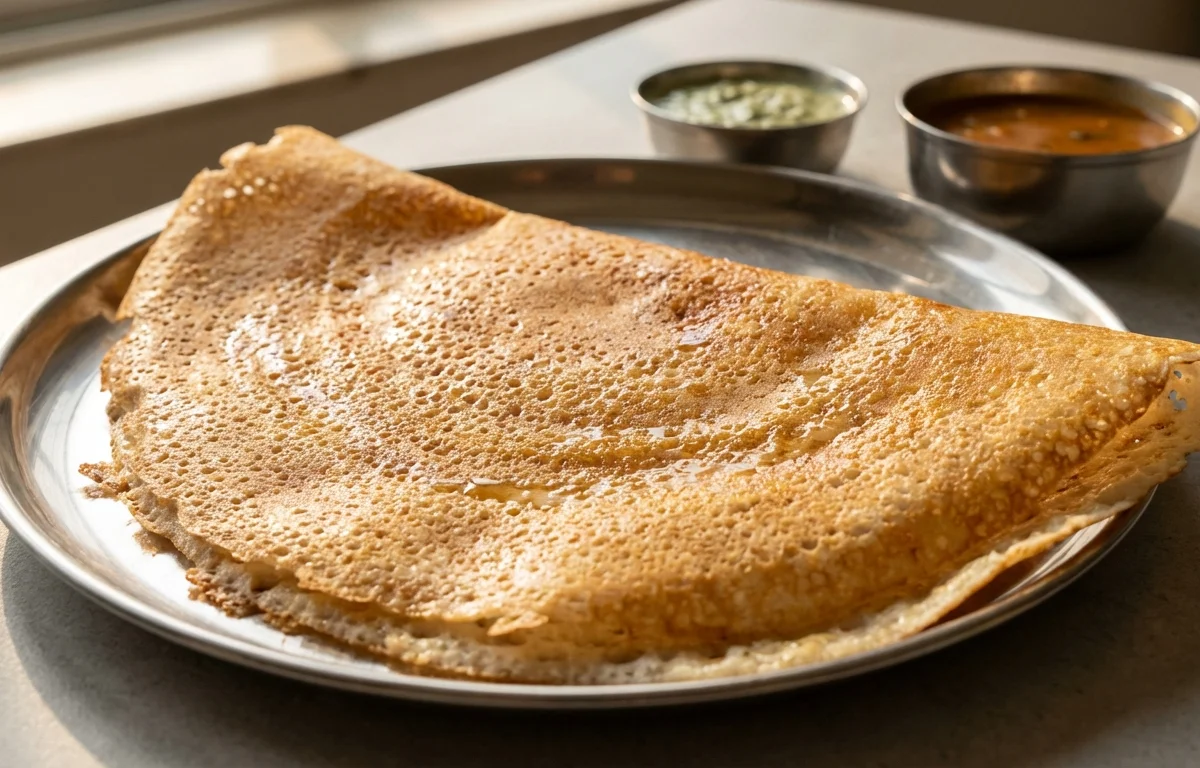
Sada Dosa
Plain crispy dosa from fermented batter — South Indian classic.
For 4 servings
Soak the rice and lentils separately
- Rinse the idli rice and urad dal thoroughly under cold water
- Place rice in one bowl and urad dal with fenugreek seeds in another
- Cover both with ample water and soak for 6 hours
Grind and ferment the batter
Grind the soaked rice and dal separately to a smooth, fine consistency using a little soaking water. Combine both pastes in a large bowl, add salt, and mix thoroughly with your hands. Cover and let the batter ferment in a warm, dark place for 8 hours until it rises and becomes airy.
TIPMixing the batter with your hands helps introduce natural yeast for better fermentation.Spread and cook the dosa until crisp
- Heat a flat non-stick tava or cast iron griddle over medium heat
- Pour a ladle of batter in the center and spread outward in a thin spiral
- Drizzle oil around the edges and cook for 3 minutes until golden and crisp
TIPWipe the pan with a damp cloth between each dosa to regulate the surface temperature.
What to keep in mind.
5 tips from the recipe — small details that make a real difference to the final dish.
- 1The temperature of the tawa is key. Too hot, and the batter will stick and lump. Too cool, and the dosa won't get crispy. Regulate the heat between dosas.
- 2For extra crispy dosas, you can add 1-2 tablespoons of fine rava (semolina) or rice flour to the batter just before making them.
- 3Do not use a fresh batch of batter straight from the refrigerator. Always allow the batter to come to room temperature for at least 30 minutes before making dosas.
- 4A well-seasoned cast-iron tawa yields the best-tasting and crispiest dosas.
- 5If your batter over-ferments and becomes too sour, you can add a little rice flour or a pinch of sugar to balance the taste.
Adapt it for your goals.
Masala Dosa
Place a spoonful of savory spiced potato filling (aloo masala) in the center of the dosa before folding it.
Ghee Roast DosaGhee Roast Dosa
Use ghee instead of oil for cooking and let the dosa roast on low-medium heat for a longer time until it becomes deep golden-brown and exceptionally crispy.
Onion DosaOnion Dosa
Sprinkle finely chopped raw onions over the dosa immediately after spreading the batter on the tawa. Gently press them in with the spatula.
Podi DosaPodi Dosa
After drizzling with oil, sprinkle a generous amount of idli podi (spiced lentil powder) over the surface of the cooking dosa.
Why this is on our healthy list.
Rich in Probiotics
The fermentation process cultivates beneficial bacteria, making dosa a natural probiotic that promotes a healthy gut microbiome and improves overall digestion.
Good Source of Protein
The combination of urad dal (lentils) and rice provides a complete protein profile containing all essential amino acids, making it an excellent plant-based protein source for muscle repair and growth.
Easily Digestible
Fermentation breaks down the complex carbohydrates and proteins in the rice and lentils into simpler forms, making them easier for the body to digest and absorb vital nutrients.
Naturally Gluten-Free
Made entirely from rice and lentils, dosa is inherently gluten-free, making it a safe and delicious option for individuals with celiac disease or gluten sensitivity.
Frequently asked questions
A single homemade Sada Dosa contains approximately 130-150 calories, depending on its size and the amount of oil used. A typical serving of two dosas would be around 260-300 calories.