
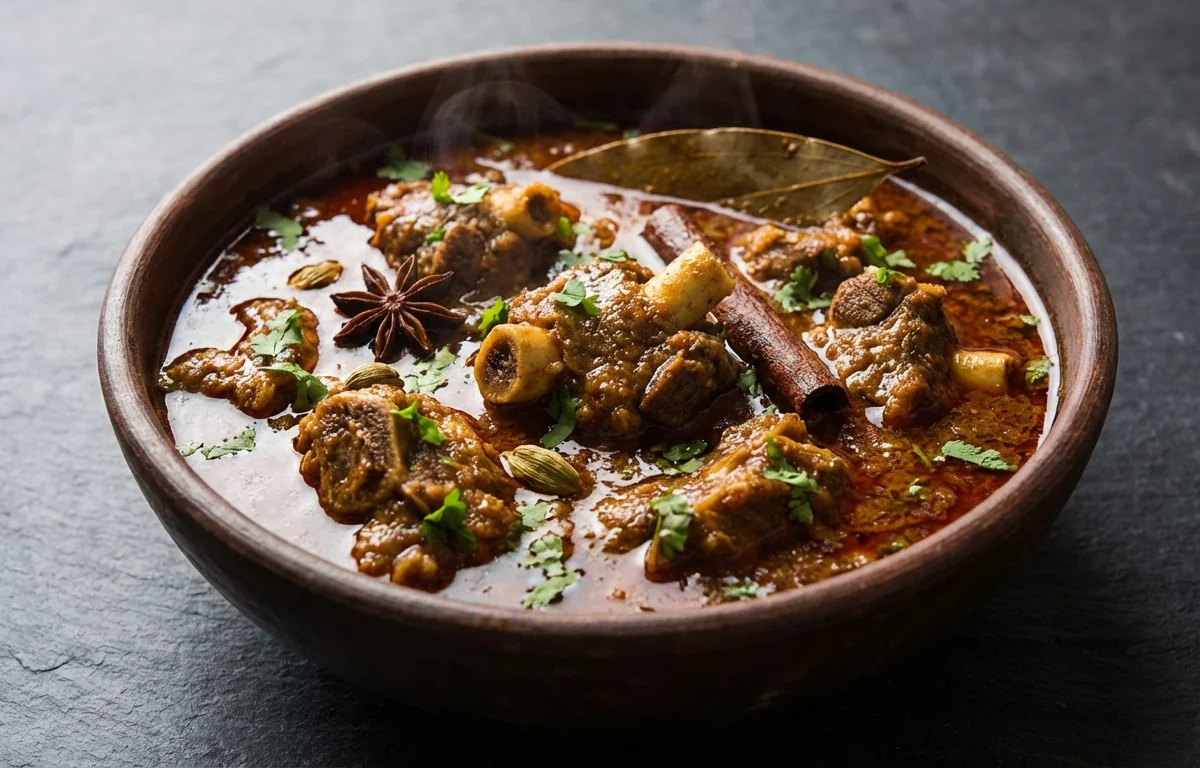
Nagpuri Saoji Mutton
An intensely spicy and aromatic mutton curry from Nagpur, famous for its unique blend of dark, roasted spices. This fiery dish is a true feast for those who love bold flavors and a rich, oily gravy.
For 4 servings
5 steps. 75 minutes total.
- 1
Step 1
- a.Prepare the Dry Saoji Masala
- b.Heat a heavy-bottomed pan over low heat. Add coriander seeds, cumin seeds, poppy seeds, peppercorns, cloves, cinnamon, both cardamoms, bay leaves, star anise, mace, and dagad phool.
- c.Dry roast for 3-4 minutes until the spices become fragrant and slightly darker. Be careful not to burn them.
- d.Add the dry red chillies and roast for another minute.
- e.Transfer the roasted spices to a plate and let them cool completely.
- f.Once cool, grind them into a fine powder in a spice grinder. This is your Saoji masala. Set aside.
- 2
Step 2
- a.Prepare the Wet Masala Paste
- b.Thinly slice 1 onion. In the same pan, heat 1 tbsp of oil.
- c.Add the sliced onion and fry on medium heat until it turns deep golden brown and crispy.
- d.In the last minute of frying, add the desiccated coconut and toast until it's light brown and aromatic. Remove from heat.
- e.In a grinder jar, combine the fried onion-coconut mixture with 1 tbsp of ginger-garlic paste. Grind to a smooth paste, adding a splash of water if needed. Set aside.
- 3
Step 3
- a.Pressure Cook the Mutton
- b.In a pressure cooker, combine the mutton pieces, 0.5 tsp salt, and 0.25 tsp turmeric powder.
- c.Add 1 cup of water and mix well.
- d.Secure the lid and pressure cook on high heat for 1 whistle. Then, reduce the heat to low and cook for 15-20 minutes, or until the mutton is 80% tender.
- e.Allow the pressure to release naturally. Strain the mutton and reserve the flavourful stock.
- 4
Step 4
- a.Build the Curry Base
- b.Finely chop the remaining 2 onions.
- c.Heat the remaining oil in a large, heavy-bottomed pot or kadai over medium heat.
- d.Add the chopped onions and sauté for 8-10 minutes until they are soft and golden brown.
- e.Add the remaining 1 tbsp of ginger-garlic paste and cook for 1 minute until the raw aroma disappears.
- f.Stir in the wet masala paste (from Step 2) and cook for 5-7 minutes, stirring frequently, until the paste darkens and starts to release oil from the sides.
- g.Add the chopped tomatoes and cook for 5-6 minutes until they turn soft and mushy, integrating into the masala.
- 5
Step 5
- a.Simmer and Finish the Curry
- b.Reduce the heat to low. Add the prepared dry Saoji masala, remaining turmeric powder, Kashmiri red chilli powder, and the remaining salt.
- c.Sauté the masalas for 2-3 minutes until they are fragrant. If the mixture becomes too dry, add a splash of the reserved mutton stock.
- d.Add the cooked mutton pieces and mix well to coat them thoroughly with the masala. Sauté for 2 minutes.
- e.Pour in the reserved mutton stock and 2 cups of hot water. Stir everything together.
- f.Bring the curry to a boil, then reduce the heat to low. Cover the pot and let it simmer for 20-25 minutes, or until the mutton is fully tender and the gravy has thickened.
- g.A characteristic layer of oil, known as 'tari', will float on top. Do not stir it in.
- h.Garnish with fresh coriander leaves and let the curry rest for 10 minutes before serving.
What to keep in mind.
6 tips from the recipe — small details that make a real difference to the final dish.
- 1For the most authentic flavor, do not skip dagad phool (stone flower). It provides a unique smoky essence.
- 2Roasting spices on low heat is crucial to release their essential oils without burning them, which would make the curry bitter.
- 3The deep brown color of the curry comes from properly browning the onions and roasting the spices. Do not rush these steps.
- 4Saoji mutton is traditionally very oily. You can skim off some of the excess oil ('tari') from the top before serving if you prefer a lighter version.
- 5For a richer flavor, marinate the mutton with ginger-garlic paste, salt, and turmeric for at least 1 hour before pressure cooking.
- 6Serve this fiery curry with neutral-tasting breads like Jowar Bhakri, Chapatis, or plain steamed rice to balance the intense spice.
Adapt it for your goals.
Protein Swap
Replace mutton with 500g of bone-in chicken. Skip the pressure cooking step and cook the chicken directly in the masala until tender, about 20-25 minutes.
Vegetarian VersionVegetarian Version
Use a mix of sturdy vegetables like potatoes, cauliflower, and paneer. Par-boil the vegetables and add them at the final simmering stage.
Milder FlavorMilder Flavor
To reduce the heat, use half the quantity of dry red chillies and black peppercorns. Use only Kashmiri or Byadgi chillies for color without excessive spice.
Why this is on our healthy list.
Rich in Protein
Mutton is an excellent source of high-quality protein, which is essential for building and repairing tissues, muscle growth, and overall body function.
Source of Iron
As a red meat, mutton is a significant source of heme iron. This type of iron is easily absorbed by the body and is crucial for forming red blood cells, preventing anemia, and maintaining energy levels.
Aromatic Spice Power
The complex blend of spices like turmeric, cloves, and black pepper contains antioxidants and compounds with anti-inflammatory properties that can support overall health.
Frequently asked questions
Dagad phool, or stone flower, is a type of lichen that grows on rocks and trees. It has a unique earthy, smoky flavor that is the hallmark of Saoji and other Maharashtrian masalas. While you can make the dish without it, you will miss the authentic signature taste.