
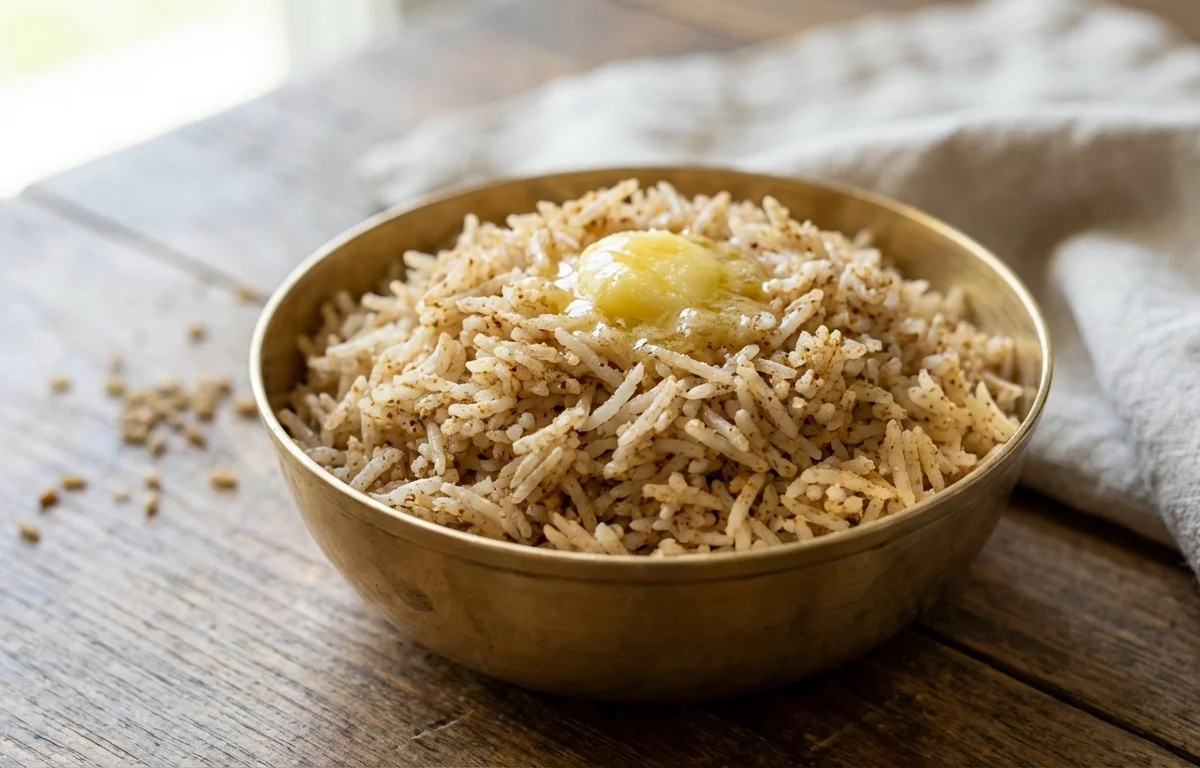
Metkut Bhaat
A warm, comforting bowl of steamed rice mixed with fragrant, spiced lentil powder (Metkut) and a generous spoonful of ghee. This classic Maharashtrian dish is simple, wholesome, and perfect for a light, satisfying meal, often considered the ultimate comfort food.
For 4 servings
4 steps. 15 minutes total.
- 1
Step 1
- a.Prepare the Rice
- b.Measure 1.5 cups of Ambemohar rice into a bowl.
- c.Rinse the rice under cool running water 2-3 times, gently swirling with your fingers, until the water runs mostly clear.
- d.Drain the water completely. Soaking is optional for this rice but can be done for 15 minutes for fluffier grains.
- 2
Step 2
- a.Cook the Rice
- b.In a medium pot with a tight-fitting lid, combine the drained rice, 3 cups of fresh water, and 0.75 tsp of salt.
- c.Bring the water to a rolling boil over high heat.
- d.Once boiling, immediately reduce the heat to the lowest possible setting. Cover the pot and let it simmer for 12-15 minutes, or until all the water has been absorbed.
- e.Do not lift the lid while it simmers. After 15 minutes, turn off the heat and let the rice rest, still covered, for at least 5 minutes. This allows the grains to steam and firm up.
- 3
Step 3
- a.Assemble the Metkut Bhaat
- b.After the rice has rested, open the lid and gently fluff the grains with a fork to separate them.
- c.While the rice is still steaming hot, divide it into four serving bowls.
- d.Top each serving with 2 tablespoons of Metkut powder and 1 tablespoon of ghee.
- e.Mix gently with a fork until the ghee melts and the Metkut powder is evenly distributed throughout the rice.
- 4
Step 4
- a.Serve Immediately
- b.Serve the Metkut Bhaat immediately while it's warm and aromatic.
- c.It is delicious on its own or can be paired with yogurt (dahi), roasted papad, or a simple pickle (lonche).
What to keep in mind.
5 tips from the recipe — small details that make a real difference to the final dish.
- 1For the most authentic flavor, use Ambemohar or another short-grain, fragrant rice.
- 2Always add the ghee and Metkut to the rice while it is hot. This ensures the ghee melts properly and coats every grain, releasing the full aroma of the Metkut.
- 3The ratio of Metkut to ghee can be adjusted to your personal preference. Some prefer it more spiced, others more rich with ghee.
- 4If using a pressure cooker, use a 1:2 rice-to-water ratio and cook for 2-3 whistles on medium heat. Let the pressure release naturally.
- 5Store leftover Metkut powder in an airtight container in a cool, dry place to maintain its freshness and aroma.
Adapt it for your goals.
Add a Tempering (Tadka)
For extra flavor, heat 1 tsp of ghee in a small pan. Add 1/2 tsp mustard seeds and a pinch of asafoetida (hing). Once the seeds pop, pour this tempering over the mixed Metkut Bhaat.
Use Different GrainsUse Different Grains
This recipe works well with other grains like brown rice, quinoa, or millets. Adjust the water ratio and cooking time accordingly.
Add VegetablesAdd Vegetables
For a more complete meal, mix in some steamed vegetables like peas, finely chopped carrots, or green beans with the rice.
Why this is on our healthy list.
Easily Digestible
The combination of steamed rice and mildly spiced lentil powder is very light on the digestive system, making it an ideal meal for children, the elderly, or during recovery from illness.
Balanced Nutrition
This dish offers a good mix of macronutrients: carbohydrates from rice for sustained energy, protein from the lentils in Metkut for muscle repair, and healthy fats from ghee for brain function.
Provides Comfort and Warmth
As a classic comfort food, a warm bowl of Metkut Bhaat can be psychologically soothing. The simple flavors and aromas are known to evoke a sense of home and well-being.
Good Source of B Vitamins
Rice is a natural source of B vitamins, including thiamine and niacin, which are essential for energy metabolism and nervous system function.
Frequently asked questions
One serving of Metkut Bhaat (approximately 1 cup or 255g) contains around 350-400 calories, primarily from the rice and ghee. The exact count can vary based on the type of rice and the amount of ghee used.