
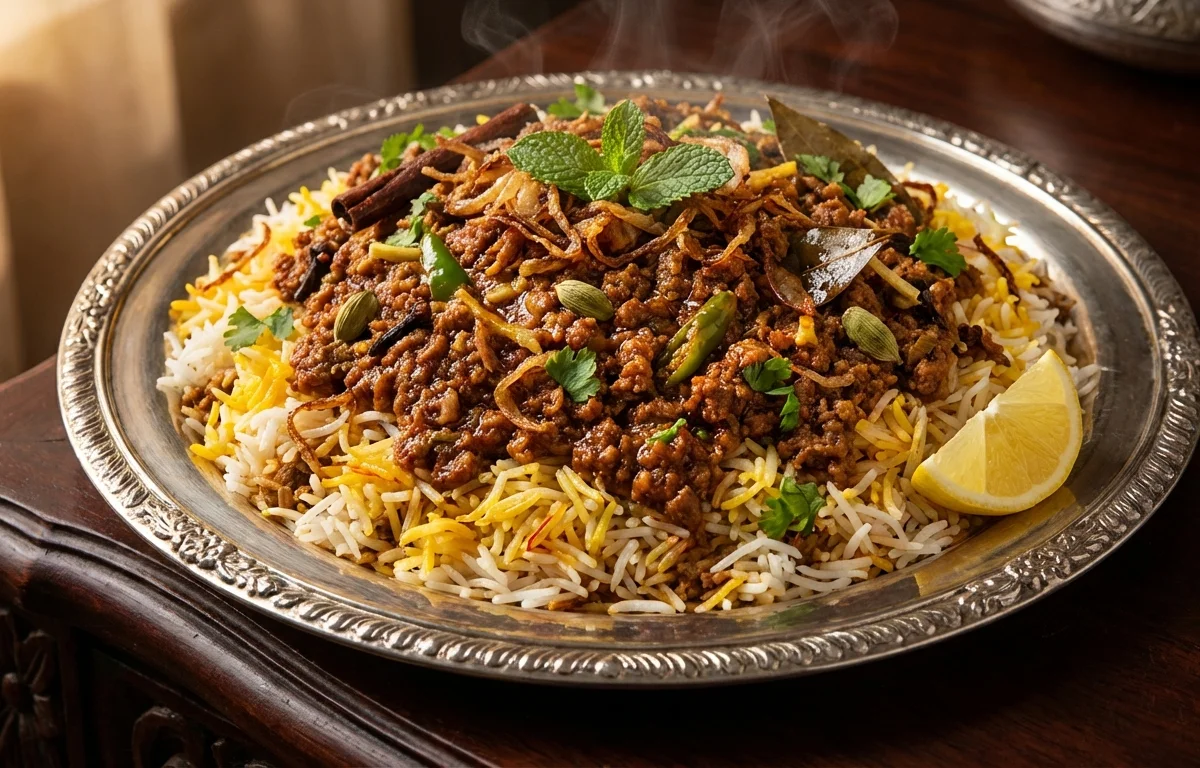
Keema Biryani
Aromatic basmati rice layered with spiced minced lamb, fragrant with saffron and mint. This classic Mughlai dish is a one-pot wonder, perfect for a festive meal or a special weekend dinner.
For 4 servings
Prepare Rice, Keema, and Saffron Milk
- Gently wash the basmati rice in cold water until the water runs clear. Soak the rice in enough water to cover for 30 minutes. Drain completely before cooking.
- In a mixing bowl, combine the mutton keema, curd, ginger garlic paste, red chili powder, turmeric powder, coriander powder, 1 tbsp of biryani masala, and 1.5 tsp of salt. Mix thoroughly and let it marinate for at least 30 minutes.
- In a small bowl, soak the saffron strands in 2 tbsp of warm milk. Set aside.
Fry Onions (Birista)
- Heat 1 cup of oil in a heavy-bottomed pan or kadai over medium-high heat. Add the thinly sliced onions from 1 onion and fry, stirring occasionally, for 12-15 minutes until they are deep golden brown and crisp.
- Be careful not to burn them as they will turn bitter. Once done, remove with a slotted spoon and spread on a paper towel to drain excess oil. This is your birista. Set aside.
Par-boil the Rice
- In a large pot, bring 8-10 cups of water to a rolling boil. Add the whole spices (bay leaves, cinnamon stick, cloves, green cardamoms) and 2 tsp of salt.
- Add the soaked and drained rice to the boiling water. Cook for 5-7 minutes until the rice is 70% cooked. The grains should be firm and have a slight bite to them.
- Immediately drain the rice in a colander to stop the cooking process. Gently spread it on a plate to cool slightly and prevent clumping.
Cook the Keema Masala
- In a heavy-bottomed pot (the one you'll use for dum), heat 3 tbsp of ghee over medium heat. Add the remaining 2 sliced onions and sauté for 8-10 minutes until they turn golden brown.
- Add the marinated keema to the pot. Increase the heat to high and cook for 7-8 minutes, stirring and breaking up lumps, until the keema is browned and the moisture has evaporated.
- Add the chopped tomatoes and slit green chilies. Cook for 5-6 minutes until the tomatoes soften and turn mushy.
- Reduce the heat to medium, add the remaining 1 tbsp of biryani masala, and half of the chopped mint and coriander leaves. Sauté for 2-3 minutes until the oil begins to separate from the masala.
Layer the Biryani
- Flatten the cooked keema masala at the bottom of the pot to form an even layer.
- Gently spread the par-cooked basmati rice evenly over the keema layer. Do not press down.
- Sprinkle the fried onions (birista), the remaining mint and coriander leaves, and the lemon juice over the rice.
- Drizzle the saffron-infused milk and the remaining 1 tbsp of ghee all over the top.
Dum Cook the Biryani
- Cover the pot with a tight-fitting lid. To seal it properly, you can place a clean kitchen towel under the lid or seal the edges with aluminum foil.
- Place the pot on a tawa (flat griddle) over the lowest possible heat. Cook on 'dum' for 20 minutes. This allows the rice to steam perfectly and absorb all the aromas.
- After 20 minutes, turn off the heat and let the biryani rest, unopened, for another 10 minutes. This step is crucial for the flavors to meld.
Serve
- Open the lid and enjoy the aroma. Gently fluff the biryani from the sides of the pot using a fork or a spatula to mix the layers without breaking the rice grains.
- Serve hot with a side of cooling raita or mirchi ka salan.
What to keep in mind.
6 tips from the recipe — small details that make a real difference to the final dish.
- 1Use aged, long-grain basmati rice for the best non-sticky texture and fragrance.
- 2Do not overcook the rice during the par-boiling stage; it should only be 70% cooked.
- 3Frying the onions to a perfect crisp, golden brown (birista) is essential for the authentic biryani flavor.
- 4Using a heavy-bottomed pot and a tawa underneath prevents the biryani from burning at the bottom during dum cooking.
- 5Letting the biryani rest for 10 minutes after cooking is crucial for the flavors to settle and the rice grains to firm up.
- 6For a richer flavor, you can use the oil left over from frying the onions to cook the keema masala.
Adapt it for your goals.
Chicken Keema Biryani
Replace mutton keema with chicken keema. Reduce the cooking time for the keema masala as chicken cooks faster.
Vegetarian Soya BiryaniVegetarian Soya Biryani
Substitute mutton keema with soaked and squeezed soya granules for a vegetarian version. Add some chopped vegetables like carrots and peas for extra texture.
Add PotatoesAdd Potatoes
Add a few peeled and quartered potatoes to the keema masala. Fry them lightly before adding to the masala to ensure they cook through.
Spicier VersionSpicier Version
Increase the amount of red chili powder and green chilies, or add a teaspoon of black pepper powder to the keema marinade for extra heat.
Why this is on our healthy list.
Excellent Source of Protein
Mutton keema is rich in high-quality protein, which is essential for building and repairing tissues, muscle growth, and overall body function.
Rich in Iron
Mutton is a great source of heme iron, which is more easily absorbed by the body than non-heme iron from plant sources. Iron is crucial for preventing anemia and maintaining energy levels.
Provides Sustained Energy
The basmati rice provides complex carbohydrates that are digested slowly, offering a steady release of energy to keep you active throughout the day.
Aids Digestion
The spices used in biryani, such as ginger, turmeric, cloves, and mint, have traditionally been used to aid digestion, reduce bloating, and soothe the stomach.
Frequently asked questions
One serving of Keema Biryani (around 400g) contains approximately 650-750 calories, depending on the fat content of the mutton and the amount of ghee and oil used.