
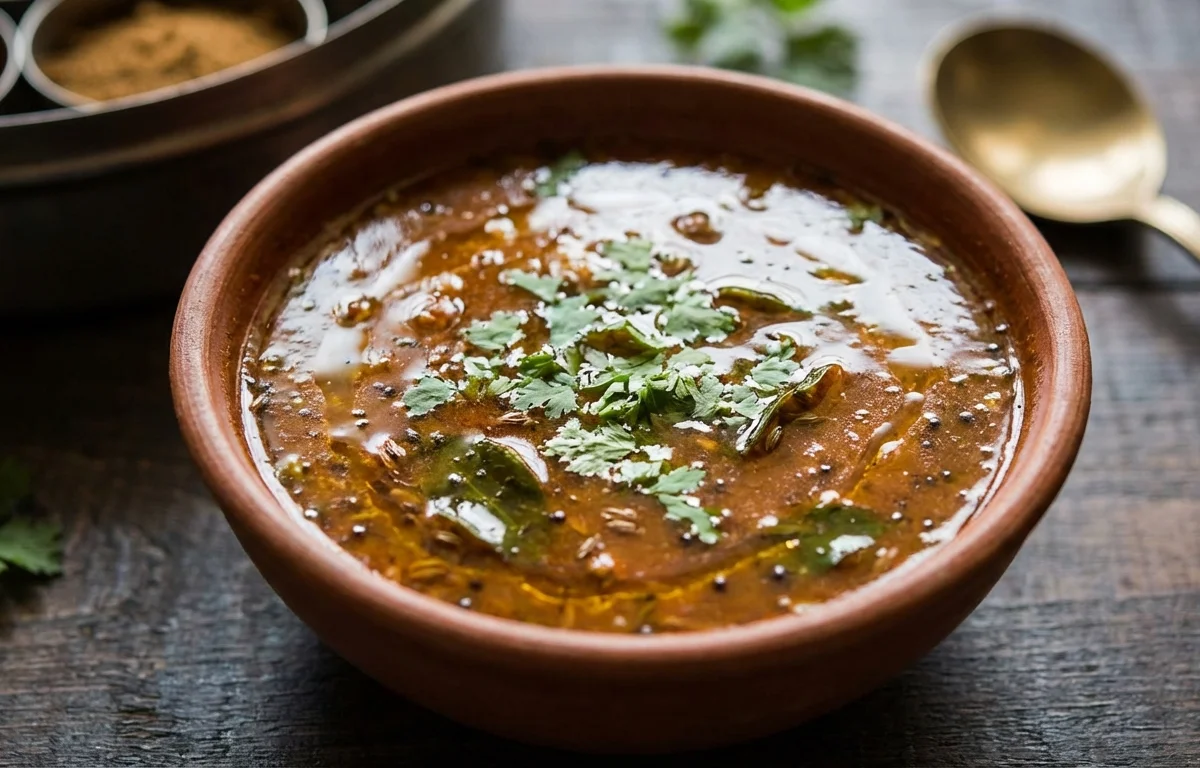
Katachi Amti
A tangy, sweet, and spicy thin curry from Maharashtra, made with the strained water from cooked chana dal. This flavorful amti is the perfect companion to Puran Poli or steamed rice.
For 4 servings
5 steps. 25 minutes total.
- 1
Step 1
- a.Cook the Dal and Extract the 'Kat'
- b.Wash the chana dal thoroughly. In a pressure cooker, combine the dal, 4 cups of water, and 1/4 tsp of turmeric powder.
- c.Pressure cook on medium heat for 4-5 whistles, or until the dal is very soft and mushy. This should take about 15 minutes.
- d.Let the pressure release naturally. Open the cooker and carefully strain the entire contents through a fine-mesh sieve into a large bowl.
- e.The strained liquid is the 'kat' – the base for our amti. The cooked dal left in the sieve is used to make Puran for Puran Poli. Set both aside.
- 2
Step 2
- a.Prepare the Coconut Spice Paste
- b.In a small grinder or blender, add the grated fresh coconut, chopped ginger, garlic cloves, and green chilies.
- c.Add 2 tablespoons of water and grind to a very smooth paste. Set aside.
- 3
Step 3
- a.Temper and Sauté
- b.Heat ghee in a deep pan or kadai over medium heat. Once hot, add the mustard seeds and let them splutter.
- c.Add the cumin seeds, hing, and curry leaves. Sauté for about 30 seconds until the curry leaves are crisp and aromatic.
- d.Add the ground coconut paste to the pan. Sauté on low-medium heat for 3-4 minutes, stirring continuously, until the paste is fragrant and the raw smell disappears.
- e.Lower the heat and add the goda masala, red chili powder, and the remaining 1/4 tsp of turmeric powder. Stir for 20-30 seconds, being careful not to burn the spices.
- 4
Step 4
- a.Simmer the Amti
- b.Immediately pour the reserved dal water (kat) into the pan. Whisk well to combine everything without lumps.
- c.Add the tamarind pulp, grated jaggery, and salt. Stir until the jaggery is fully dissolved.
- d.Bring the mixture to a rolling boil, then reduce the heat to low and let it simmer gently for 8-10 minutes. This allows all the flavors to meld together beautifully.
- e.The amti should have a thin, soupy consistency. Adjust salt, jaggery, or tamarind if needed to achieve the perfect balance of sweet, sour, and spicy.
- 5
Step 5
- a.Garnish and Serve
- b.Turn off the heat and garnish generously with finely chopped coriander leaves.
- c.Serve the hot Katachi Amti with traditional Puran Poli or steamed basmati rice.
What to keep in mind.
5 tips from the recipe — small details that make a real difference to the final dish.
- 1For the most authentic flavor, do not skip the Goda Masala. It has a unique sweet and pungent aroma that defines Maharashtrian cuisine.
- 2The key to a perfect Katachi Amti is the balance of 'tikat-ambat-god' (spicy-sour-sweet). Taste and adjust the chili, tamarind, and jaggery to your liking.
- 3Sauté the coconut paste on low heat to prevent it from sticking or burning, which can impart a bitter taste to the amti.
- 4Katachi Amti is traditionally thin. If you prefer a slightly thicker consistency, you can mix 1 teaspoon of besan (gram flour) in 2 tablespoons of water and add it to the amti while it simmers.
- 5The flavor of the amti deepens as it rests. It often tastes even better the next day.
Adapt it for your goals.
Vegan Version
To make this recipe vegan, simply substitute the ghee with a neutral vegetable oil like sunflower or coconut oil.
With VegetablesWith Vegetables
For added nutrition, you can add a handful of drumstick pieces (moringa) or chopped spinach to the amti while it simmers.
Different Lentil WaterDifferent Lentil Water
While traditionally made with chana dal water, you can also make a similar amti using the strained water from cooked toor dal (pigeon peas) or masoor dal (red lentils).
Why this is on our healthy list.
Rich in Plant-Based Protein
The 'kat' or lentil stock is a good source of protein leached from the chana dal, making this dish beneficial for muscle repair and overall body function.
Aids Digestion
The tempering includes spices like cumin, asafoetida (hing), and ginger, which are well-known in Ayurveda for their digestive properties, helping to prevent bloating and indigestion.
Anti-Inflammatory Properties
Ingredients like turmeric (containing curcumin), ginger, and garlic possess potent anti-inflammatory compounds that can help reduce inflammation in the body.
Boosts Immunity
The combination of garlic, ginger, and various spices provides essential vitamins and antioxidants that can help strengthen the immune system.
Frequently asked questions
'Kat' refers to the strained, protein-rich water obtained after cooking lentils (in this case, chana dal). 'Amti' is the Marathi word for a thin, tangy, and soupy curry. So, Katachi Amti literally means a curry made from lentil stock.