
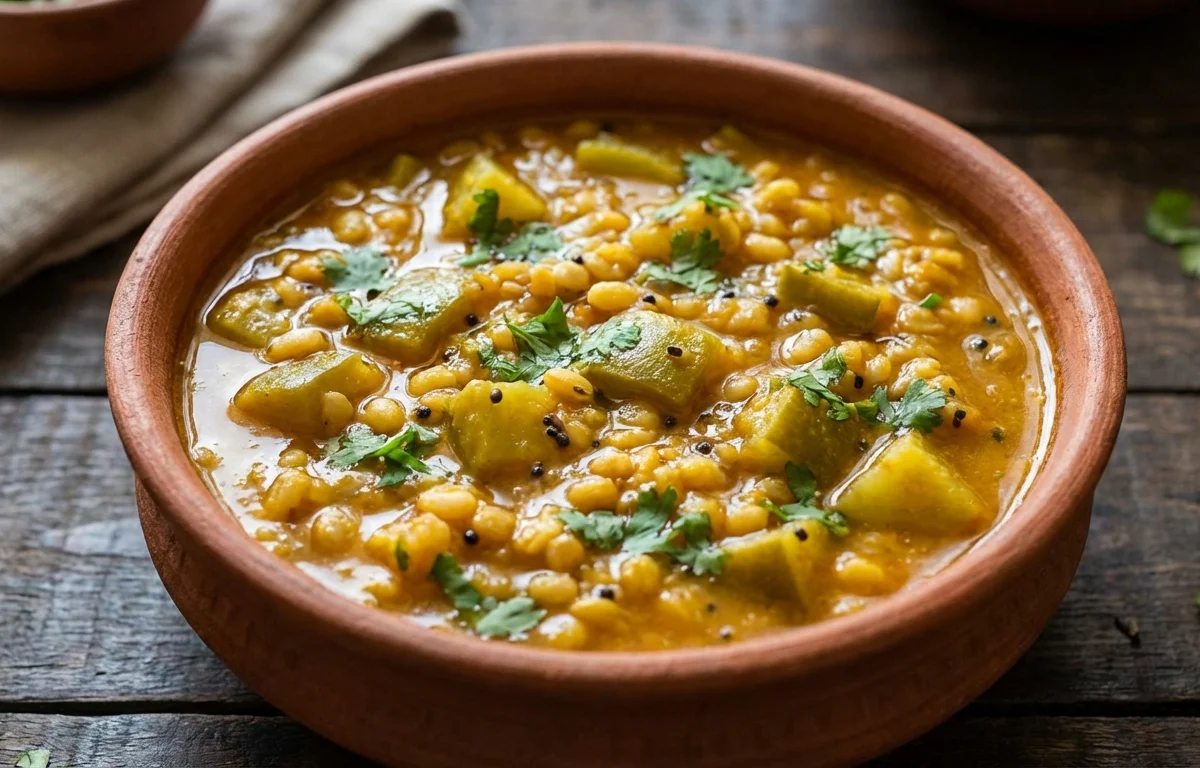
Kairichi Udid Methi
A classic Maharashtrian condiment made with tangy raw mango, roasted urad dal, and fenugreek seeds. This sweet, sour, and slightly bitter pickle is the perfect accompaniment to spice up any meal.
For 32 servings
6 steps. 10 minutes total.
- 1
Prepare the Mango: Wash the raw mangoes thoroughly
- a.Peel the skin and grate the flesh using a box grater. Set the grated mango aside in a large, non-reactive bowl.
- 2
Step 2
- a.Roast the Dal and Spices: In a small, heavy-bottomed pan, dry roast the urad dal on low heat for 3-4 minutes until it turns light golden and becomes aromatic. Add the fenugreek seeds and continue roasting for another minute until they darken slightly. Be careful not to burn them, as this will make the pickle excessively bitter. Remove from heat and let the mixture cool completely.
- 3
Step 3
- a.Grind the Roasted Mixture: Once cooled, transfer the roasted urad dal and fenugreek seeds to a spice grinder or blender. Grind them into a coarse powder. Set aside.
- 4
Step 4
- a.Prepare the Tempering (Tadka): Heat the peanut oil in the same pan over medium heat. Once the oil is hot, add the mustard seeds. Wait for them to splutter completely, which indicates the oil is at the right temperature. Add the asafoetida and turmeric powder, and stir for 10-15 seconds.
- 5
Combine all Ingredients: Turn off the heat
- a.Immediately add the grated raw mango to the hot oil and mix well to coat it evenly. Next, add the ground dal-fenugreek powder, red chili powder, grated jaggery, and salt. Stir everything together vigorously until the jaggery melts from the residual heat and all ingredients are well combined.
- 6
Step 6
- a.Cool and Store: Allow the Kairichi Udid Methi to cool down completely to room temperature. Once cooled, transfer it to a clean, dry, and airtight glass jar. While it can be served immediately, the flavors will meld and deepen if you let it rest for at least 24 hours.
What to keep in mind.
6 tips from the recipe — small details that make a real difference to the final dish.
- 1Use firm, sour raw mangoes like 'Totapuri' or 'Rajapuri' for the best tangy flavor and crisp texture.
- 2Roasting the dal and fenugreek seeds on low heat is crucial for developing a deep, nutty aroma without burning them.
- 3Ensure your storage jar is completely dry and sterilized to prevent spoilage and extend the pickle's shelf life.
- 4The pickle's flavor profile matures over time. It tastes even better a day or two after preparation.
- 5For easier grating, you can use the shredding disc of a food processor.
- 6Always use a clean, dry spoon when serving the pickle to avoid introducing moisture and bacteria.
Adapt it for your goals.
Spice Level
For a milder version, use Kashmiri red chili powder which imparts a vibrant color with less heat. For a spicier kick, add a teaspoon of freshly ground black pepper.
SweetenerSweetener
If jaggery is unavailable, you can substitute it with an equal amount of brown sugar or coconut sugar, though the authentic flavor will be slightly different.
TextureTexture
For a chunkier pickle, finely chop the raw mango into small cubes instead of grating it.
Why this is on our healthy list.
Aids Digestion
Fenugreek seeds and asafoetida (hing) are well-known for their digestive properties, helping to alleviate bloating, gas, and indigestion.
Rich in Vitamin C
Raw mangoes are an excellent source of Vitamin C, a powerful antioxidant that boosts the immune system, protects against infections, and promotes healthy skin.
Source of Plant-Based Protein
Urad dal provides a good amount of plant-based protein and dietary fiber, which are essential for muscle repair, energy, and maintaining a healthy digestive system.
Natural Blood Purifier
Jaggery, an unrefined sugar, contains minerals like iron and is known in traditional medicine to help purify the blood and cleanse the body when consumed in moderation.
Frequently asked questions
When stored in a clean, dry, airtight glass jar in the refrigerator, this pickle can last for up to 2-3 months. The oil and salt act as natural preservatives.