
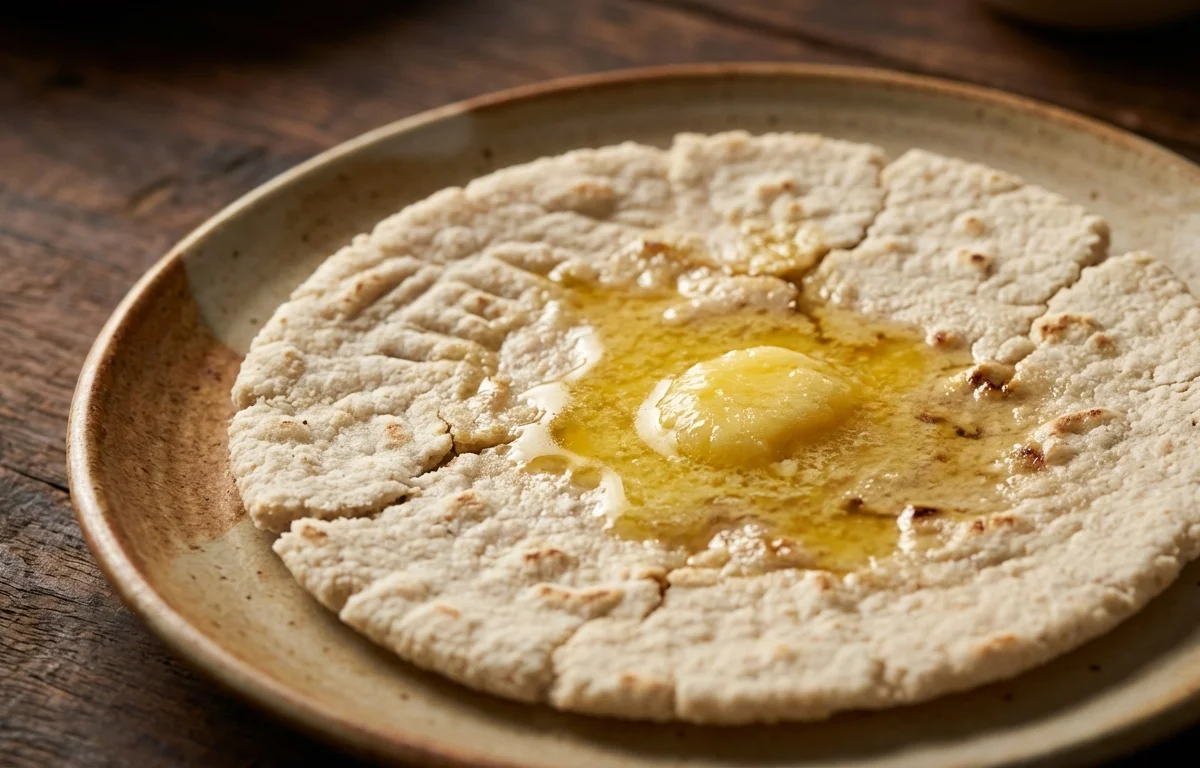
Jowar Bhakri
A rustic, gluten-free flatbread from Maharashtra made with sorghum flour. This wholesome bhakri is traditionally patted by hand and cooked on a griddle until it puffs up beautifully. Perfect with spicy curries or chutneys.
For 4 servings
5 steps. 25 minutes total.
- 1
Prepare the dough: In a large bowl, mix together the jowar flour and salt
- a.Gradually pour in the hot water while mixing with a spoon. The water should be hot but manageable to touch. Once the flour comes together, knead it with the heel of your palm for 5-7 minutes until you get a smooth, soft, and pliable dough. It should not be sticky. Cover the dough with a damp cloth and let it rest for 10 minutes.
- 2
Step 2
- a.Divide the dough into equal portions.
- 3
Pat the bhakri: Take one portion of the dough and roll it into a smooth ball
- a.Sprinkle some dry jowar flour on a clean, flat surface or a chakla (rolling board). Place the dough ball on the floured surface and gently flatten it with your palm. Using your fingers and palm, start patting the dough, rotating it simultaneously to form an even, thin circle of about 5-6 inches in diameter. Dust with more flour as needed to prevent sticking.
- 4
Cook the bhakri: Heat a cast iron tawa or griddle over medium-high heat
- a.It should be hot before you place the bhakri on it. Carefully lift the patted bhakri and place it on the hot tawa. Sprinkle a little water on the top surface and spread it evenly with your fingers. Cook for about 1 minute, until the water evaporates and the top looks dry. Flip the bhakri and cook the other side for another 1-2 minutes, until light brown spots appear. Using tongs, lift the bhakri and place it directly on a medium flame. It will puff up like a balloon. Flip and cook the other side on the direct flame for a few seconds. Avoid burning it. Repeat the process for all the remaining dough balls.
- 5
Step 5
- a.Serve the Jowar Bhakri immediately, smearing a little ghee on top if you like.
What to keep in mind.
6 tips from the recipe — small details that make a real difference to the final dish.
- 1Using hot water is crucial for a soft dough, as jowar flour is gluten-free.
- 2Knead the dough very well. The more you knead, the smoother the dough and the easier it is to pat without cracks.
- 3If you are a beginner and find patting difficult, you can place the dough ball between two sheets of parchment paper and gently roll it with a rolling pin.
- 4Ensure the tawa is sufficiently hot before placing the bhakri, otherwise it will become hard.
- 5Jowar bhakri tastes best when served fresh and hot. They can become chewy as they cool down.
- 6Store leftover bhakris in a cloth-lined container or a casserole to keep them soft for a few hours.
Adapt it for your goals.
Healthy
Add 1/4 cup of finely chopped spinach or fenugreek leaves (methi) to the dough for added nutrients and fiber.
high proteinHigh protein
Mix in 1/4 cup of chickpea flour (besan) with the jowar flour to increase the protein content of the bhakri.
kid friendlyKid friendly
Add a pinch of carom seeds (ajwain) to the dough for better digestion and flavor. Serve with a dollop of butter or a mild lentil soup.
quickQuick
Instead of patting by hand, place the dough ball between two sheets of parchment paper and use a rolling pin to flatten it quickly and evenly.