
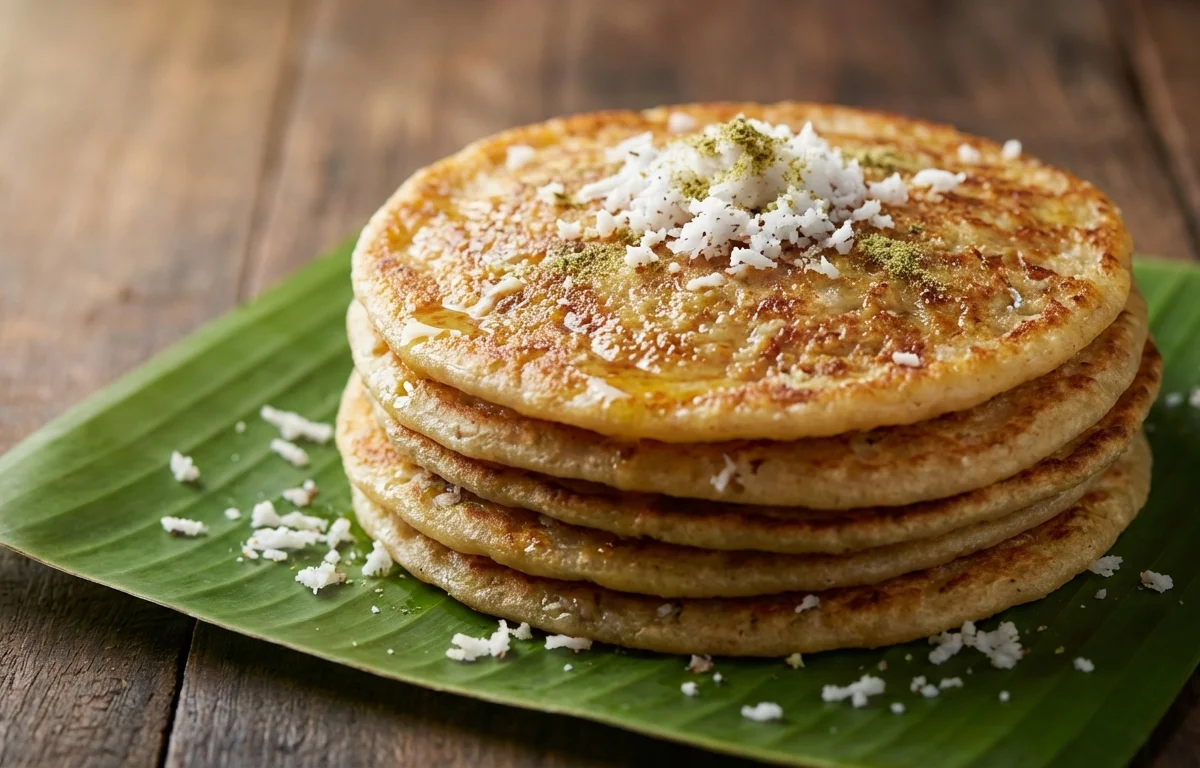
Godu Polo
A delightful sweet dosa from Mangalorean cuisine, made with rice flour, jaggery, and coconut. This instant, no-fermentation pancake is soft, lacy, and perfect for a quick breakfast or evening snack.
For 4 servings
Prepare the Jaggery Syrup
- In a small saucepan, combine the powdered jaggery with 1/2 cup of water.
- Place the pan over a low-medium flame and stir continuously until the jaggery dissolves completely. This should take about 3-4 minutes.
- Turn off the heat. Strain the syrup through a fine-mesh sieve into a bowl to remove any impurities. Let it cool slightly for a few minutes.
Make the Dosa Batter
- In a large mixing bowl, add the rice flour, fresh grated coconut, cardamom powder, and salt. Whisk them together to combine.
- Gradually pour the warm jaggery syrup into the dry ingredients, whisking constantly to prevent lumps from forming.
- Slowly add the remaining 1 cup of water while continuing to whisk. Mix until you achieve a smooth, lump-free, and pourable batter. The consistency should be thin, similar to that of a crepe or neer dosa batter.
Cook the Godu Polo
- Heat a non-stick tawa or a well-seasoned cast-iron skillet over medium heat. Once hot, reduce the flame to medium-low.
- Grease the tawa lightly with about 1/4 teaspoon of ghee.
- Stir the batter well, then take a ladleful and pour it from a height onto the hot tawa to create a lacy, round dosa. Do not spread it with the ladle.
- Drizzle a little more ghee around the edges of the polo.
- Cook for 90 seconds to 2 minutes. You will see small holes forming on the surface. Wait until the top surface looks cooked (no longer liquid) and the edges start to crisp up and lift from the pan.
- Gently fold the polo in half or flip it to cook for another 30-45 seconds if you prefer it crispier. Traditionally, it's often cooked on just one side.
Serve
- Remove the cooked polo from the tawa and transfer it to a serving plate.
- Repeat the process with the remaining batter, making sure to stir the batter well and grease the tawa before making each polo.
- Serve the Godu Polo immediately while it's hot and soft, either on its own or with a dollop of fresh white butter.
What to keep in mind.
6 tips from the recipe — small details that make a real difference to the final dish.
- 1For the best lacy texture, ensure the batter is thin and pourable, and the tawa is sufficiently hot before pouring.
- 2Always stir the batter well before making each dosa, as the rice flour tends to settle at the bottom.
- 3Cook on a medium-low flame to prevent the jaggery from burning while allowing the dosa to cook through.
- 4Using a non-stick pan is highly recommended for beginners as the sweet batter can be prone to sticking.
- 5For a richer flavor and color, use dark, organic jaggery.
- 6These dosas are best served fresh and hot, as they can become chewy upon cooling.
Adapt it for your goals.
Add Nuts
For extra crunch and nutrition, add 2 tablespoons of finely chopped cashews or almonds to the batter.
Flavor TwistFlavor Twist
Add a pinch of nutmeg powder or a teaspoon of fennel seed powder along with the cardamom for a different flavor profile.
Wheat Flour VersionWheat Flour Version
You can substitute rice flour with whole wheat flour (atta) for a different taste and texture. The result will be a softer, thicker pancake rather than a lacy dosa.
Why this is on our healthy list.
Source of Energy
Made from rice flour and jaggery, this dish is rich in carbohydrates, providing a quick and delicious source of energy to start your day or as an evening snack.
Better Sweetener
Jaggery is an unrefined sugar that retains more nutrients than white sugar, including small amounts of iron, magnesium, and potassium, making it a slightly healthier sweetening option.
Gluten-Free Option
As this recipe uses rice flour, it is naturally gluten-free, making it a suitable and tasty option for individuals with gluten sensitivity or celiac disease.
Frequently asked questions
One serving of Godu Polo (approximately 2 pieces) contains an estimated 370-400 calories. This can vary based on the size of the dosa and the amount of ghee used.