
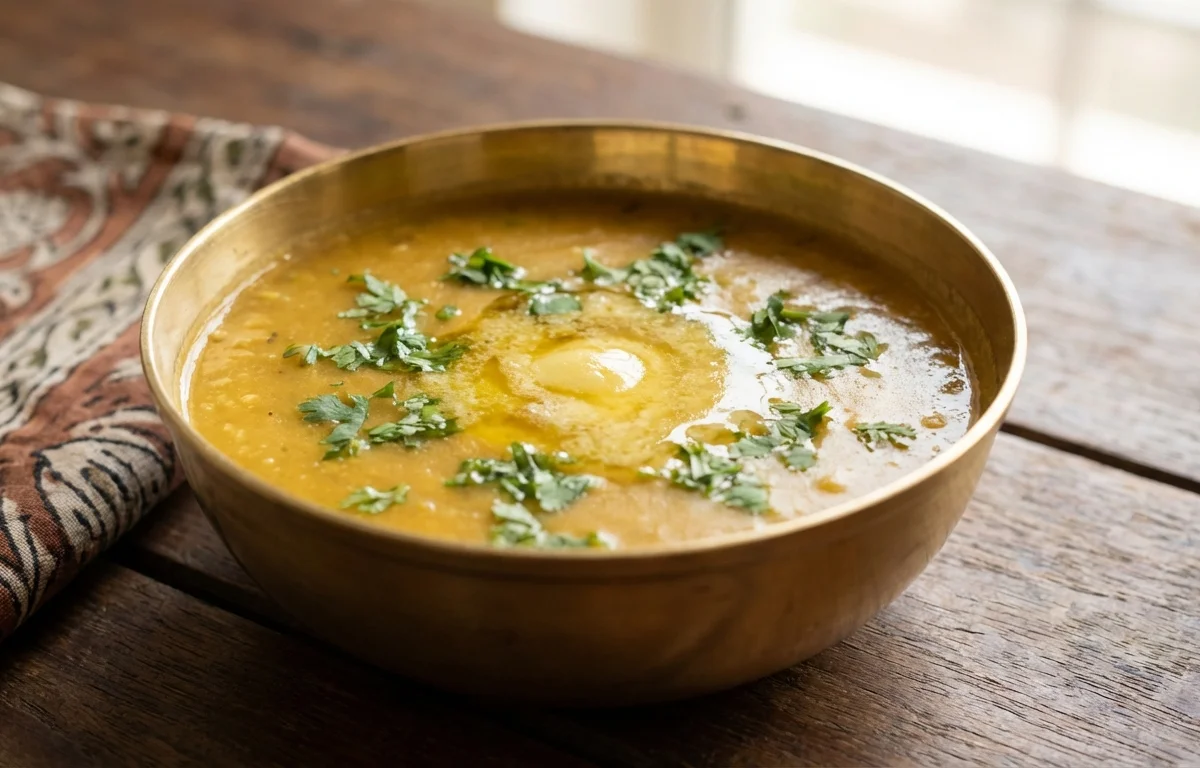
Dal Varan
A simple, comforting Maharashtrian lentil soup made from split pigeon peas (toor dal). Mildly flavored with turmeric and asafoetida, this wholesome, sattvic dal is finished with a dollop of ghee and traditionally served with steamed rice, making it a staple in festive meals and everyday comfort food.
For 4 servings
Prepare the Dal: Rinse the toor dal under running water 2-3 times until the water runs clear. For faster cooking, you can soak the dal in 2 cups of water for 30 minutes, then drain completely. This step is optional but recommended.
Pressure Cook the Dal: Transfer the drained dal to a pressure cooker. Add 3 cups of fresh water, turmeric powder, and hing. Secure the lid and pressure cook on medium heat for 4-5 whistles, which should take about 15 minutes. Turn off the heat and allow the pressure to release naturally, which takes another 10 minutes.
Mash to a Creamy Consistency: Once the pressure has fully released, open the cooker. Use a whisk or an immersion blender to mash the cooked dal until it is completely smooth and creamy. This step is crucial for achieving the authentic, velvety texture of Varan.
Simmer and Season: Place the cooker back on the stove over low heat. Add salt, grated jaggery, and about 1 cup of warm water to adjust the consistency to your liking. It should be like a thick, flowing soup. Stir well until the jaggery dissolves completely.
Final Simmer: Let the dal simmer gently for 5-7 minutes, allowing the flavors to meld together. Stir occasionally to prevent it from sticking to the bottom of the cooker.
Finish and Serve: Turn off the heat. Stir in the ghee until it melts and is fully incorporated into the dal. Garnish with freshly chopped coriander leaves. Serve hot with steamed rice and a side of lemon wedge.
What to keep in mind.
5 tips from the recipe — small details that make a real difference to the final dish.
- 1For the smoothest texture, use an immersion blender or pass the cooked dal through a fine-mesh sieve (puran yantra).
- 2Varan is traditionally mild. Avoid adding other spices like chili powder or garam masala to maintain its authentic, sattvic taste.
- 3Always add warm water to adjust the consistency of the cooked dal. Using cold water can alter the taste and texture.
- 4This dal is perfect for young children or when recovering from an illness due to its simple, nutritious, and easily digestible nature.
- 5Dal Varan thickens as it cools. Add a little hot water to adjust the consistency when reheating.
Adapt it for your goals.
Ambat Varan (Tangy Dal)
Add 1-2 pieces of dried kokum along with the dal while pressure cooking for a subtle, tangy flavor.
Lemon VaranLemon Varan
Squeeze a teaspoon of fresh lemon juice into the dal just before serving for a fresh, zesty taste.
Godh VaranGodh Varan
For a slightly sweeter version, increase the jaggery to 2 teaspoons.
Why this is on our healthy list.
Rich in Plant-Based Protein
Toor dal is an excellent source of protein, which is essential for muscle repair, building tissues, and overall body function, making it a great choice for vegetarians and vegans.
Aids Digestion
This dal is prepared with minimal spices and includes hing (asafoetida), which is known to reduce gas and aid digestion. Its simple nature makes it very light on the stomach.
Provides Sustained Energy
Lentils are complex carbohydrates with a low glycemic index, providing a steady release of energy that keeps you feeling full and energized for longer periods.
Good Source of Iron and Folate
Toor dal is a good source of iron, which is vital for preventing anemia, and folate, which is crucial for cell growth and metabolism.
Frequently asked questions
Yes, Dal Varan is very healthy. It is an excellent source of plant-based protein, dietary fiber, and essential minerals. Being low in fat and spices, it is light, easy to digest, and considered a wholesome, comforting meal.