
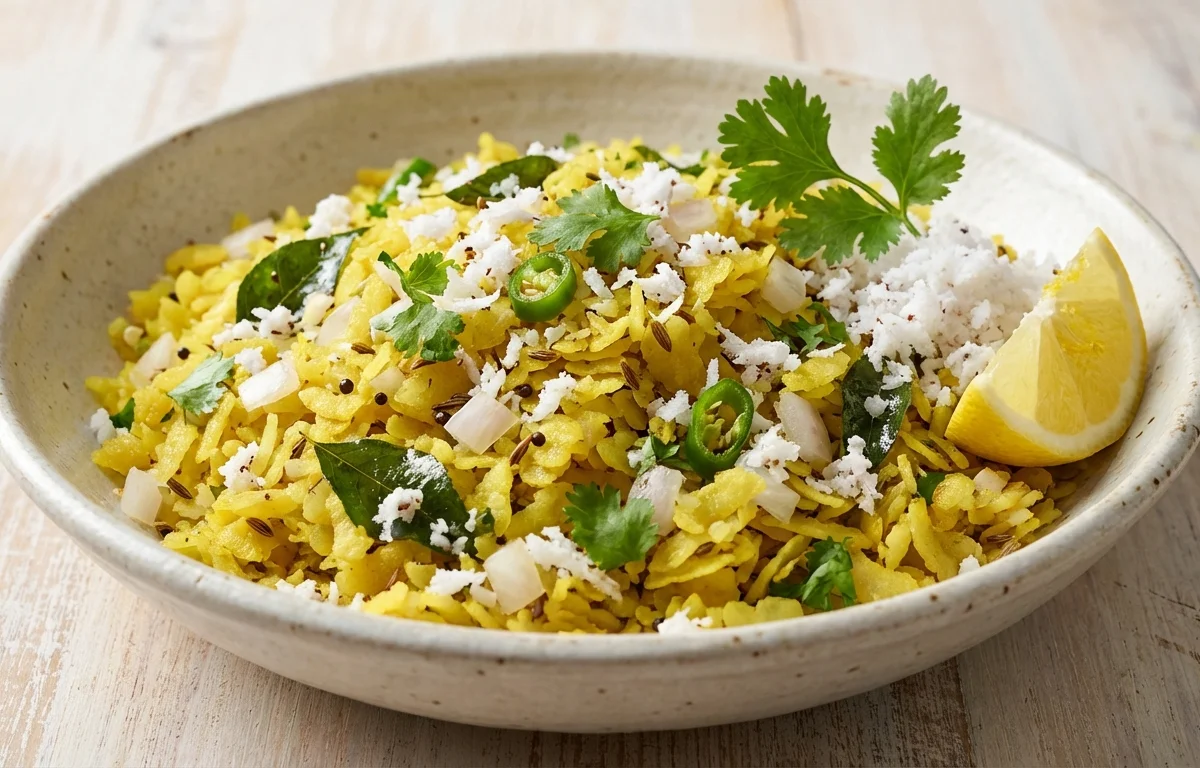
Dadpe Pohe
A refreshing no-cook Maharashtrian snack made with thin flattened rice, fresh coconut, and onions, brought to life with a zesty tempering. Ready in minutes, it's the perfect light breakfast or evening snack.
For 4 servings
4 steps. 5 minutes total.
- 1
Step 1
- a.Prepare the Poha Base
- b.In a large mixing bowl, combine the thin poha, finely chopped onion, freshly grated coconut, chopped coriander leaves, sugar, and salt.
- c.Using your fingertips, gently toss all the ingredients together. Be careful not to crush the delicate poha flakes. The goal is to evenly distribute everything.
- 2
Step 2
- a.Moisten and Rest
- b.Drizzle the fresh lemon juice all over the poha mixture.
- c.Mix gently once more. Cover the bowl and set it aside for 5 to 7 minutes.
- d.During this time, the moisture from the onions, coconut, and lemon juice will start to soften the poha flakes.
- 3
Step 3
- a.Prepare the Tempering (Tadka)
- b.Heat the peanut oil in a small pan (tadka pan) over medium heat.
- c.Once the oil is hot, add the mustard seeds and let them splutter completely.
- d.Add the cumin seeds and hing, and sauté for a few seconds until the cumin seeds sizzle.
- e.Add the slit green chilies and curry leaves. Be careful as they may splutter. Sauté for about 30 seconds until the curry leaves turn crisp and aromatic.
- f.Finally, add the turmeric powder, give it a quick stir for 2-3 seconds, and immediately turn off the heat to prevent it from burning.
- 4
Step 4
- a.Combine and Serve
- b.Immediately pour the sizzling hot tempering over the resting poha mixture. You should hear a satisfying sizzle.
- c.Quickly and thoroughly mix everything together with a spoon or spatula until the poha is evenly coated in the yellow tempering.
- d.Let it stand for another 2 minutes for the flavors to meld and the poha to soften completely from the heat of the tempering.
- e.Garnish with extra coriander or grated coconut if desired, and serve immediately for the best texture.
What to keep in mind.
6 tips from the recipe — small details that make a real difference to the final dish.
- 1Use only thin (patal) poha. Thick poha will not soften properly with this method and will result in a hard, chewy dish.
- 2Do not wash or rinse the poha. The moisture from the other ingredients is precisely what's needed to soften it without making it mushy.
- 3Pour the tempering while it's sizzling hot. This final blast of heat is crucial to 'steam' and perfectly soften the poha flakes.
- 4For the best flavor, use freshly grated coconut instead of frozen or desiccated coconut.
- 5Serve Dadpe Pohe immediately. It loses its ideal texture and can become dry or soggy if left to sit for too long.
- 6Adjust the balance of sugar, salt, and lemon juice to suit your personal taste before adding the tempering.
Adapt it for your goals.
Crunchy Dadpe Pohe
Add 2-3 tablespoons of roasted peanuts along with the tempering for a delightful crunch. You can also top the finished dish with fine sev (crispy chickpea flour noodles) just before serving.
Fruity & TangyFruity & Tangy
During mango season, add 1/4 cup of finely chopped raw green mango (kairi) to the poha base for a sharp, tangy flavor. Pomegranate arils also make a great addition for a sweet and juicy burst.
Spicier VersionSpicier Version
For extra heat, add 1/4 teaspoon of red chili powder to the tempering along with the turmeric powder.
Why this is on our healthy list.
Instant Energy Boost
Poha is a good source of healthy carbohydrates, which provide a quick and sustained release of energy, making it an excellent breakfast or pre-workout snack.
Gut-Friendly
As a light and easily digestible food, poha is gentle on the stomach. The addition of hing (asafoetida) in the tempering further aids digestion and prevents bloating.
Rich in Antioxidants
Ingredients like turmeric, curry leaves, onions, and coriander are packed with antioxidants that help fight free radicals and reduce inflammation in the body.
Vegan and Gluten-Free
This recipe is naturally vegan and gluten-free (ensure hing is gluten-free), making it a suitable and delicious option for individuals with dietary restrictions.
Frequently asked questions
Dadpe Pohe is a no-cook recipe where thin poha is softened by the moisture of raw onions, coconut, and a hot tempering. Kanda Pohe is a cooked dish where thick poha is rinsed, and then sautéed with onions, potatoes, and spices.