
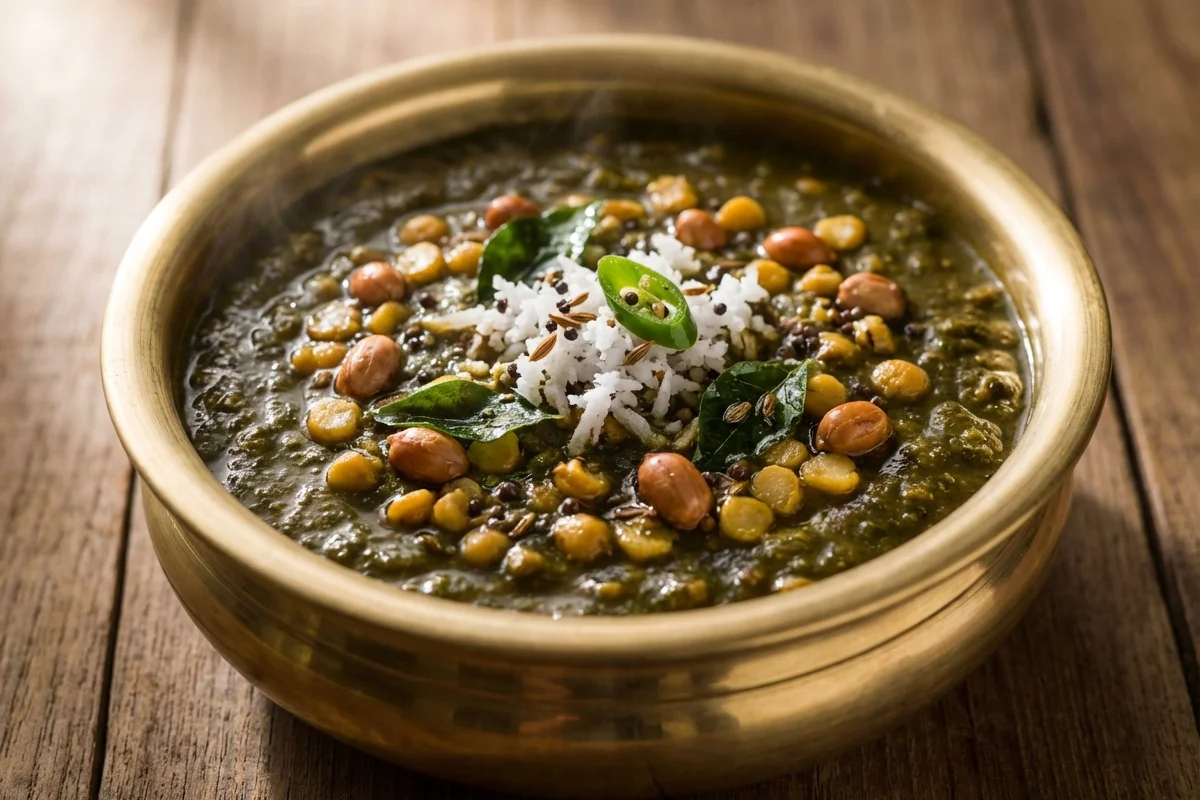
Aluchi Patal Bhaji
A classic Maharashtrian curry made from tender colocasia leaves, simmered with chana dal, peanuts, and a sweet-sour blend of tamarind and jaggery. It's a unique, flavorful dish that pairs perfectly with steamed rice or bhakri.
For 4 servings
5 steps. 30 minutes total.
- 1
Step 1
- a.Preparation
- b.Rinse the chana dal thoroughly and soak it in ample water for at least 2 hours. After soaking, drain the water completely.
- c.Wash the colocasia leaves well under running water. Carefully remove the thick central vein and any other tough stems from each leaf. Stack the leaves and chop them finely.
- d.If using whole tamarind, soak it in 1/4 cup of warm water for 15 minutes. Squeeze the tamarind to extract a thick pulp, then strain and discard the solids. Set the pulp aside.
- 2
Step 2
- a.Pressure Cook the Base
- b.In a pressure cooker, combine the soaked and drained chana dal, finely chopped colocasia leaves, and raw peanuts.
- c.Add the turmeric powder and 2 cups of water.
- d.Secure the lid and pressure cook on medium heat for 4-5 whistles, or for about 15 minutes, until the dal is very soft and mushy. Allow the pressure to release naturally.
- 3
Step 3
- a.Simmer the Bhaji
- b.Once the pressure has released, open the cooker. Use a whisk or the back of a ladle to lightly mash the cooked mixture. The goal is to break down the leaves and dal while retaining some texture.
- c.Place the cooker back on low heat. Add the tamarind pulp, grated jaggery, goda masala, red chili powder, and salt. Stir everything together until well combined.
- d.In a separate small bowl, whisk the besan with 1/4 cup of water to create a smooth, lump-free slurry.
- e.Slowly pour the besan slurry into the simmering bhaji, stirring continuously to prevent any lumps from forming.
- f.Add the fresh grated coconut and the remaining 1.5 to 1.75 cups of water, depending on your desired consistency. The bhaji should have a flowing, thin gravy.
- g.Bring the mixture to a gentle boil and let it simmer for 5-7 minutes, allowing the flavors to meld and the raw taste of besan to cook off.
- 4
Step 4
- a.Prepare the Tempering (Tadka)
- b.While the bhaji simmers, heat the vegetable oil in a small pan (tadka pan) over medium heat.
- c.Once the oil is hot, add the mustard seeds. When they start to crackle, add the cumin seeds and hing.
- d.Immediately add the slit green chilies and curry leaves. Be careful as they may splutter. Sauté for about 30 seconds until the chilies are blistered and the leaves are crisp.
- 5
Step 5
- a.Finish and Serve
- b.Pour the hot, sizzling tempering directly over the simmering bhaji. Stir well to incorporate the flavors.
- c.Let the bhaji cook for another minute.
- d.Serve Aluchi Patal Bhaji hot with steamed rice, jowar bhakri, or chapati.
What to keep in mind.
6 tips from the recipe — small details that make a real difference to the final dish.
- 1To prevent throat irritation from the calcium oxalate crystals in colocasia leaves, always use a souring agent like tamarind or kokum.
- 2For the most authentic flavor, do not skip the goda masala. It provides a unique, sweet, and pungent aroma.
- 3The balance of sweet (jaggery) and sour (tamarind) is key to this dish. Adjust the quantities to your personal preference.
- 4Stirring continuously while adding the besan slurry is crucial to achieve a smooth, lump-free gravy.
- 5This dish tastes even better the next day as the flavors deepen and mature.
- 6You can use ghee instead of oil for the tempering to add a richer flavor and aroma.
Adapt it for your goals.
Lentil Variation
You can make this dish with a mix of chana dal and toor dal for a slightly different texture and flavor.
No CoconutNo Coconut
If you don't have fresh coconut, you can use 2 tablespoons of dry desiccated coconut or skip it entirely. The bhaji will still be delicious.
Added VegetablesAdded Vegetables
Some variations include adding pieces of drumstick (moringa) or sweet potato chunks while pressure cooking the dal and leaves.
Souring AgentSouring Agent
If tamarind is unavailable, you can use 4-5 pieces of dried kokum. Add them while pressure cooking.
Why this is on our healthy list.
Rich in Dietary Fiber
The combination of colocasia leaves, chana dal, and peanuts makes this dish an excellent source of dietary fiber, which aids digestion, promotes gut health, and helps in maintaining stable blood sugar levels.
Good Source of Plant-Based Protein
Chana dal and peanuts are packed with protein, making this curry a great option for vegetarians and vegans to meet their daily protein requirements, which is essential for muscle repair and growth.
Packed with Vitamins and Minerals
Colocasia leaves are a powerhouse of Vitamin A and Vitamin C, which are crucial for vision and immunity. The dish also provides iron from jaggery and leaves, and magnesium from peanuts.
Frequently asked questions
Colocasia leaves contain calcium oxalate crystals (raphides), which can cause irritation or an itchy sensation in the throat and mouth. Cooking them with a souring agent like tamarind or kokum helps to neutralize these crystals, making the leaves safe and enjoyable to eat.