Grain10 recipes
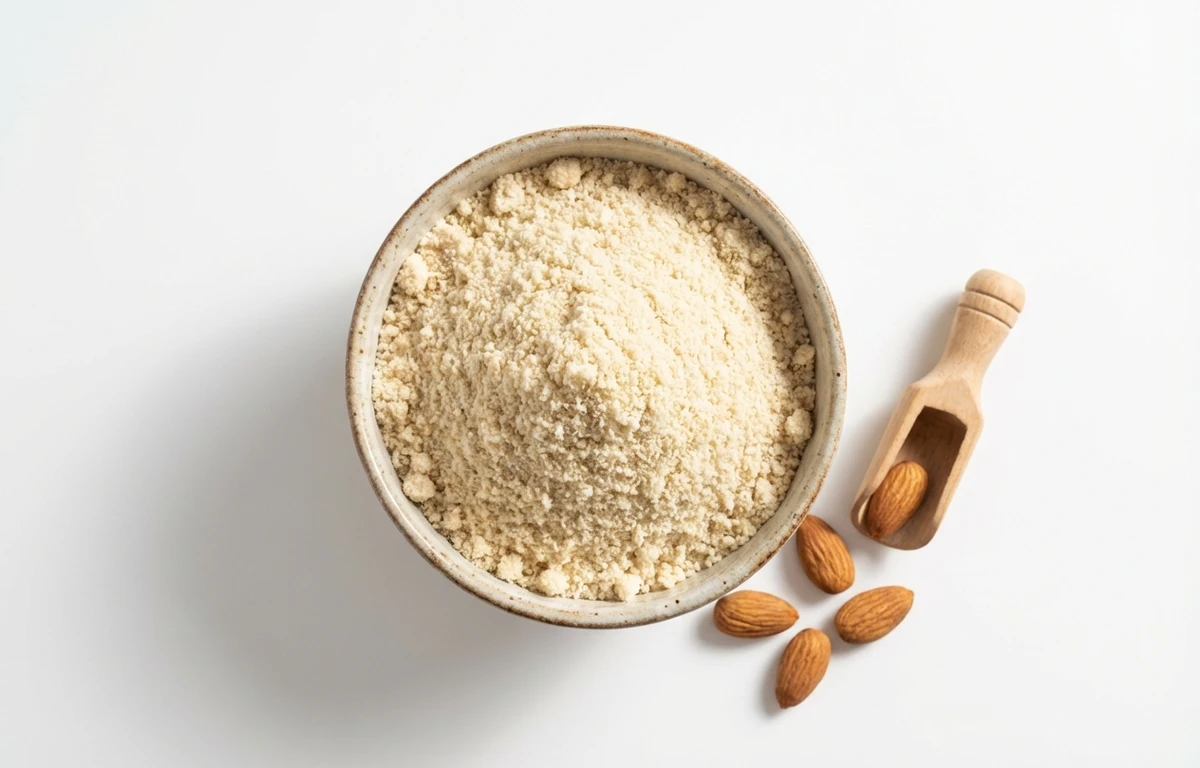
almond flour.
VegetarianVeganGluten-freeDairy-freeNut-freePeanut-freeSoy-freeEgg-freeShellfish-freeHoney-freeAlcohol-free
ALSO KNOWN AS
almond mealbadam atta
SERVING
CALORIES
575
PROTEIN
21.4g
CARBS
20g
FAT
50g
FIBER
12.2g
NUTRITION PROFILE · per 100 g
Everything in this ingredient.
MACRONUTRIENTS
Calories575kcal—
Protein21.4g43%
Carbohydrates20g7%
Fiber12.2g44%
Sugar4.8g10%
Total fat50g64%
Saturated fat3.7g19%
Cholesterol0mg0%
Water4.7g—
MINERALS
Sodium1.0mg0%
Potassium705mg15%
Calcium269mg21%
Iron3.7mg21%
Magnesium251mg60%
Phosphorus512mg41%
Zinc2.8mg25%
Copper0.98mg109%
Manganese1.8mg79%
Selenium0.74µg1%
VITAMINS
Vitamin A0µg0%
Vitamin C0mg0%
Vitamin D0µg0%
Thiamin (B1)0.11mg9%
Riboflavin (B2)0.75mg58%
Niacin (B3)4.0mg25%
Vitamin B60.10mg6%
Folate (B9)37.8µg9%
%DV based on a 2,000 cal diet. Source: USDA FoodData Central. A dash in the %DV column means there’s no established Daily Value for that nutrient.
MEASUREMENT CONVERSIONS
How much is what.
1 cup96g
1 tablespoon6g
1 teaspoon2g
1 ml0.4g
1 liter400g
HEALTH BENEFITS
Why eat it.
- ✓Rich in nutrients like Vitamin E, magnesium, and healthy monounsaturated fats.
- ✓Low in carbohydrates and high in fiber, which helps manage blood sugar levels.
- ✓Naturally gluten-free, making it an excellent alternative for those with celiac disease or gluten sensitivity.
- ✓May support heart health by helping to lower LDL ('bad') cholesterol.
COOKING TIPS
In the kitchen.
- 1Almond flour browns more quickly than wheat flour due to its higher fat content; consider reducing oven temperature by 25°F (15°C).
- 2It is not a 1:1 substitute for all-purpose flour. It requires more binder, like an extra egg, in baked goods due to the lack of gluten.
- 3Excellent for creating tender, moist cakes, macarons, and cookies, as well as a low-carb breading for fish or chicken.
- 4For best results in baking, use a kitchen scale to measure by weight rather than volume, as it can be dense and compact easily.
STORAGE
Keep it fresh.
- Store in an airtight container in a cool, dark place like a pantry for up to 6 months.
- For longer freshness (up to a year), store in the refrigerator or freezer to prevent the natural oils from becoming rancid.
FAQ
Frequently asked questions.
Is almond flour healthy?
Yes, almond flour is highly nutritious, providing significant amounts of Vitamin E, magnesium, and heart-healthy monounsaturated fats. It is lower in carbohydrates and higher in fiber than traditional wheat flour, which helps in managing blood sugar levels and supporting heart health.
How much protein and carbs are in almond flour?
Per 100g, almond flour contains approximately 21.43g of protein and 20g of carbohydrates. This high protein-to-carb ratio makes it a popular choice for those looking to increase protein intake while limiting starch.
Is almond flour gluten-free?
Yes, almond flour is naturally gluten-free as it is made entirely from ground almonds. This makes it an excellent alternative for individuals with celiac disease, gluten sensitivity, or those following a grain-free diet.
Is almond flour keto-friendly?
Yes, almond flour is very keto-friendly due to its low net carb count and high healthy fat content. It is one of the most common flour substitutes used in ketogenic baking to create bread, muffins, and crusts without the high carb count of grain flours.
Can I substitute wheat flour with almond flour 1:1?
No, you generally cannot substitute them 1:1 because almond flour lacks gluten, which provides structure and elasticity. You usually need more binding agents like eggs or xanthan gum, and it often requires less liquid than wheat flour recipes.
What is the difference between almond flour and almond meal?
Almond flour is made from blanched almonds with the skins removed and ground into a fine powder. Almond meal is made from whole almonds with the skins on, resulting in a coarser texture and darker color, which is better suited for breading or rustic bakes.
Is almond flour good for weight loss?
While almond flour is calorie-dense at 575 calories per 100g, its high fiber and protein content can promote satiety and keep you full longer. However, because of its high fat content, it should be consumed in moderation as part of a calorie-controlled diet.
How should I store almond flour and how long does it last?
Because of its high oil content, almond flour can go rancid if exposed to heat. It is best stored in an airtight container in the refrigerator for up to 6 months or in the freezer for up to a year to maintain freshness.
How do you know if almond flour has gone bad?
You can tell almond flour is spoiled if it develops a sour, bitter, or 'paint-like' smell instead of its usual sweet, nutty aroma. If you see any signs of mold or if the taste is unpleasantly bitter, it should be discarded immediately.
Does almond flour work for frying or breading?
Yes, almond flour makes an excellent low-carb breading for chicken, fish, or vegetables. It browns faster than wheat flour due to its fat content, so it is best to cook at a slightly lower temperature to prevent the coating from burning.
RECIPES
Cook with almond flour.
10 recipes · sorted by what’s quick