
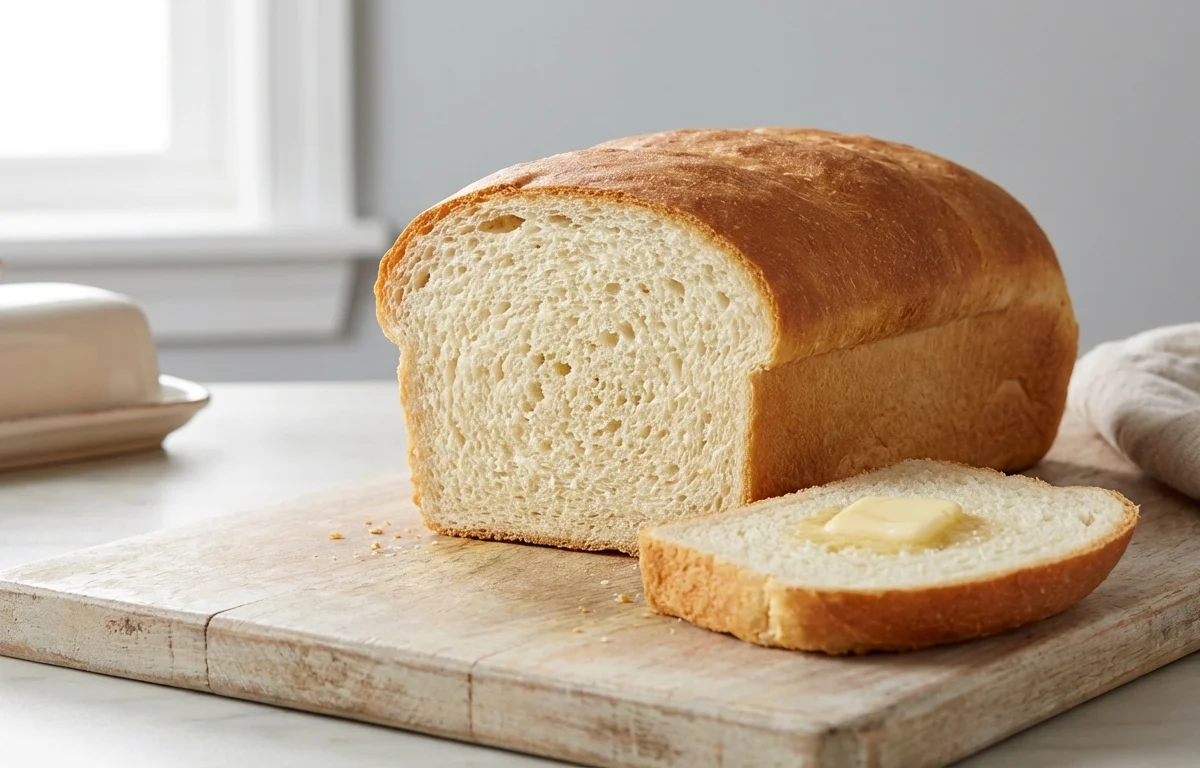
White Bread
A classic, homemade white bread with a soft, fluffy interior and a beautiful golden crust. Perfect for sandwiches, toast, or enjoying fresh with butter. This simple, rewarding recipe yields a loaf far superior to any store-bought version.
For 12 servings
Proof the Yeast
- In a small bowl or the bowl of your stand mixer, combine the warm water, granulated sugar, and instant yeast.
- Stir gently to dissolve. Let the mixture stand for 5-10 minutes until it becomes foamy and bubbly. This confirms your yeast is active.
Form the Dough
- To the yeast mixture, add the melted butter, salt, and about half of the all-purpose flour.
- Mix with a dough hook on low speed or a wooden spoon until combined.
- Gradually add the remaining flour, mixing until a shaggy dough forms that pulls away from the sides of the bowl.
Knead the Dough
- Turn the dough out onto a lightly floured surface. Knead by hand for 8-10 minutes, or continue with a stand mixer's dough hook on medium-low speed for 6-8 minutes.
- The dough is ready when it's smooth, elastic, and passes the 'windowpane test': a small piece should stretch thin enough to see light through it without tearing.
First Rise
- Form the dough into a ball. Lightly grease a large bowl with oil or butter.
- Place the dough in the bowl, turning it once to coat the top.
- Cover the bowl with plastic wrap or a damp kitchen towel.
- Let it rise in a warm, draft-free spot for 60-90 minutes, or until it has doubled in size. The exact time will depend on the temperature of your room.
Shape the Loaf and Second Rise
- Gently punch down the risen dough to release the air. Transfer it to a lightly floured surface.
- Press the dough into a rectangle roughly 8 inches wide.
- Roll the rectangle up tightly into a log. Pinch the seam and the ends firmly to seal.
- Place the log, seam-side down, into a greased 9x5 inch loaf pan.
- Cover the pan loosely with plastic wrap and let it rise for another 30-45 minutes, until the dough has risen about 1 inch above the rim of the pan.
Bake the Bread
- About 20 minutes into the second rise, preheat your oven to 375°F (190°C).
- Place the loaf pan on the center rack of the preheated oven.
- Bake for 30-35 minutes. The crust should be a deep golden brown. To check for doneness, the internal temperature should be 190-200°F (88-93°C), or it should sound hollow when you tap the bottom.
- If the top browns too quickly, tent it loosely with aluminum foil for the last 10 minutes of baking.
Cool and Slice
- Remove the bread from the oven and let it cool in the pan for 5-10 minutes.
- Carefully turn the loaf out onto a wire rack to cool completely. This prevents a soggy bottom.
- It is crucial to let the bread cool for at least 1-2 hours before slicing. Slicing while warm can result in a gummy texture as the internal structure is still setting.
What to keep in mind.
5 tips from the recipe — small details that make a real difference to the final dish.
- 1Ensure your water is warm, not hot. Water above 120°F (49°C) can kill the yeast.
- 2For a richer flavor, you can substitute the water with warm milk.
- 3For an extra soft crust, brush the top of the loaf with melted butter as soon as it comes out of the oven.
- 4Store the completely cooled bread in a bread box or a sealed bag at room temperature for up to 4 days.
- 5Don't add too much extra flour while kneading. A slightly sticky dough is normal and will result in a softer bread.
Adapt it for your goals.
Herb Bread
Add 2 tablespoons of chopped fresh herbs like rosemary, thyme, or chives to the dry ingredients.
Cinnamon Swirl BreadCinnamon Swirl Bread
Before rolling the dough into a log in Step 5, brush it with melted butter and sprinkle generously with a mixture of cinnamon and sugar.
Whole Wheat BlendWhole Wheat Blend
Replace up to half of the all-purpose flour with whole wheat flour for a heartier, nuttier loaf. You may need to add a little extra water.
Why this is on our healthy list.
Source of Energy
Provides carbohydrates, the body's primary fuel source, which is essential for powering your brain, muscles, and daily activities.
No Preservatives
By baking your own bread, you control the ingredients. This recipe is free from the artificial preservatives and additives often found in commercially produced bread.
Mindful Baking
The process of kneading, shaping, and baking bread can be a relaxing and rewarding activity, offering a great way to de-stress and practice mindfulness.
Frequently asked questions
One slice of this homemade white bread (approximately 64g) contains about 160-180 calories, primarily from carbohydrates and a small amount of protein and fat.