
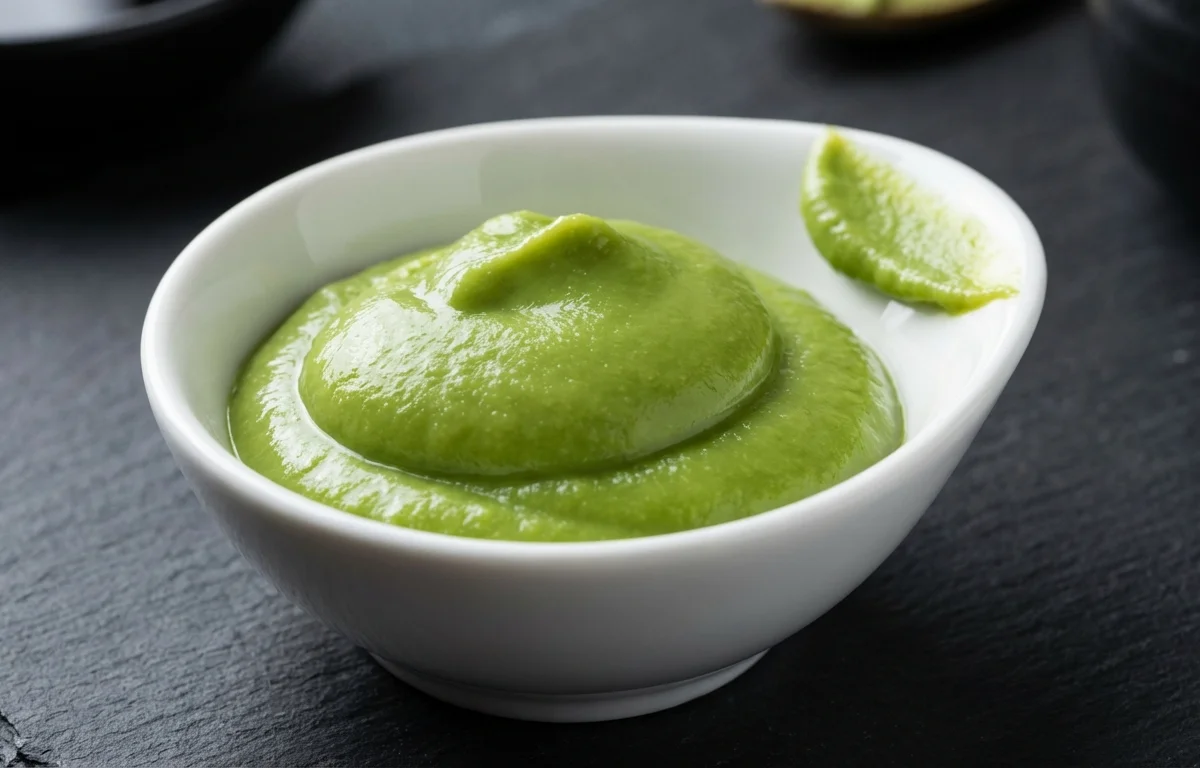
Wasabi Paste
Create that iconic, pungent green paste for your sushi nights at home. This recipe uses horseradish and mustard powder to replicate the sinus-clearing kick of wasabi in just a few minutes. It's the perfect quick and easy condiment when you need that spicy accompaniment for Japanese dishes.
For 4 servings
4 steps.
- 1
Step 1
- a.Combine Dry Ingredients
- b.In a small, non-reactive bowl, add the horseradish powder and mustard powder.
- c.Whisk them together thoroughly to ensure they are evenly distributed.
- 2
Step 2
- a.Form the Paste
- b.Begin adding the ice-cold water, about 1 teaspoon at a time, while stirring continuously with a small spoon or spatula.
- c.Continue adding water and mixing until you achieve a thick, smooth paste similar in consistency to clay or toothpaste. You may not need all the water, so add it slowly to avoid making it too runny.
- 3
Step 3
- a.Color and Rest
- b.If using, stir in one drop of green food coloring until the color is uniform and vibrant.
- c.Cover the bowl with plastic wrap, pressing it directly onto the surface of the paste to prevent a crust from forming.
- d.Let the paste rest at room temperature for 10-15 minutes. This resting period is crucial as it allows the chemical reaction that creates the characteristic heat and pungent flavor to fully develop.
- 4
Step 4
- a.Serve
- b.After resting, the wasabi paste is at its peak flavor. Serve immediately alongside soy sauce with sushi, sashimi, noodles, or grilled meats.
What to keep in mind.
5 tips from the recipe — small details that make a real difference to the final dish.
- 1For the most potent flavor, use ice-cold water. The cold temperature enhances the chemical reaction that produces the heat.
- 2The pungency of the paste peaks about 10-15 minutes after mixing and will gradually diminish over time. For best results, make it fresh just before serving.
- 3To store leftovers, place the paste in a small airtight container. Press a piece of plastic wrap directly onto the surface before sealing the lid. Refrigerate for up to 3-4 days.
- 4Beyond sushi, use this paste to add a kick to salad dressings, marinades, mashed potatoes, or deviled eggs.
- 5If your paste is too thick, add water drop by drop. If it's too thin, add a small amount of horseradish and mustard powder (in a 3:1 ratio) to thicken it.
Adapt it for your goals.
Natural Color
For a natural green hue, mix in 1/4 teaspoon of spirulina powder or matcha powder instead of artificial food coloring.
Sweeter ProfileSweeter Profile
Add a pinch of sugar or a tiny drop of honey to the paste to balance the intense heat with a subtle sweetness.
Tangy KickTangy Kick
Incorporate a few drops of rice vinegar or lime juice after the paste has rested for a tangy, brighter flavor profile.
Why this is on our healthy list.
Potent Antimicrobial Properties
The key compounds in horseradish and mustard, known as isothiocyanates, have been studied for their ability to inhibit the growth of bacteria and microbes, which is why it was traditionally served with raw fish.
Natural Decongestant
The volatile compounds released when you eat wasabi travel up the nasal passages, creating a vapor that can help clear sinuses and relieve congestion temporarily.
Anti-inflammatory Potential
Studies suggest that isothiocyanates found in horseradish may help reduce inflammation in the body by inhibiting inflammatory enzymes and pathways.
Frequently asked questions
In the small quantities it's typically consumed, it's a low-calorie, low-fat condiment. The primary ingredients, horseradish and mustard, contain compounds called isothiocyanates, which are believed to have anti-inflammatory and antimicrobial properties.