
keralaMediumveganvegetariangluten freedairy free
Virgin Coconut Oil
RATING
4.2/5(12)
TASTE SCORE
8/10
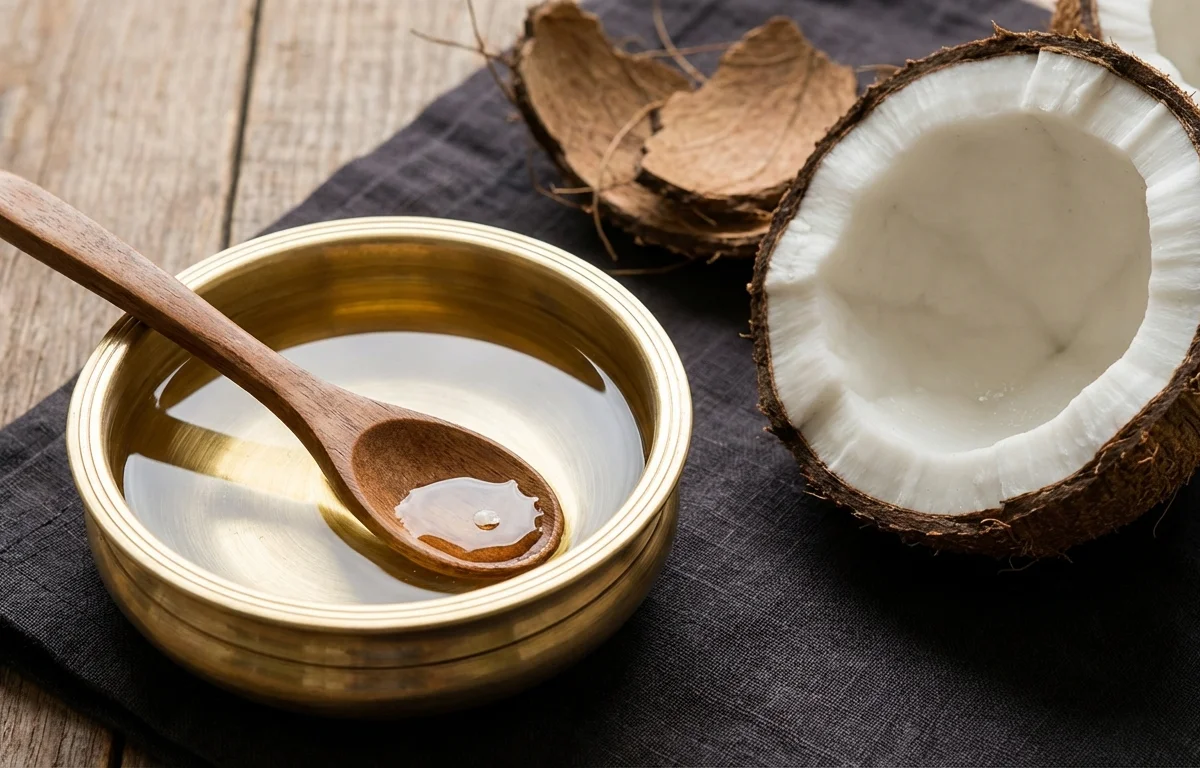
Learn to make pure, fragrant Virgin Coconut Oil at home from fresh coconut milk. This traditional Kerala method yields a high-quality oil perfect for cooking, skin, and hair care.
SERVINGS
20
INGREDIENTS
For 20 servings
NUTRITION · PER SERVING
32
32
CALORIES · 1 TBSP
Protein0g · 0%
Carbs1g · 13%
Fat3g · 84%
Fiber1g
Sodium2mg
Potassium33mg
Phosphorus10mg
INSTRUCTIONS
5 steps. 60 minutes total.
5 STEPS
- 1
Step 1
- a.Prepare the coconut: Break the coconuts in half and carefully scrape out all the white flesh using a coconut scraper. You should have about 6-7 cups of grated coconut.
- 2
Extract the coconut milk: Transfer the grated coconut to a blender
- a.Add 4 cups of warm water. Blend on high for 1-2 minutes until the mixture is smooth. Pour the mixture through a fine-mesh sieve or cheesecloth placed over a large bowl. Squeeze the pulp firmly to extract as much milk as possible. Discard the pulp.
- 3
Step 3
- a.Cook the coconut milk: Pour the extracted coconut milk into a heavy-bottomed pan or a traditional Kerala uruli. Place the pan over medium heat and bring the milk to a simmer, stirring occasionally. Once it starts simmering, reduce the heat to low.
- 4
Step 4
- a.Separate the oil: Continue to cook on low heat, stirring every 5-10 minutes to prevent the solids from sticking and burning. After about 30-40 minutes, you will see the oil starting to separate from the milk solids. Keep cooking until the solids turn a deep golden brown and the oil becomes clear and fragrant. This will take about 45-60 minutes in total. Turn off the heat and let it cool down completely.
- 5
Step 5
- a.Strain and store the oil: Once cooled, carefully strain the oil through a clean cheesecloth or a fine metal strainer into a dry, airtight glass jar. Press the solids lightly to get any remaining oil out. The leftover brown solids (kalkan) are edible and can be mixed with sugar as a snack. Store the Virgin Coconut Oil at room temperature. It will solidify in cooler climates.
PRO TIPS
What to keep in mind.
5 tips from the recipe — small details that make a real difference to the final dish.
- 1Always use mature, brown coconuts for the highest oil yield and best flavor.
- 2A thick, heavy-bottomed pan (like a cast-iron kadai or uruli) is crucial to prevent the milk solids from scorching.
- 3Be patient and cook on low heat. Rushing the process on high heat will burn the solids and give the oil a bitter taste.
- 4Ensure the storage jar is completely dry, as any moisture can spoil the oil.
- 5The leftover brown coconut solids, known as 'kalkan' in Malayalam, are delicious. Mix them with a little jaggery or sugar for a traditional snack.
RECIPE VARIATIONS
Adapt it for your goals.
quick
Quick
Use 3-4 cans of store-bought, unsweetened, full-fat coconut milk instead of extracting it from fresh coconuts. This will significantly reduce the preparation time.
healthyHealthy
This method produces a heated or 'cooked' virgin oil. For a no-heat version, you can refrigerate the coconut milk for 12 hours. The cream will solidify on top. Skim this cream and gently warm it just until it melts into oil.
PAIRS WELL WITH