
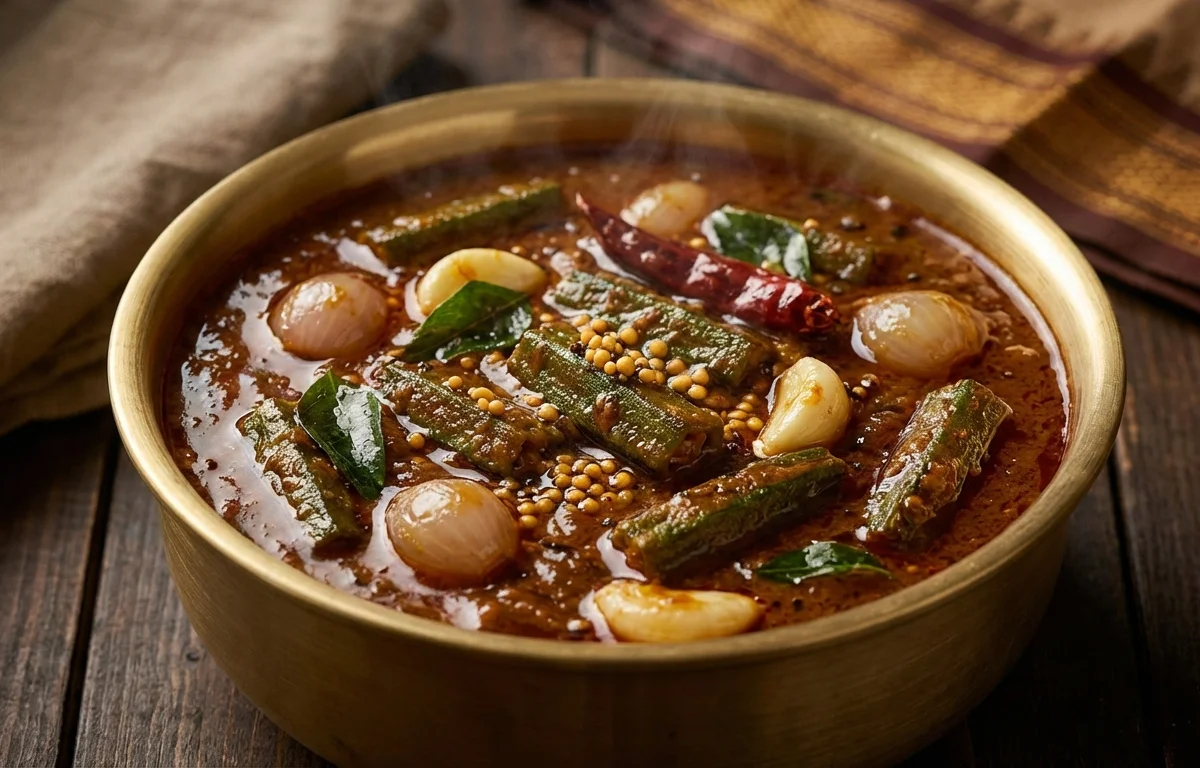
Vendakkai Kara Kuzhambu
A fiery and tangy South Indian curry from Tamil Nadu, featuring tender okra simmered in a tamarind and spice-infused gravy. It's the perfect zesty companion for steamed rice.
For 4 servings
Prepare Tamarind and Okra
- Soak the tamarind ball in 1.5 cups of hot water for about 15 minutes.
- After soaking, squeeze the pulp thoroughly to extract all the juice. Strain this liquid through a fine-mesh sieve, discard the solids, and set the tamarind water aside.
- Crucially, ensure the okra is completely dry before chopping into 1-inch pieces. Any moisture will make the final dish slimy.
Sauté the Okra
- Heat 2 tbsp of gingelly oil in a heavy-bottomed pan or kadai over medium heat.
- Add the chopped okra and sauté for 8-10 minutes, stirring occasionally.
- Continue cooking until the characteristic sliminess disappears and the okra pieces have light brown spots. This step is key for texture. Remove the okra from the pan and set aside.
Temper Spices and Sauté Aromatics
- In the same pan, add the remaining 1 tbsp of oil.
- Once the oil is hot, add the mustard seeds. When they begin to splutter, add the fenugreek seeds, urad dal, and broken dried red chilies.
- Sauté for about 30 seconds until the urad dal turns a pale golden color.
- Add the curry leaves and hing, giving it a quick stir for a few seconds.
- Add the pearl onions and crushed garlic. Sauté for 3-4 minutes until the onions soften and become translucent.
Build the Kuzhambu Gravy
- Add the chopped tomatoes and cook for 4-5 minutes, stirring until they break down and become soft and mushy.
- Lower the heat, then add the sambar powder and turmeric powder. Stir continuously for 1 minute until the spices are fragrant, being careful not to burn them.
- Pour in the prepared tamarind water. Add the salt and jaggery.
- Stir well, increase the heat, and bring the mixture to a rolling boil.
- Reduce the heat to a simmer and cook for 5-7 minutes, uncovered, until the raw smell of the tamarind has gone and the gravy starts to thicken slightly.
Combine and Finish
- Gently add the sautéed okra back into the simmering gravy.
- Mix well, cover the pan, and let it cook on low heat for another 5-7 minutes. This allows the okra to become tender and absorb the flavors of the kuzhambu.
- Check the consistency. It should be thick enough to coat a spoon. If it's too thick, add a splash of hot water. If too thin, simmer for a few more minutes without the lid.
- Turn off the heat and let the kuzhambu rest for at least 10 minutes before serving to allow the flavors to meld.
Serve
- Serve the Vendakkai Kara Kuzhambu hot with steamed rice, a dollop of ghee, and a side of appalam (papad) for a complete and authentic meal.
What to keep in mind.
7 tips from the recipe — small details that make a real difference to the final dish.
- 1Drying the okra thoroughly before chopping is the most important step to prevent a slimy curry.
- 2Sautéing the okra separately until browned ensures it holds its shape and texture in the gravy.
- 3Use gingelly (sesame) oil for the most authentic South Indian flavor.
- 4Don't skip the jaggery; it perfectly balances the sourness of the tamarind and the heat from the spices.
- 5For a deeper flavor, you can dry roast the sambar powder for 30 seconds before adding it to the pan.
- 6The kuzhambu tastes even better the next day as the flavors have more time to meld.
- 7Adjust the amount of tamarind based on its age and sourness. Older tamarind is often more concentrated.
Adapt it for your goals.
Vegetable Addition
You can make this kuzhambu with other vegetables like brinjal (eggplant), drumsticks, or sundakkai (turkey berry). Sauté them similarly to the okra before adding to the gravy.
Spice PowderSpice Powder
For a more traditional flavor, replace the sambar powder with authentic 'Kuzhambu Milagai Thool' if you have it.
Creamier VersionCreamier Version
For a milder, creamier gravy, add 1/4 cup of coconut milk or a tablespoon of ground coconut paste at the very end of cooking. Simmer for just a minute and do not boil.
With LentilsWith Lentils
Add 2 tablespoons of cooked toor dal along with the tamarind water to give the gravy more body and protein.
Why this is on our healthy list.
Rich in Dietary Fiber
Okra is an excellent source of both soluble and insoluble fiber, which aids in digestion, helps maintain bowel regularity, and promotes a healthy gut microbiome.
Packed with Antioxidants
The combination of tamarind, tomatoes, and spices like turmeric provides a rich supply of antioxidants that help protect the body against damage from free radicals.
Supports Blood Sugar Control
The soluble fiber in okra can help slow down the absorption of sugar in the digestive tract, contributing to more stable blood sugar levels.
Anti-inflammatory Properties
Key spices in the dish, such as turmeric (containing curcumin) and garlic, are well-known for their potent anti-inflammatory effects, which can benefit overall health.
Frequently asked questions
Sliminess in okra-based dishes is very common and usually happens for two reasons: 1) The okra was not completely dry when you chopped it. 2) The okra was not sautéed long enough to cook off the slime before being added to the gravy. Ensure you pat the okra bone-dry and sauté it until it gets light brown spots.