
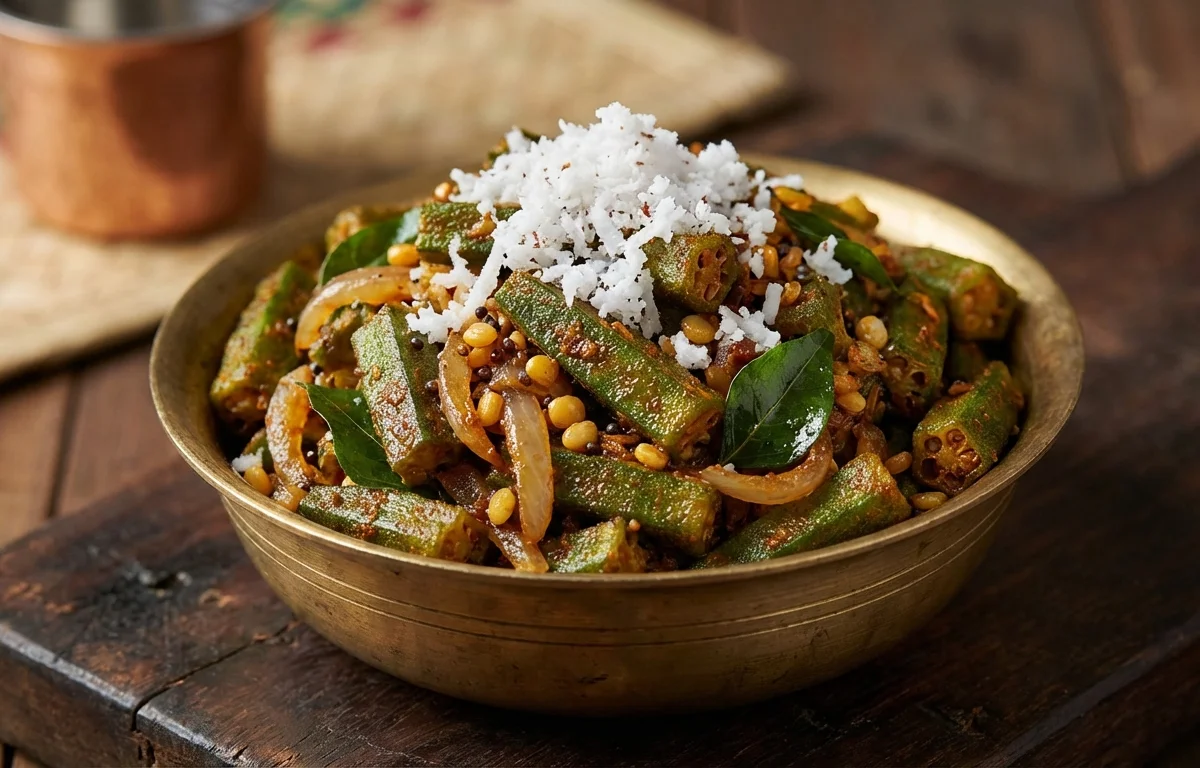
Vendakkai Fry
Crispy, non-slimy okra stir-fried with onions and simple South Indian spices. This quick and easy side dish, also known as Bhindi Fry, is a perfect accompaniment to rice and sambar or dal.
For 4 servings
Prepare the Okra
- Wash the okra thoroughly under running water.
- Spread them on a clean kitchen towel and pat them completely dry. Let them air dry for at least 30 minutes. This is the most critical step to prevent a slimy texture.
- Once bone dry, trim the top and tail of each okra. Chop them into 1/4-inch thick rounds.
Prepare the Tempering (Tadka)
- Heat sesame oil in a wide, heavy-bottomed pan or kadai over medium heat.
- Add the mustard seeds and wait for them to splutter completely, which takes about 30 seconds.
- Add the urad dal and sauté for about a minute until it turns a light golden brown.
- Carefully add the curry leaves and asafoetida (hing). Sauté for another 10-15 seconds until the leaves are crisp and fragrant.
Sauté Onions and Cook Okra
- Add the finely chopped onions to the pan and sauté for 3-4 minutes until they become soft and translucent.
- Add the chopped okra to the pan. Gently toss to coat it evenly with the oil and tempering.
- Cook uncovered on medium to medium-low heat for 15-18 minutes, stirring gently every 3-4 minutes. Do not cover the pan, as trapped steam will make the okra slimy.
- Continue cooking until the slimy texture disappears and the okra pieces are tender and slightly browned at the edges.
Add Spices and Finish
- Once the okra is cooked and no longer slimy, reduce the heat to low.
- Add the turmeric powder, red chili powder, and salt.
- Gently mix until the spices coat the okra evenly. Be careful not to mash the pieces.
- Cook for another 2-3 minutes for the raw spice flavors to mellow.
- If using, stir in the fresh grated coconut. Turn off the heat.
Serve
- Serve the Vendakkai Fry hot as a side dish with steamed rice and sambar, rasam, or dal. It also pairs well with roti or chapati.
What to keep in mind.
6 tips from the recipe — small details that make a real difference to the final dish.
- 1The key to non-slimy okra is ensuring it's completely dry before chopping. Any moisture will activate the mucilage.
- 2Always cook okra in a wide, open pan. Covering it traps steam and results in a sticky texture.
- 3Add salt only at the very end of cooking. Adding it earlier draws out moisture and makes the okra slimy.
- 4For an extra crispy texture, you can add a teaspoon of rice flour or besan (chickpea flour) along with the other spices.
- 5Stir gently and infrequently. Over-stirring can break the okra pieces and make them mushy.
- 6Choose tender, young okra that snaps easily for the best taste and texture. Avoid tough, fibrous ones.
Adapt it for your goals.
With Besan
For a nuttier flavor and crispier texture, add 1 tablespoon of besan (gram flour) in the last 5 minutes of cooking and stir-fry until it's fragrant.
With PeanutsWith Peanuts
Add 2 tablespoons of coarsely crushed roasted peanuts at the end for a delightful crunch.
With Lemon JuiceWith Lemon Juice
Squeeze half a lemon over the finished dish to brighten the flavors and help cut any remaining sliminess.
North Indian Style (Bhindi Fry)North Indian Style (Bhindi Fry)
Omit urad dal and curry leaves. Add 1/2 teaspoon of amchur (dry mango powder) and 1/2 teaspoon of garam masala along with the other spices for a different flavor profile.
Why this is on our healthy list.
Rich in Dietary Fiber
Okra is an excellent source of soluble and insoluble fiber, which aids digestion, helps prevent constipation, and promotes a healthy gut microbiome.
Supports Blood Sugar Control
The high fiber content in okra helps slow down the absorption of sugar in the digestive tract, leading to more stable blood sugar levels.
Packed with Vitamins and Minerals
This dish provides essential nutrients like Vitamin C for immune support, Vitamin K for bone health, and folate, which is crucial for cell growth and metabolism.
Contains Beneficial Antioxidants
Okra is rich in antioxidants called polyphenols, which can reduce inflammation and protect the body against damage from harmful free radicals.
Frequently asked questions
The most common reasons for slimy okra are: 1) Not drying the okra completely after washing. 2) Covering the pan while cooking, which traps steam. 3) Adding salt too early, which draws out moisture. 4) Over-stirring, which breaks down the okra.