
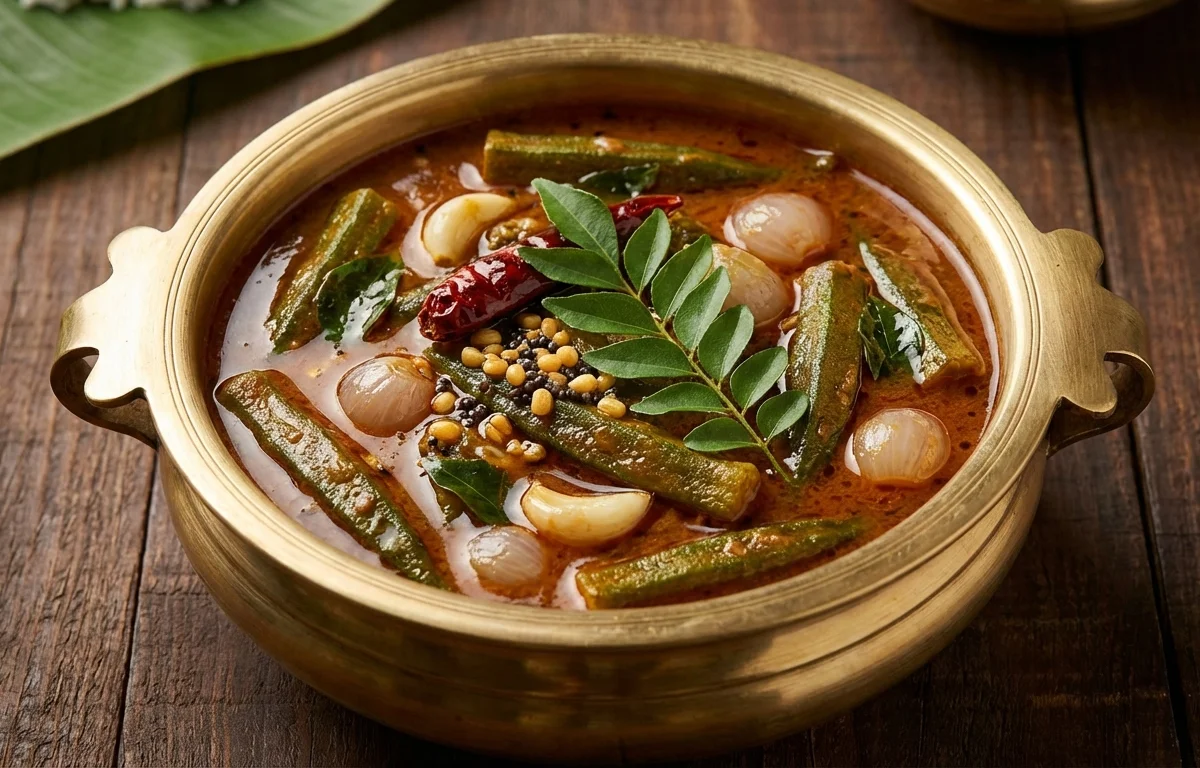
Vendaikkai Puli Kuzhambu
A classic Tamil curry where tender okra is simmered in a tangy tamarind gravy, spiced with sambar powder. This flavorful kuzhambu is a perfect comfort food, best enjoyed with hot steamed rice.
For 4 servings
Preparation: Wash the okra thoroughly and pat completely dry with a cloth to prevent sliminess. Cut them into 1-inch pieces. In a bowl, dilute the tamarind paste in 1.5 cups of warm water and set aside. Peel the sambar onions and lightly crush the garlic cloves.
Sauté Okra: Heat 2 tablespoons of gingelly oil in a heavy-bottomed pan or kadai over medium heat. Add the chopped okra and sauté for 8-10 minutes, stirring occasionally, until they are no longer slimy and have light brown spots. Remove the sautéed okra and set aside.
Tempering and Sautéing Aromatics: In the same pan, add the remaining 2 tablespoons of oil. Once hot, add the mustard seeds. When they begin to splutter, add the fenugreek seeds and sauté for 10-15 seconds until fragrant. Immediately add the curry leaves, asafoetida, crushed garlic, and peeled sambar onions. Sauté for 3-4 minutes until the onions turn soft and translucent.
Build the Gravy Base: Add the finely chopped tomato and cook for 4-5 minutes until it turns soft and mushy. Lower the heat, add the turmeric powder and sambar powder. Stir continuously for one minute until the raw aroma of the spices disappears.
Simmer the Kuzhambu: Pour the prepared tamarind water into the pan. Add salt, powdered jaggery, and the remaining 0.5 cup of water. Stir well and bring the mixture to a vigorous boil. Let it boil for about 5 minutes to cook the tamarind.
Combine and Finish: Add the sautéed okra to the boiling gravy. Mix gently, reduce the heat to low, cover the pan, and let it simmer for 10-12 minutes. The gravy will thicken, and you will see a layer of oil separating on the surface, which indicates it's perfectly cooked. Check the seasoning and adjust if necessary.
Serve: Let the kuzhambu rest for at least 15 minutes before serving. It tastes best served hot with steamed rice, appalam (papad), and a vegetable stir-fry (poriyal).
What to keep in mind.
6 tips from the recipe — small details that make a real difference to the final dish.
- 1Ensure the okra is completely dry before chopping to minimize sliminess. This is the most critical step.
- 2Sautéing the okra separately until lightly browned is essential for the best texture; do not skip this.
- 3Gingelly (Indian sesame) oil provides the most authentic and traditional flavor for this kuzhambu.
- 4The small amount of jaggery is crucial to balance the tanginess of the tamarind and the heat from the spices.
- 5Patience is key. Allow the kuzhambu to simmer on low heat until oil separates on top; this is the sign of a perfectly cooked gravy.
- 6This curry tastes even better the next day as the flavors have more time to meld together.
Adapt it for your goals.
Vegetable Variation
Replace okra with other vegetables like drumsticks (murungakkai), eggplant (brinjal), or sun-dried berries (manathakkali vathal) for a different flavor profile.
Creamier VersionCreamier Version
For a richer, creamier gravy, add 1/4 cup of thin coconut milk during the last 5 minutes of simmering. Do not let it boil vigorously after adding the coconut milk.
With LentilsWith Lentils
Add 2-3 tablespoons of cooked toor dal along with the tamarind water to give the kuzhambu more body and protein.
Why this is on our healthy list.
Rich in Dietary Fiber
Okra is an excellent source of dietary fiber, which aids in digestion, helps maintain stable blood sugar levels, and promotes a feeling of fullness, supporting weight management.
Packed with Antioxidants
Tamarind, tomatoes, and various spices like turmeric are rich in antioxidants. These compounds help combat oxidative stress and inflammation in the body.
Aids Digestion
The combination of tamarind, asafoetida, and fenugreek seeds in this recipe is traditionally known to stimulate digestion and alleviate common digestive issues.
Frequently asked questions
The key is to ensure the okra is completely dry before you chop it. Wash it and pat it dry with a kitchen towel, or let it air dry for a while. Sautéing it in oil separately before adding it to the gravy also helps remove any residual sliminess.