
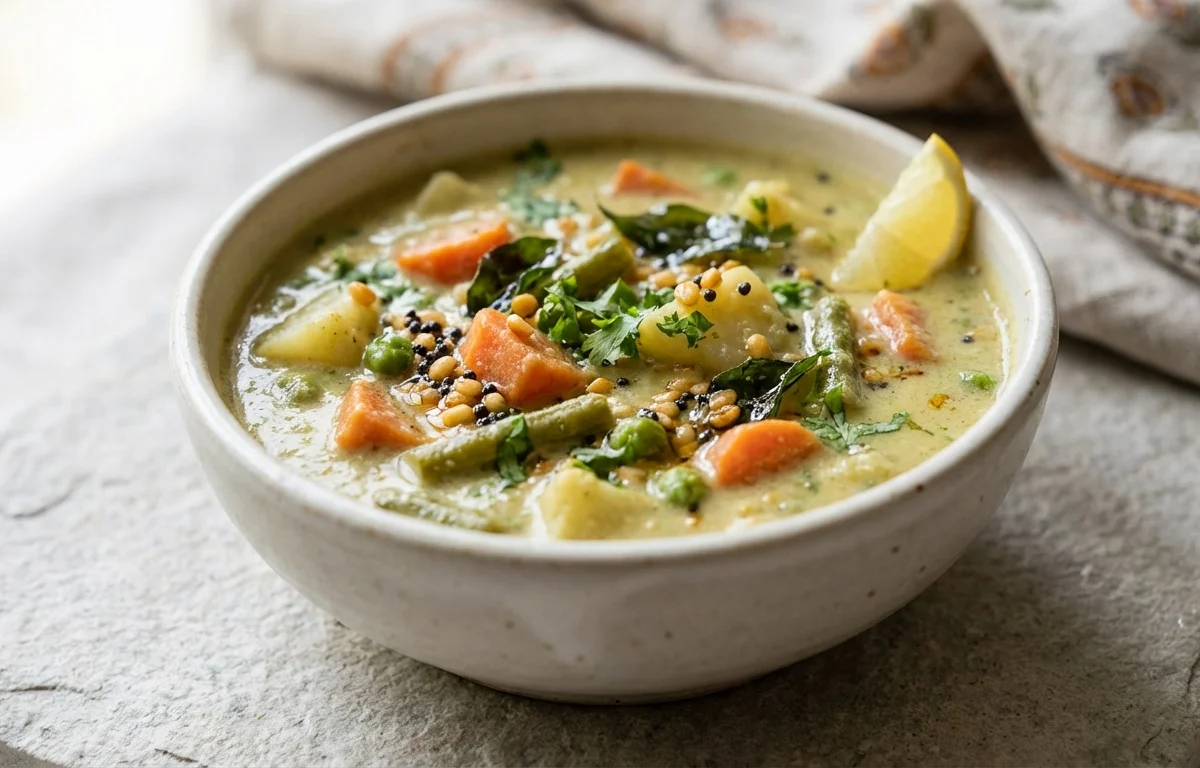
Vegetable Sagu
A fragrant and mildly spiced mixed vegetable curry from Karnataka, simmered in a creamy coconut and green chili masala. This classic side dish is the perfect partner for fluffy pooris, set dosas, or chapatis.
For 4 servings
5 steps. 25 minutes total.
- 1
Step 1
- a.Prepare the Coconut Masala Paste
- b.In a blender jar, combine the grated coconut, green chillies, ginger, garlic cloves, roasted gram dal, cinnamon stick, cloves, and packed coriander leaves.
- c.Add 1/4 cup of water and blend until you have a very smooth, fine paste. Set aside.
- 2
Step 2
- a.Cook the Vegetables
- b.In a medium pot, add the diced carrots, green beans, and potatoes. Cover with water and bring to a boil.
- c.Cook for about 7-8 minutes until the vegetables are almost tender.
- d.Add the green peas and cook for another 2-3 minutes. The vegetables should be cooked through but still retain a slight bite.
- e.Drain the water completely and set the cooked vegetables aside.
- 3
Step 3
- a.Prepare the Tempering (Tadka)
- b.Heat oil in a large pan or kadai over medium heat. Once hot, add the mustard seeds and allow them to splutter.
- c.Add the urad dal, curry leaves, and asafoetida. Sauté for about 30 seconds until the dal turns a light golden brown.
- d.Add the finely chopped onion and sauté for 3-4 minutes until it becomes soft and translucent.
- 4
Step 4
- a.Sauté Masala and Combine
- b.Add the chopped tomato and cook for 4-5 minutes, stirring occasionally, until it breaks down and becomes soft and mushy.
- c.Add the prepared coconut masala paste and turmeric powder. Sauté for 5-7 minutes on medium-low heat until the raw aroma disappears and you see oil separating from the sides of the masala.
- d.Add the cooked vegetables and salt. Gently mix to coat the vegetables evenly with the masala.
- 5
Step 5
- a.Simmer and Finish
- b.Pour in the remaining 1.5 cups of water, stir well, and bring the curry to a gentle boil.
- c.Reduce the heat to low, cover the pan, and let it simmer for 8-10 minutes. This allows the flavors to meld together beautifully.
- d.Turn off the heat. Stir in the fresh lemon juice.
- e.Garnish with more fresh coriander leaves and serve hot.
What to keep in mind.
5 tips from the recipe — small details that make a real difference to the final dish.
- 1For the most authentic flavor and texture, always use fresh coconut. Desiccated coconut will not yield the same creamy result.
- 2Ensure the vegetables are not overcooked; they should be tender but firm to the bite.
- 3Roasted gram dal (pottukadalai) is crucial for thickening the sagu and adding a nutty flavor. If unavailable, you can lightly toast 1 tbsp of chana dal and grind it with the masala.
- 4The consistency of sagu should be like a thick stew. Adjust with a little hot water if it's too thick, or simmer for a few more minutes if it's too thin.
- 5Feel free to add other vegetables like cauliflower florets, chayote squash (seeme badnekai), or sweet corn.
Adapt it for your goals.
Flavor
For a richer, restaurant-style sagu, add 1 tablespoon of poppy seeds (khus khus) and 5-6 cashews to the grinder with the coconut masala ingredients.
ColorColor
To make a 'White Sagu' (Vella Sagu), omit the turmeric powder and tomatoes. This version has a subtler flavor and is also a traditional preparation.
VegetablesVegetables
You can use a different mix of vegetables based on availability. Cauliflower, bell peppers, and sweet potatoes are also great additions. Adjust cooking times accordingly.
Why this is on our healthy list.
Rich in Dietary Fiber
The diverse mix of vegetables like carrots, beans, and peas makes this dish an excellent source of dietary fiber, which aids digestion and promotes gut health.
Provides Healthy Fats
Fresh coconut is a key ingredient that provides medium-chain triglycerides (MCTs), a type of healthy fat that can be a good source of energy.
Packed with Vitamins & Minerals
This curry is a powerhouse of essential nutrients, including Vitamin A from carrots, Vitamin C from tomatoes, and various minerals from the assortment of vegetables.
Anti-inflammatory Properties
Spices like turmeric (containing curcumin), ginger, and garlic are known for their potent anti-inflammatory and antioxidant properties, which help combat oxidative stress.
Frequently asked questions
One serving (approx. 1 cup or 245g) of Vegetable Sagu contains around 250-300 calories. The exact count depends on the amount of oil and coconut used.