
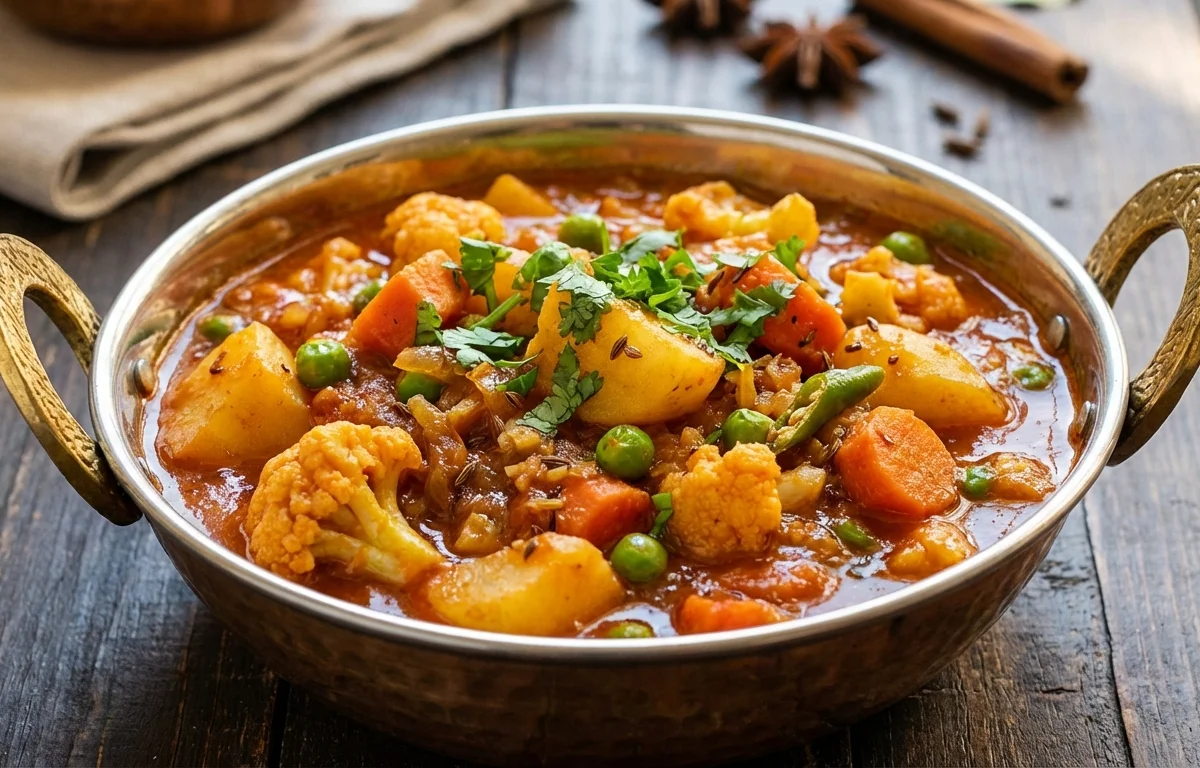
Vegetable Sabzi
A vibrant and wholesome medley of fresh vegetables cooked in a savory onion-tomato masala with aromatic Indian spices. This everyday North Indian classic is a perfect, healthy side dish for rotis and dal.
For 4 servings
8 steps. 25 minutes total.
- 1
Heat oil in a kadai or heavy-bottomed pan over medium heat
- a.Add the cumin seeds and let them splutter for about 30 seconds. Add the asafoetida and stir for a few seconds.
- 2
Step 2
- a.Add the finely chopped onion and sauté for 3-4 minutes until it becomes soft and translucent. Then, add the ginger-garlic paste and slit green chilies, and cook for another minute until the raw aroma disappears.
- 3
Stir in the chopped tomatoes
- a.Add the turmeric powder, red chili powder, coriander powder, and salt. Mix everything well and cook for 5-7 minutes, stirring occasionally, until the tomatoes soften and the oil begins to separate from the masala.
- 4
Step 4
- a.Add the diced potatoes, carrots, French beans, and cauliflower florets to the pan. Gently stir for 2-3 minutes to coat all the vegetables evenly with the masala.
- 5
Step 5
- a.Pour in 1/4 cup of water, reduce the heat to low, cover the pan, and let the vegetables cook for 10-12 minutes. Stir once or twice in between to prevent sticking. The vegetables should be about 80% cooked.
- 6
Add the green peas, mix gently, and cover the pan again
- a.Cook for another 5-7 minutes until all the vegetables are tender but still hold their shape. Avoid overcooking to prevent them from becoming mushy.
- 7
Turn off the heat
- a.Sprinkle the garam masala over the sabzi and garnish with freshly chopped coriander leaves. Give it a final gentle mix. Let it rest for 5 minutes before serving.
- 8
Step 8
- a.Serve the vegetable sabzi hot with fresh rotis, parathas, or as a side dish with dal and rice.
What to keep in mind.
5 tips from the recipe — small details that make a real difference to the final dish.
- 1Cut all vegetables into uniform sizes to ensure they cook evenly.
- 2For a slight tang, squeeze a wedge of lemon juice over the sabzi just before serving.
- 3Do not add too much water, as this is a dry preparation. The vegetables will release their own moisture as they cook.
- 4To retain a slight crunch in the vegetables, avoid overcooking them. They should be tender but not mushy.
- 5If using frozen vegetables, thaw them to room temperature before adding them to the pan to maintain the cooking temperature.
Adapt it for your goals.
Protein-Rich
Add 100g of cubed paneer or a handful of boiled chickpeas along with the green peas for a protein boost.
Semi GravySemi-Gravy
To make a semi-gravy version, increase the water to 1 cup and add 2 tablespoons of cashew paste or cream at the end for a richer texture.
Different VegetablesDifferent Vegetables
Feel free to use other vegetables like bell peppers (capsicum), sweet corn, broccoli, or mushrooms. Add softer vegetables like bell peppers towards the end of the cooking time.
Jain/Satvic VersionJain/Satvic Version
For a no-onion, no-garlic version, simply skip the onion and ginger-garlic paste. The flavor will still be delicious due to the other spices.
Why this is on our healthy list.
Rich in Dietary Fiber
The diverse mix of vegetables provides a high amount of dietary fiber, which aids in digestion, promotes gut health, and helps maintain stable blood sugar levels.
Packed with Vitamins and Minerals
Each vegetable contributes a unique profile of essential vitamins (like A, C, and K) and minerals (like potassium and manganese), supporting overall immunity and bodily functions.
Supports Weight Management
Being low in calories and high in nutrients and fiber, this sabzi is very filling. It can help you feel full for longer, making it an excellent choice for a weight management diet.
Antioxidant Powerhouse
Spices like turmeric and the colorful vegetables are rich in antioxidants, which help combat oxidative stress and reduce inflammation in the body.
Frequently asked questions
One serving of this Vegetable Sabzi contains approximately 160-180 calories, making it a light and healthy option. The exact count can vary based on the specific vegetables and amount of oil used.