
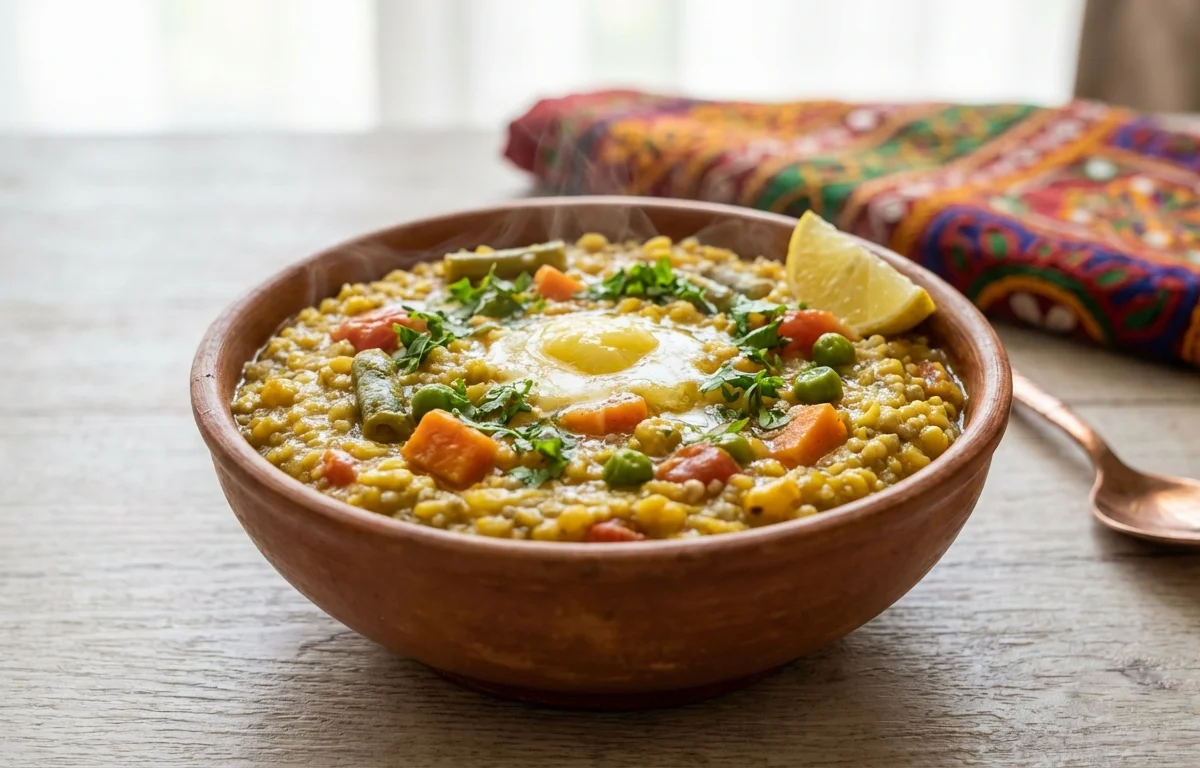
Vegetable Bajra Khichdi
A rustic and hearty one-pot meal from Rajasthan, made with nutritious pearl millet, yellow lentils, and mixed vegetables. It’s a wholesome comfort food, perfect for a light yet filling lunch or dinner.
For 4 servings
6 steps. 40 minutes total.
- 1
Step 1
- a.Prepare the Grains
- b.Rinse the bajra thoroughly under running water 3-4 times. Soak it in ample water for at least 4-6 hours, or overnight.
- c.Rinse the moong dal until the water runs clear. Soak it in water for 30 minutes.
- d.After soaking, drain all the water from both the bajra and moong dal completely.
- 2
Step 2
- a.Pressure Cook Bajra and Dal
- b.In a 3-liter or larger pressure cooker, combine the drained bajra, moong dal, turmeric powder, and 0.5 tsp of salt.
- c.Pour in 3 cups of water and stir well.
- d.Secure the lid and pressure cook on medium heat for 5-6 whistles.
- e.Turn off the heat and allow the pressure to release naturally. This takes about 10-15 minutes.
- f.Once the pressure has settled, open the cooker and gently mash the mixture with the back of a spoon to create a slightly creamy consistency. Set aside.
- 3
Step 3
- a.Prepare the Vegetable Masala
- b.Heat ghee in a large, heavy-bottomed pan or kadai over medium heat.
- c.Once the ghee is hot, add the cumin seeds and let them sizzle and become fragrant, for about 30 seconds.
- d.Add the hing, followed immediately by the finely chopped onion. Sauté for 3-4 minutes until the onions turn soft and translucent.
- e.Add the ginger-garlic paste and slit green chilies. Cook for another minute until the raw aroma disappears.
- 4
Step 4
- a.Cook Vegetables and Spices
- b.Add the chopped tomatoes to the pan. Cook for 4-5 minutes, stirring occasionally, until they become soft and mushy.
- c.Stir in the red chili powder, coriander powder, and the remaining 1 tsp of salt. Sauté the spices for one minute until they release their aroma.
- d.Add the mixed vegetables (carrots, peas, beans) and sauté for 3-4 minutes, coating them well with the masala.
- 5
Step 5
- a.Combine and Simmer
- b.Transfer the cooked bajra-dal mixture from the pressure cooker into the pan with the vegetables.
- c.Mix everything together thoroughly until well combined.
- d.Pour in 1 cup of warm water (or more) to adjust the khichdi to your preferred consistency. It should resemble a thick porridge.
- e.Bring the mixture to a gentle simmer and cook for 5-7 minutes, stirring occasionally, to allow the flavors to meld together.
- 6
Step 6
- a.Finish and Serve
- b.Turn off the heat. Stir in the garam masala and fresh lemon juice.
- c.Garnish generously with chopped coriander leaves.
- d.Serve the vegetable bajra khichdi immediately, with an extra dollop of ghee on top. It pairs wonderfully with plain yogurt, papad, and pickle.
What to keep in mind.
5 tips from the recipe — small details that make a real difference to the final dish.
- 1Soaking the bajra is a crucial step to ensure it cooks properly and is easily digestible. Do not skip it.
- 2For a richer flavor, you can lightly dry roast the bajra in a pan for 2-3 minutes before soaking.
- 3The consistency of the khichdi thickens as it cools. Add a splash of hot water when reheating to restore its texture.
- 4For the most authentic Rajasthani flavor, do not skimp on the ghee. It adds a rich, nutty taste that complements the millet.
- 5Gently mashing the cooked bajra and dal mixture helps create a creamier, more cohesive texture for the khichdi.
Adapt it for your goals.
Protein-Rich
Add 1/2 cup of cubed paneer or boiled chickpeas along with the mixed vegetables for an extra protein boost.
Different GrainsDifferent Grains
Replace bajra with other millets like jowar (sorghum) or foxtail millet. Adjust soaking and cooking times accordingly as they vary.
Spicier VersionSpicier Version
Add a whole dry red chili to the tempering (tadka) and increase the amount of green chilies or red chili powder to your liking.
Creamier TextureCreamier Texture
For a richer, creamier finish, stir in 2 tablespoons of fresh cream or cashew paste at the very end of cooking.
Why this is on our healthy list.
Rich in Fiber & Aids Digestion
Bajra is an excellent source of insoluble dietary fiber, which adds bulk to stool, promotes regular bowel movements, prevents constipation, and helps maintain a healthy gut microbiome.
Gluten-Free and Diabetic-Friendly
As a naturally gluten-free grain with a low glycemic index, bajra releases glucose slowly into the bloodstream. This helps in managing blood sugar levels, making it an ideal food for people with diabetes or celiac disease.
Packed with Plant-Based Protein
The combination of moong dal and bajra provides a complete profile of essential amino acids, offering high-quality plant-based protein that is crucial for muscle repair, growth, and overall body function.
Heart Healthy
Bajra is rich in magnesium, which plays a key role in regulating blood pressure and maintaining a steady heartbeat. The high fiber content also helps in lowering bad cholesterol (LDL) levels, contributing to better cardiovascular health.
Frequently asked questions
Yes, it's exceptionally healthy. Bajra is a gluten-free millet rich in fiber, magnesium, and iron. Moong dal adds plant-based protein, and the vegetables provide essential vitamins and minerals, making it a balanced and nutritious one-pot meal.