
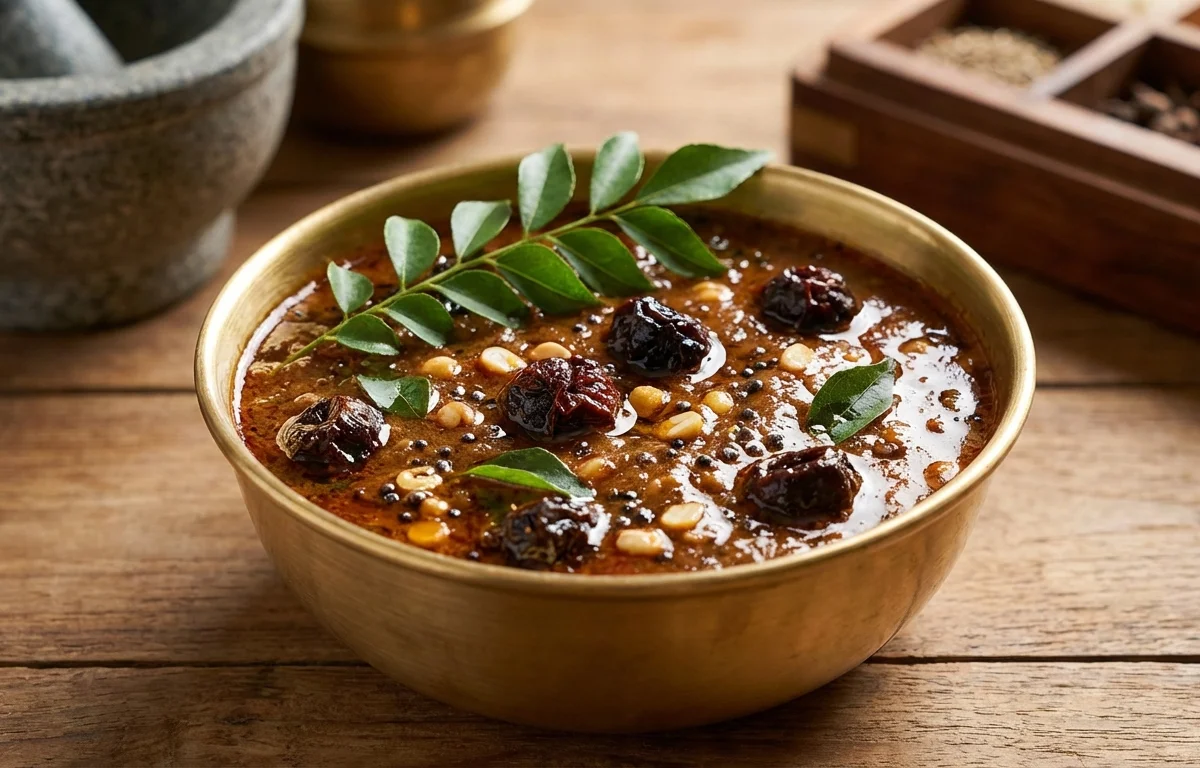
Vathal Kozhambu
A classic Tamil Brahmin curry with a perfect balance of tangy, spicy, and slightly sweet flavors. Made with sun-dried vegetables simmered in a tamarind-based gravy, it's a flavorful dish that pairs wonderfully with hot rice and ghee.
For 4 servings
6 steps. 25 minutes total.
- 1
Prepare the tamarind base
- a.In a bowl, whisk the tamarind paste with 2.5 cups of warm water until it is completely dissolved. Strain if necessary to remove any fibers and set aside.
- 2
Prepare the tempering (tadka)
- a.Heat the sesame oil in a heavy-bottomed pan or kadai over medium heat. Once the oil is hot, add the mustard seeds. When they start to splutter, add the urad dal, chana dal, and fenugreek seeds. Sauté for about a minute until the dals turn a light golden brown.
- 3
Fry the vathal and spices
- a.Add the broken dried red chilies and curry leaves to the pan and sauté for 30 seconds. Then, add the manathakkali vathal and fry on low-medium heat for 1-2 minutes until it puffs up slightly. Be careful not to burn it.
- 4
Add spice powders
- a.Reduce the heat to low and add the hing, turmeric powder, sambar powder, and optional red chili powder. Stir continuously for 30 seconds until fragrant.
- 5
Simmer the kozhambu
- a.Immediately pour the prepared tamarind water into the pan. Add the salt and jaggery, and stir well to combine. Bring the mixture to a vigorous boil, then reduce the heat to low, cover the pan, and let it simmer for 15-20 minutes. The gravy will thicken, and you will see oil separating at the edges.
- 6
Thicken and finish
- a.If you prefer a thicker gravy, make a slurry by mixing the rice flour with 2 tablespoons of water. Pour this slurry into the simmering kozhambu, stirring constantly to prevent lumps. Cook for another 2-3 minutes. Turn off the heat and let it rest for at least 20-30 minutes before serving to allow the flavors to meld.
What to keep in mind.
6 tips from the recipe — small details that make a real difference to the final dish.
- 1For the most authentic flavor, use high-quality, dark sesame oil (gingelly oil).
- 2Fry the vathal on low heat to prevent it from burning, which can impart a bitter taste to the entire dish.
- 3The jaggery is crucial for balancing the sourness of the tamarind and the bitterness of the vathal. Adjust the amount to your preference.
- 4Vathal Kozhambu tastes even better the next day as the flavors deepen and mature.
- 5Always add the spice powders on low heat to prevent them from burning.
- 6Let the kozhambu rest before serving. This allows the flavors to fully develop and meld together.
Adapt it for your goals.
Vegetable Addition
Sauté vegetables like pearl onions (shallots), drumsticks, or small brinjals along with the tempering before adding the tamarind water.
Vathal TypeVathal Type
Substitute manathakkali vathal with sundakkai vathal (dried turkey berry) or a mix of different vathals for a different flavor profile.
Garlic FlavorGarlic Flavor
Add 4-5 cloves of lightly crushed garlic along with the tempering for a pungent, aromatic twist.
Creamier TextureCreamier Texture
For a slightly thicker and milder version, add 2 tablespoons of cooked, mashed toor dal along with the tamarind water.
Why this is on our healthy list.
Aids Digestion
Tamarind acts as a natural mild laxative, while spices like hing (asafoetida) and fenugreek seeds are known to improve digestion, reduce gas, and prevent bloating.
Rich in Antioxidants
The key ingredients like tamarind, turmeric, and red chilies are loaded with antioxidants that help combat oxidative stress and protect the body's cells from damage.
Anti-inflammatory Properties
Turmeric contains curcumin, a powerful anti-inflammatory compound. The spices used in this dish can help reduce inflammation in the body.
Frequently asked questions
Vathal are sun-dried vegetables, berries, or legumes, preserved in salt and sometimes buttermilk. They are a staple in South Indian pantries and are used to make curries when fresh vegetables are not available.