
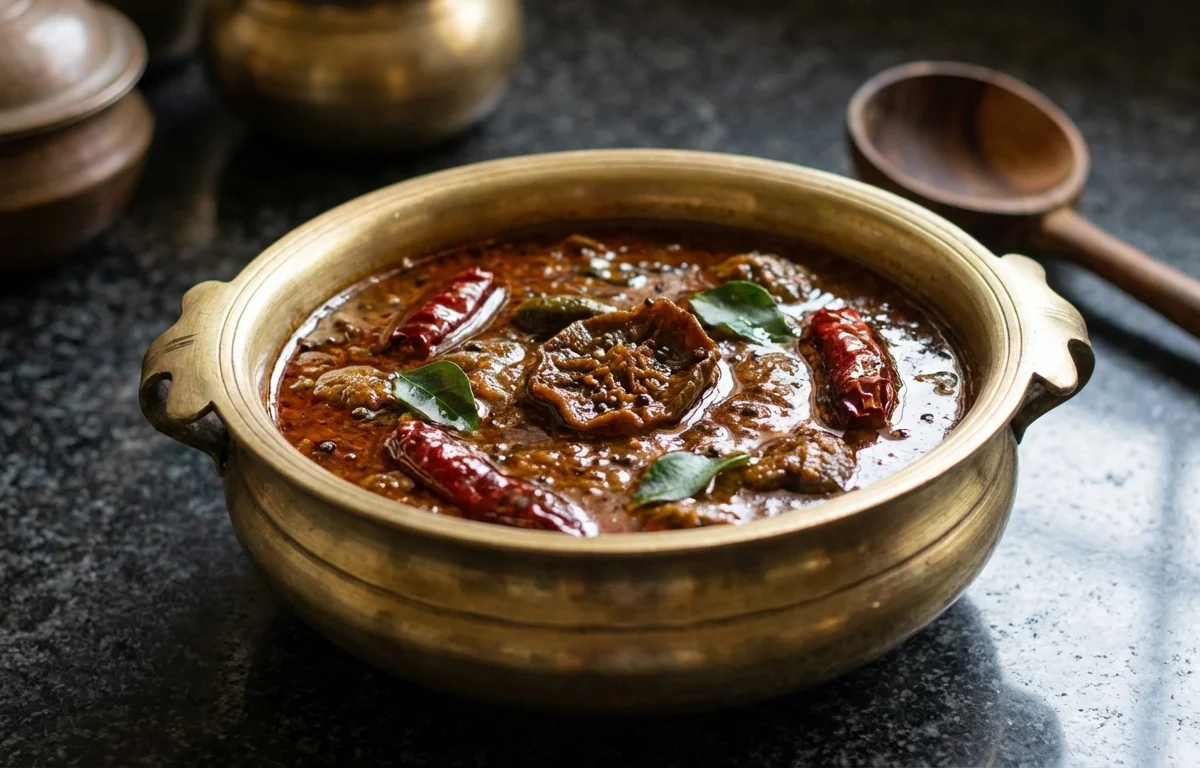
Vatha Kulambu
A classic Tamil delicacy, this tangy and spicy tamarind-based curry features sun-dried turkey berries (sundakkai vathal). Its intense, complex flavor pairs perfectly with hot rice and a dollop of ghee.
For 4 servings
Prepare Tamarind Extract: In a bowl, dissolve the tamarind paste in 2.5 cups of warm water. Mix well and strain the liquid through a fine-mesh sieve to remove any fibers or seeds. Set this tamarind water aside.
Temper Spices: Heat the gingelly oil in a heavy-bottomed pan or clay pot (kadai) over medium heat. Once hot, add the mustard seeds. When they begin to splutter, add the fenugreek seeds, tur dal, and broken dried red chilies. Sauté for about 30 seconds until the dal turns a light golden brown.
Sauté Aromatics: Add the curry leaves and asafoetida, giving it a quick stir. Immediately add the peeled sambar onions and lightly crushed garlic cloves. Sauté for 4-5 minutes until the onions soften and become translucent.
Fry the Vathal: Add the sundakkai vathal to the pan. Fry for 1-2 minutes, stirring continuously, until they puff up slightly and become aromatic. Be careful not to let them burn.
Build the Gravy: Lower the heat and add the turmeric powder and sambar powder. Stir for 30 seconds until fragrant, then immediately pour in the prepared tamarind water to prevent the spices from burning.
Simmer the Kulambu: Add the salt and jaggery to the pan. Stir well to combine. Bring the mixture to a rolling boil, then reduce the heat to low. Partially cover the pan and let it simmer for 15-20 minutes. The gravy will thicken, the raw smell of tamarind will dissipate, and oil will start to separate at the edges.
Thicken (Optional) & Rest: If you prefer a thicker gravy, mix the rice flour with 2 tablespoons of water in a small bowl to form a smooth, lump-free slurry. Pour this into the simmering kulambu while stirring continuously. Cook for another 2-3 minutes until it thickens.
Serve: Turn off the heat and let the Vatha Kulambu rest for at least 20-30 minutes for the flavors to meld beautifully. Serve hot with steamed rice, a dollop of ghee, and a side of appalam (papad).
What to keep in mind.
6 tips from the recipe — small details that make a real difference to the final dish.
- 1The authentic flavor comes from gingelly (sesame) oil; try not to substitute it for the best taste.
- 2Vatha Kulambu tastes even better the next day as the flavors mature and deepen.
- 3Adjust the jaggery and sambar powder to balance the tangy, sweet, and spicy notes to your liking.
- 4Since vathal is already salted, add salt cautiously. Taste the gravy before adding the full amount.
- 5For a richer flavor, you can use a mix of vathals like sundakkai and manathakkali.
- 6Cooking in a traditional clay pot (man chatti) enhances the earthy flavor of the kulambu.
Adapt it for your goals.
Vegetable Vatha Kulambu
Add vegetables like drumsticks, brinjal (eggplant), or okra along with the onions for a heartier version.
Different VathalDifferent Vathal
Replace sundakkai vathal with manathakkali vathal (black nightshade), pavakkai vathal (bitter gourd), or even dried mango pieces for a different flavor profile.
No Onion/Garlic VersionNo Onion/Garlic Version
For a sattvic version, simply omit the sambar onions and garlic. The flavor will still be robust from the spices and tamarind.
Creamy VersionCreamy Version
Add 2-3 tablespoons of coconut milk or a tablespoon of ground coconut paste at the end of simmering for a milder, creamier texture.
Why this is on our healthy list.
Aids Digestion
Tamarind acts as a natural laxative, while spices like asafoetida and fenugreek help reduce bloating and improve overall gut health.
Rich in Antioxidants
The combination of tamarind, turmeric, curry leaves, and sundakkai provides a powerful dose of antioxidants that combat cellular damage from free radicals.
Anti-inflammatory Properties
Curcumin in turmeric and other compounds in the spices offer potent anti-inflammatory benefits, which can help manage chronic inflammation in the body.
Good Source of Iron
Sundakkai (turkey berry) is traditionally valued for its high iron content, making this dish beneficial for preventing anemia and boosting energy levels.
Frequently asked questions
A single serving (approx. 1 cup or 245g) of Vatha Kulambu contains around 180-220 calories, primarily from the oil and carbohydrates. The exact count can vary based on the amount of oil and jaggery used.