
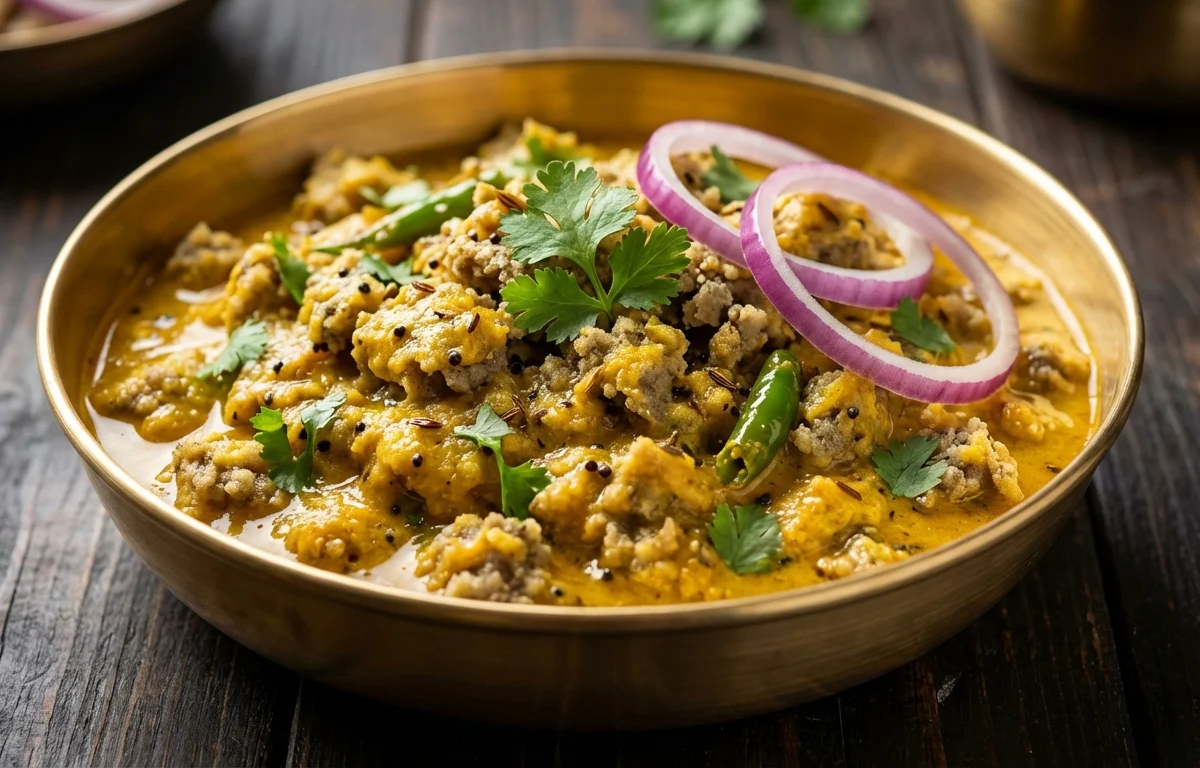
Vagharelo Rotlo
A comforting Gujarati breakfast made from leftover pearl millet flatbreads (bajra rotla) crumbled and sautéed with yogurt and spices. This savory, tangy, and soft dish is a delicious way to repurpose leftovers.
For 4 servings
5 steps. 10 minutes total.
- 1
Step 1
- a.Prepare Rotla and Curd Mixture
- b.Take the leftover bajra rotlas and crumble them with your hands into small, bite-sized pieces. Aim for pieces about half an inch in size. Set aside.
- c.In a separate bowl, whisk the curd and 1/4 cup of water together until you have a smooth, lump-free mixture.
- 2
Step 2
- a.Temper the Spices (Vaghar)
- b.Heat oil in a wide, heavy-bottomed pan or kadai over medium heat.
- c.Once the oil is hot, add the mustard seeds. Wait for about 30 seconds until they begin to splutter and pop.
- d.Immediately add the cumin seeds and hing. Sauté for another 15-20 seconds until the cumin seeds turn golden and fragrant.
- 3
Step 3
- a.Sauté Aromatics
- b.Add the finely chopped onion, minced garlic, and green chilies to the pan.
- c.Sauté for 3-4 minutes, stirring frequently, until the onions soften and become translucent.
- d.Reduce the heat to low. Add the turmeric powder, red chili powder, and coriander powder. Stir continuously for 30 seconds to cook the spices without burning them.
- 4
Step 4
- a.Combine and Cook
- b.Add the crumbled rotlo pieces, salt, and optional sugar to the pan. Mix thoroughly to ensure the rotlo is evenly coated with the spice masala.
- c.Pour the whisked curd-water mixture all over the rotlo.
- d.Gently stir everything together. Cook on low heat for 3-4 minutes, allowing the rotlo to absorb the moisture and become soft and flavorful. Avoid over-mixing to prevent it from becoming mushy.
- 5
Step 5
- a.Garnish and Serve
- b.Once the dish is heated through and has reached a semi-dry consistency, turn off the heat.
- c.Garnish with freshly chopped coriander leaves and serve immediately while hot.
What to keep in mind.
5 tips from the recipe — small details that make a real difference to the final dish.
- 1For the best texture, use day-old, slightly dry rotla. Fresh rotla can become too soft and mushy.
- 2Always add the curd mixture on low heat and stir gently to prevent it from curdling.
- 3If your curd is very sour, you can increase the amount of sugar slightly or add a splash of milk to balance the flavor.
- 4For a richer flavor, you can use ghee instead of oil for the tempering.
- 5Serve immediately. Vagharelo Rotlo tends to dry out as it cools.
Adapt it for your goals.
Add Vegetables
Sauté finely chopped vegetables like carrots, peas, or bell peppers along with the onions for added nutrition and texture.
Different FlatbreadsDifferent Flatbreads
This recipe also works well with leftover jowar (sorghum) rotla or even whole wheat rotis (chapatis).
Vegan VersionVegan Version
Substitute the dairy curd with a plant-based yogurt like cashew or peanut curd. Ensure the yogurt is unsweetened.
Spicier VersionSpicier Version
Add a slit green chili along with the tempering and increase the amount of red chili powder for extra heat.
Why this is on our healthy list.
Rich in Fiber
Bajra (pearl millet) is an excellent source of dietary fiber, which aids in digestion, promotes a feeling of fullness, and helps maintain stable blood sugar levels.
Gut-Friendly Probiotics
The use of curd (yogurt) introduces beneficial probiotics into the dish, which support a healthy gut microbiome, improve digestion, and boost immunity.
Sustained Energy Release
As a complex carbohydrate, bajra provides a slow and steady release of energy, making this dish a great option for a fulfilling breakfast or lunch that keeps you energized for longer.
Gluten-Free Grain
This dish is naturally gluten-free as it is made from pearl millet, making it a suitable and nutritious option for individuals with celiac disease or gluten sensitivity.
Frequently asked questions
Vagharelo Rotlo is a traditional Gujarati dish made by crumbling leftover pearl millet flatbreads (bajra rotla) and sautéing them with spices, onions, garlic, and yogurt. 'Vagharelo' means 'tempered', referring to the cooking process.