
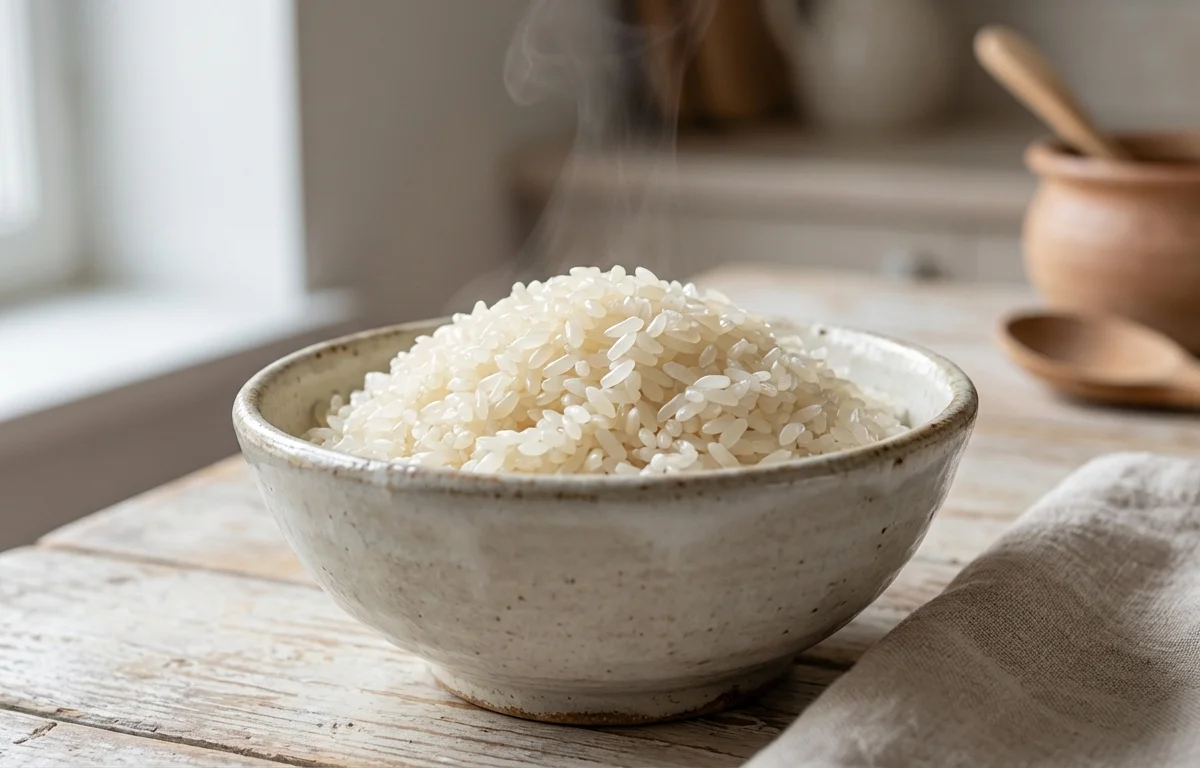
Usuna Arna
A simple, everyday staple from Odisha, Usuna Arna is perfectly cooked parboiled rice. It's the comforting foundation for classic Odia meals like dalma, santula, and various curries, loved for its distinct texture and nutty flavor.
For 4 servings
Rinse and Soak the Rice
- Take the parboiled rice in a large bowl. Rinse it under cold running water 3-4 times, gently rubbing the grains, until the water runs mostly clear.
- Add fresh water to cover the rice by at least 2 inches. Let it soak for a minimum of 30 minutes and up to 1 hour. This step is crucial for a soft, fluffy texture.
Boil the Rice
- Drain the soaking water completely.
- Transfer the soaked rice to a large, heavy-bottomed pot. Add 6 cups of fresh water and the optional salt.
- Place the pot on the stove over medium-high heat and bring the water to a rolling boil. This will take about 5-7 minutes.
Simmer Until Cooked
- Once the water is boiling, reduce the heat to a medium simmer. Cook uncovered for 15-20 minutes, stirring occasionally to prevent the rice from sticking to the bottom.
- To check for doneness, carefully take a few grains and press them between your thumb and forefinger. They should be completely soft and mash easily.
Drain and Steam
- Once cooked, carefully drain the rice through a fine-mesh sieve or colander to remove all the excess starchy water (known as 'peja' or 'toraani').
- Immediately return the drained rice to the hot pot. Cover with a tight-fitting lid and let it stand off the heat for 5-10 minutes.
- This final steaming step allows the grains to absorb any remaining moisture, firm up, and become perfectly fluffy.
Serve
- Gently fluff the cooked Usuna Arna with a fork to separate the grains.
- Serve hot as the perfect accompaniment to Odia dishes like Dalma, Santula, or any curry.
What to keep in mind.
4 tips from the recipe — small details that make a real difference to the final dish.
- 1Soaking is a crucial step for parboiled rice; don't skip it as it ensures a softer, more evenly cooked result.
- 2The drained starchy water, known as 'peja' or 'toraani', is nutritious. Let it cool and drink it with a pinch of salt for a traditional, hydrating beverage.
- 3Always use a large pot to boil rice, at least three times the volume of the rice and water, to prevent the starchy water from boiling over.
- 4The cooking time can vary slightly depending on the age and variety of the rice. Older rice might require a few extra minutes and a little more water.
Adapt it for your goals.
Aromatic Rice
For a fragrant version, add 1 bay leaf, 2-3 green cardamoms, and 2 cloves to the water while boiling the rice. Remove the whole spices before serving.
Turmeric RiceTurmeric Rice
Add 1/4 teaspoon of turmeric powder to the boiling water for a beautiful yellow color and added anti-inflammatory benefits.
Why this is on our healthy list.
Lower Glycemic Index
Parboiled rice has a lower glycemic index compared to regular white rice, which means it causes a slower, more gradual rise in blood sugar levels, making it a better choice for individuals managing diabetes.
Rich in B-Vitamins
The unique parboiling process forces nutrients from the bran and germ into the endosperm. This results in higher retention of B-vitamins like thiamine and niacin, which are essential for energy metabolism.
Promotes Gut Health
Parboiled rice contains a higher amount of resistant starch, which acts as a prebiotic. It feeds the beneficial bacteria in your gut, promoting a healthy digestive system.
Frequently asked questions
Usuna Arna is the Odia term for cooked parboiled rice. It's a staple food in Odisha and many parts of Eastern India, prepared by boiling the rice in excess water and then draining it.