
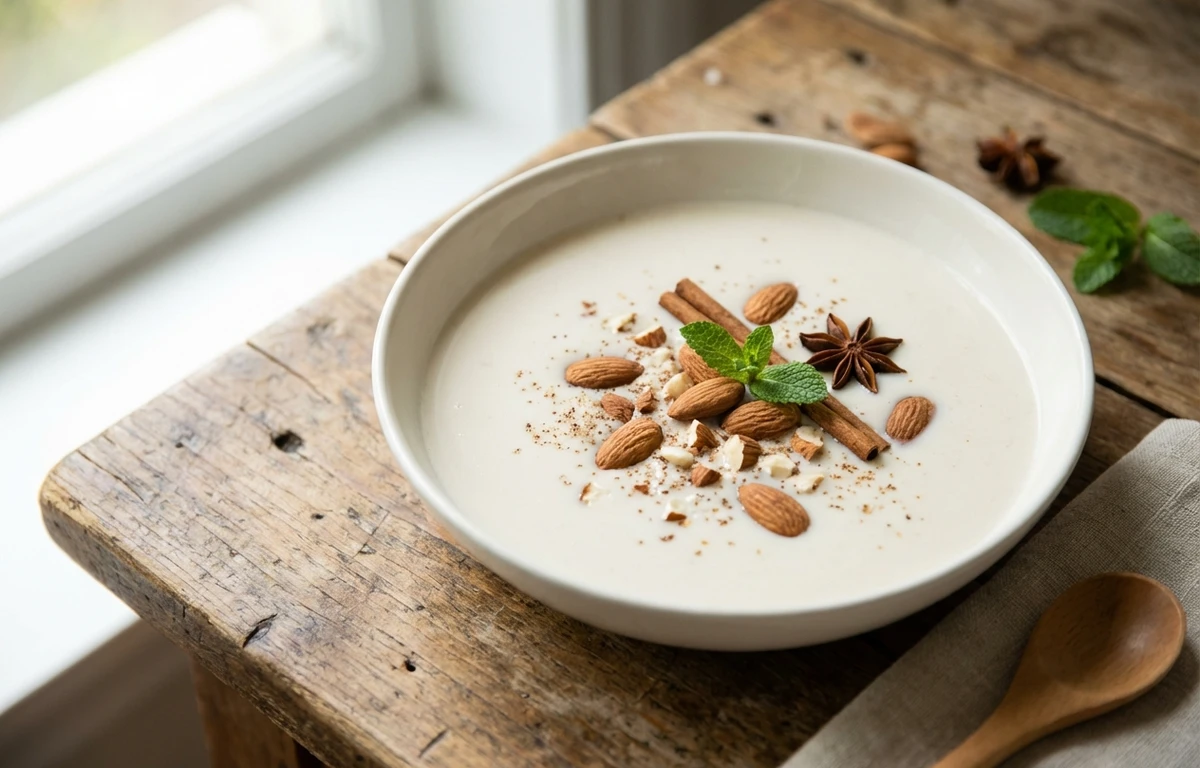
Unfortified Almond Milk
Create your own creamy, fresh almond milk at home with this simple recipe. It's naturally free from the fortifications, thickeners, and preservatives found in store-bought versions, making it a perfect choice for special dietary needs.
For 4 servings
4 steps.
- 1
Step 1
- a.Soak the almonds
- b.Place the raw almonds in a medium bowl.
- c.Cover them completely with water by at least 2 inches.
- d.Let the almonds soak for at least 8 hours, or overnight, at room temperature.
- e.After soaking, drain the water and rinse the almonds thoroughly under fresh water.
- 2
Step 2
- a.Blend the almonds and water
- b.Transfer the soaked and rinsed almonds to a high-speed blender.
- c.Add 4 cups of fresh, filtered water.
- d.If using, add the optional maple syrup, vanilla extract, and salt.
- e.Secure the lid and blend on high speed for 1 to 2 minutes, until the mixture is completely smooth and creamy.
- 3
Step 3
- a.Strain the almond milk
- b.Place a nut milk bag or a cheesecloth-lined strainer over a large bowl or pitcher.
- c.Carefully pour the blended almond mixture into the bag.
- d.Gather the top of the bag and gently squeeze from the top down to press all the liquid out. Continue squeezing until the pulp is as dry as possible.
- 4
Step 4
- a.Store the almond milk
- b.Transfer the strained almond milk into a glass jar or bottle with a tight-fitting lid.
- c.Store in the refrigerator for up to 4 days. Shake well before each use as separation is natural.
What to keep in mind.
6 tips from the recipe — small details that make a real difference to the final dish.
- 1For the creamiest milk, use a high-speed blender. It breaks down the almonds more effectively.
- 2Don't skip the soaking step! It softens the almonds, making them easier to blend and resulting in a smoother milk.
- 3The leftover almond pulp is nutritious. Don't throw it away! You can use it in smoothies, oatmeal, or baked goods like cookies and crackers.
- 4For a quicker version, you can soak the almonds in very hot (not boiling) water for 30-60 minutes.
- 5Always shake the milk before serving, as natural separation will occur without commercial stabilizers.
- 6Feel free to adjust the water-to-almond ratio. Use less water for a richer, creamier milk, or more water for a lighter version.
Adapt it for your goals.
Quick
If you're short on time, use 1 cup of blanched slivered almonds and soak them in hot water for just 30 minutes before blending.
ckd friendlyCkd friendly
This recipe is naturally low in phosphorus and potassium. To further adapt it, omit the optional salt and maple syrup to minimize sodium and sugar intake.
healthyHealthy
For a sugar-free version, sweeten the milk with 1-2 pitted Medjool dates instead of maple syrup. Blend them along with the almonds and water.
Why this is on our healthy list.
Low in Phosphorus & Potassium
Unlike dairy milk, unfortified almond milk is naturally low in phosphorus and potassium, making it a safer and healthier choice for individuals with kidney disease.
Dairy-Free and Vegan
This milk is entirely plant-based, making it suitable for vegans and those with lactose intolerance or a dairy allergy.
No Additives or Preservatives
By making it at home, you avoid the gums, thickeners, and preservatives commonly added to commercial almond milk, resulting in a cleaner product.
Rich in Vitamin E
Almonds are a great source of Vitamin E, a powerful antioxidant that helps protect your cells from oxidative damage.
Frequently asked questions
Yes, homemade unfortified almond milk is very healthy. It's low in calories, naturally dairy-free and lactose-free, and contains no additives. It's an excellent choice for those on kidney-friendly diets as it's low in phosphorus and potassium.