
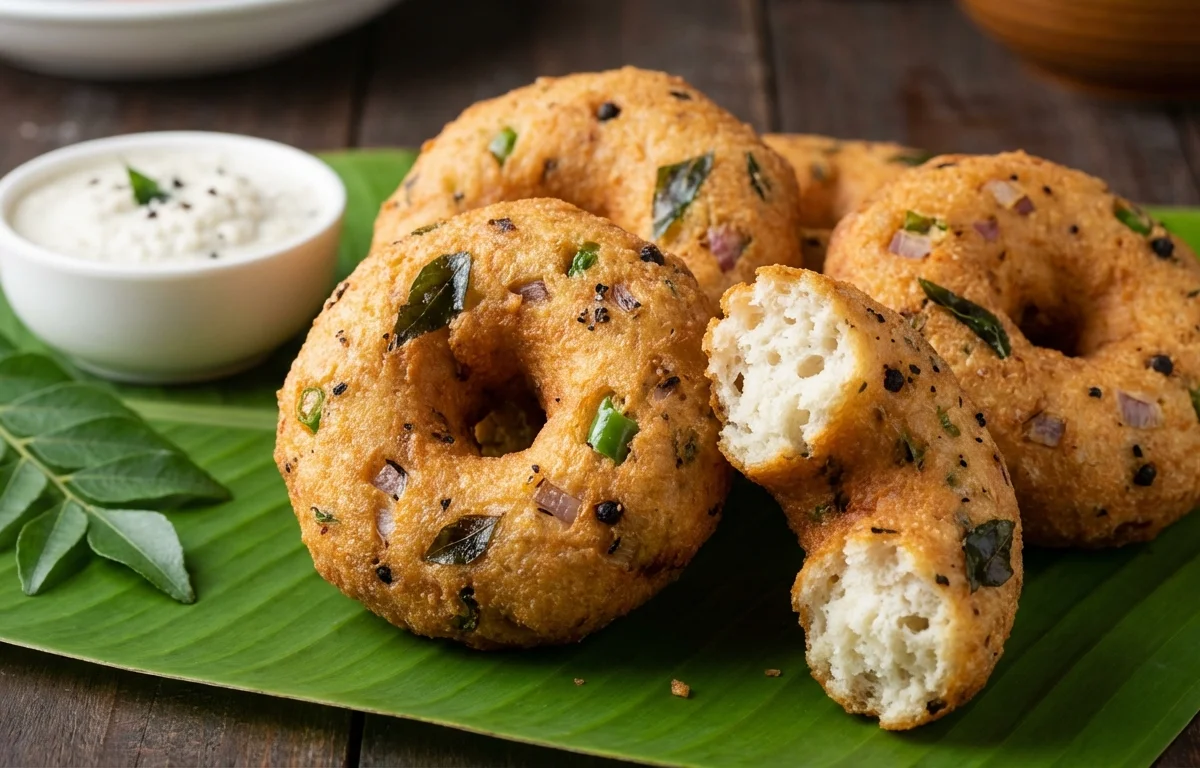
Ulundu Vadai
Crispy on the outside, soft and fluffy on the inside, these savory lentil donuts are a South Indian classic. Made from urad dal batter, they are perfect with sambar and coconut chutney.
For 4 servings
6 steps. 20 minutes total.
- 1
Step 1
- a.Soak the Dal
- b.Rinse the urad dal thoroughly under cold running water until the water runs clear.
- c.Soak the dal in at least 3 cups of fresh water for a minimum of 3 hours and a maximum of 4 hours. Over-soaking can make the vadas absorb more oil.
- 2
Step 2
- a.Grind the Batter
- b.Drain the soaked dal completely, ensuring no water is left.
- c.Transfer the dal to a wet grinder or a high-powered blender.
- d.Grind the dal into a thick, smooth, and fluffy batter. Add 1 tablespoon of ice water at a time, only if necessary, to help the blades move. The final batter should be very thick and paste-like.
- e.Transfer the batter to a large bowl. Using your hand or a whisk, beat the batter in a circular motion for 3-5 minutes. This incorporates air, which is crucial for light and fluffy vadas.
- 3
Step 3
- a.Check Batter Consistency and Mix
- b.To check if the batter is ready, drop a small dollop into a bowl of water. It should float immediately. If it sinks, beat the batter for a few more minutes and test again.
- c.Once the batter is aerated, gently fold in the finely chopped onion, green chilies, ginger, curry leaves, crushed peppercorns, asafoetida, and rice flour.
- d.Do NOT add salt yet. Adding it now will cause the onions to release water and make the batter runny.
- 4
Step 4
- a.Heat Oil and Finalize Batter
- b.Pour oil into a heavy-bottomed kadai or deep pan, filling it to about one-third of its capacity. Heat the oil over medium heat to about 175°C (350°F).
- c.If you don't have a thermometer, drop a tiny bit of batter into the oil. It should sizzle and rise to the top steadily without browning too quickly.
- d.Just before you are ready to fry, add the salt to the batter and mix gently.
- 5
Step 5
- a.Shape and Fry the Vadas
- b.Keep a small bowl of water nearby. Dip your hands in the water to prevent the batter from sticking.
- c.Take a lemon-sized portion of the batter onto your wet palm. Flatten it slightly into a disc and use your thumb to make a hole in the center.
- d.Carefully and gently slide the shaped vada into the hot oil from the side of the pan to avoid splashing.
- e.Fry 3-4 vadas at a time, avoiding overcrowding the pan. Fry on medium heat for 2-3 minutes per side, until they are golden brown, crisp, and cooked through.
- f.Use a slotted spoon to remove the vadas from the oil and place them on a wire rack or a plate lined with paper towels to drain excess oil.
- 6
Step 6
- a.Serve
- b.Serve the Ulundu Vadas immediately while they are hot and crispy with traditional accompaniments like sambar and coconut chutney.
What to keep in mind.
6 tips from the recipe — small details that make a real difference to the final dish.
- 1The key to fluffy vadas is a thick, well-aerated batter. Use minimal ice-cold water while grinding.
- 2Always perform the 'float test' to ensure your batter is light enough before frying.
- 3Add salt only at the very end, just before frying, to prevent the batter from becoming watery.
- 4Maintain a consistent medium heat for the oil. If the oil is too hot, the vadas will brown quickly but remain raw inside. If it's not hot enough, they will absorb too much oil.
- 5Wet your hands with water before shaping each vada. This makes the sticky batter easy to handle and shape.
- 6If your batter becomes watery by mistake, add 1-2 tablespoons of rice flour or fine semolina (rava) to thicken it.
Adapt it for your goals.
Sambar Vada
After frying, soak the hot vadas in a bowl of warm water for 5 minutes to soften them. Gently squeeze out the water and then immerse them in hot, flavorful sambar for at least 30 minutes before serving.
Rasam VadaRasam Vada
A lighter alternative to Sambar Vada. Soak the fried vadas in hot, tangy rasam and garnish with fresh coriander.
Masala VadaMasala Vada
Add 1/4 cup of finely chopped dill leaves (suva/sabbasige) and a pinch of turmeric powder to the batter for a different flavor profile.
Plain Vada (Medu Vada)Plain Vada (Medu Vada)
For a simpler version, omit the onions. This is a common preparation for religious festivals or offerings.
Why this is on our healthy list.
Rich in Plant-Based Protein
Urad dal is an excellent source of plant-based protein, which is essential for building and repairing tissues, muscle growth, and overall body function.
Good Source of Dietary Fiber
The lentils provide a good amount of dietary fiber, which aids in digestion, helps prevent constipation, and promotes a feeling of fullness, which can help with weight management.
Energy Booster
Urad dal is rich in iron, which plays a vital role in carrying oxygen throughout the body. This helps combat fatigue and boosts overall energy levels.
Supports Bone Health
Containing important minerals like magnesium, potassium, phosphorus, and calcium, urad dal contributes to maintaining and improving bone mineral density.
Frequently asked questions
This usually happens for two reasons: the batter was not aerated enough, or too much water was used during grinding. Beat the batter vigorously for several minutes until it's light and passes the 'float test' to ensure fluffy vadas.