
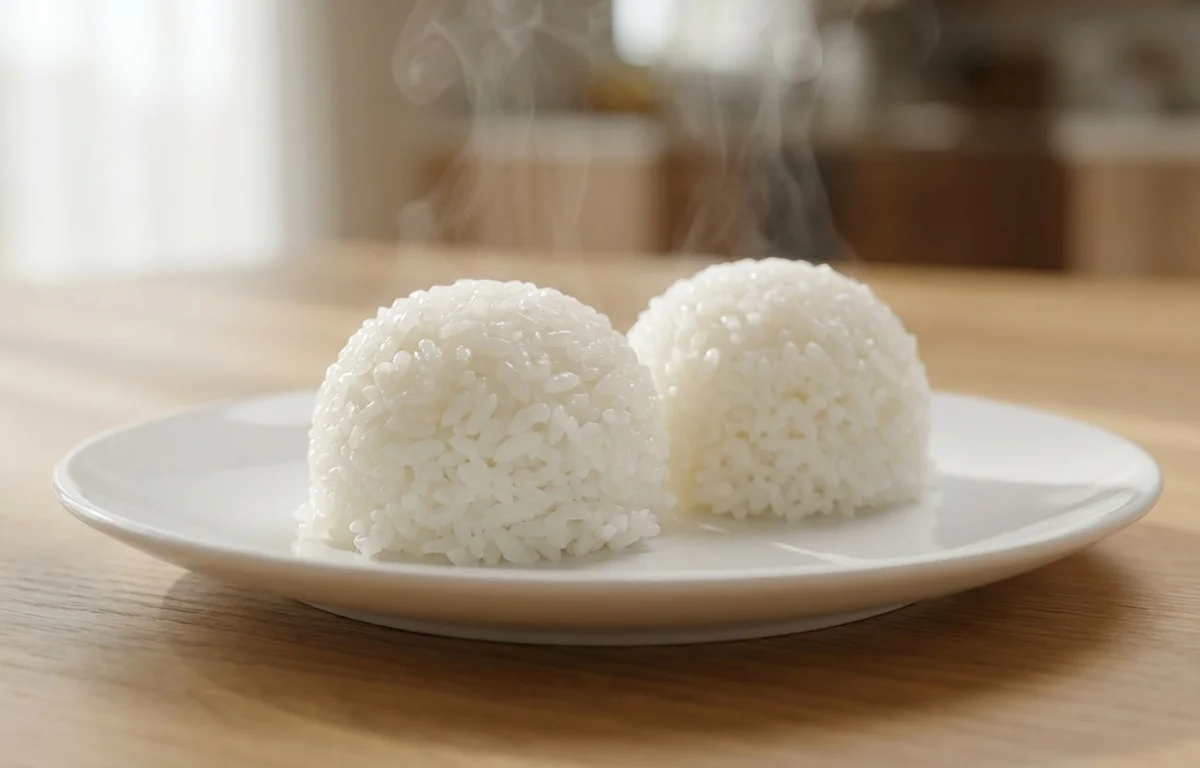
Two Scoops Rice
The essential foundation of any Hawaiian plate lunch! This perfectly steamed, slightly sticky short-grain rice is ideal for soaking up delicious gravy from kalua pig or chicken katsu. Simple, satisfying, and a true taste of the islands.
For 4 servings
4 steps. 30 minutes total.
- 1
Step 1
- a.Rinse the Rice
- b.Place the Calrose rice in a medium bowl and cover with cold water.
- c.Gently swirl the rice with your fingers to release the excess starch. The water will become cloudy.
- d.Carefully pour out the cloudy water, using your hand to keep the rice from spilling.
- e.Repeat this rinsing process 3 to 4 more times, until the water runs mostly clear. Drain the rice completely in a fine-mesh sieve for a minute.
- 2
Step 2
- a.Cook the Rice
- b.Transfer the thoroughly rinsed rice to a medium saucepan with a tight-fitting lid.
- c.Add 2 cups of fresh water and the optional salt.
- d.Place the saucepan over medium-high heat and bring to a rolling boil.
- e.Once boiling, give the rice one quick, gentle stir with a spoon or chopsticks to prevent sticking.
- f.Immediately reduce the heat to the lowest possible setting, cover the pot tightly, and let it simmer for 18 minutes. Do not lift the lid during this time.
- 3
Step 3
- a.Rest the Rice
- b.After 18 minutes, turn off the heat completely but leave the saucepan on the warm burner.
- c.Let the rice stand, still covered, for an additional 10 minutes. This step is crucial as it allows the rice to finish steaming and absorb any remaining moisture, resulting in a fluffy texture.
- 4
Step 4
- a.Fluff and Serve
- b.After the resting period, remove the lid.
- c.Use a rice paddle or a fork to gently fluff the rice, lifting and turning it from the bottom to the top to separate the grains.
- d.For the authentic Hawaiian plate lunch experience, use a standard ice cream scoop to serve two scoops of rice per plate.
What to keep in mind.
6 tips from the recipe — small details that make a real difference to the final dish.
- 1The most critical step is rinsing the rice. It removes excess surface starch, which is the key to preventing gummy rice.
- 2Resist the temptation to peek! Keeping the lid on traps the steam, which is essential for cooking the rice evenly.
- 3A heavy-bottomed saucepan distributes heat more evenly and helps prevent the rice from scorching on the bottom.
- 4For a foolproof method, use a rice cooker. Simply follow the manufacturer's instructions for white rice, using a 1:1.25 rice-to-water ratio.
- 5Let the rice cool for a minute or two before scooping. This helps the scoops hold their shape better.
- 6Serve as the base for classic Hawaiian dishes like Loco Moco, Kalua Pig, or Chicken Katsu, alongside a scoop of macaroni salad.
Adapt it for your goals.
Flavor Infusion
Cook the rice in a low-sodium chicken or vegetable broth instead of water for a richer, more savory flavor.
Furikake RiceFurikake Rice
After fluffing the rice, sprinkle it generously with furikake, a Japanese seasoning blend of seaweed, sesame seeds, and salt, for a delicious umami boost.
Coconut RiceCoconut Rice
For a subtle tropical flavor, replace half of the water with an equal amount of full-fat canned coconut milk. This pairs well with grilled fish or shrimp.
Why this is on our healthy list.
Provides Quick Energy
As a simple carbohydrate, white rice is quickly converted into energy by the body, making it an excellent fuel source for physical activity.
Easily Digestible
White rice is low in fiber, which makes it gentle on the digestive system. It's often recommended for people experiencing digestive upset.
Naturally Gluten-Free
Rice is a naturally gluten-free grain, making it a safe and fundamental staple for individuals with celiac disease or gluten sensitivity.
Low in Fat and Sodium
Plain steamed rice is naturally very low in fat, cholesterol, and sodium, fitting well into heart-healthy and low-sodium dietary patterns.
Frequently asked questions
Two Scoops Rice is a simple carbohydrate that provides quick energy. As a low-fat, low-cholesterol food, it can be part of a balanced diet. However, it is a refined grain with a higher glycemic index, so portion control is important, especially for individuals monitoring their blood sugar levels.