
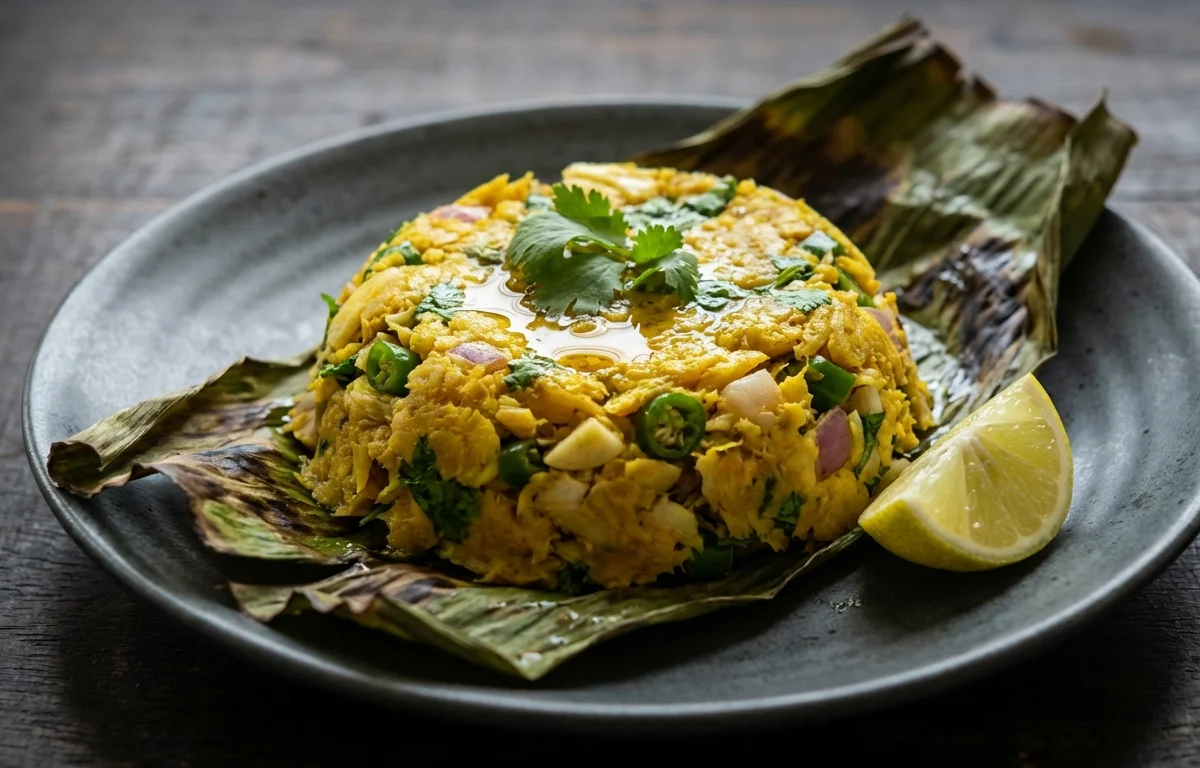
Tora Paatot Diya Masor Pitika
A classic Assamese dish where boiled and mashed fish is mixed with pungent mustard oil and aromatics, then wrapped and steamed in fragrant turmeric leaves. A simple, rustic, and incredibly flavorful preparation.
For 4 servings
Boil the Fish
- In a pot, combine the fish steaks, 4 cups of water, and 1/2 tsp of salt.
- Bring the water to a boil over medium-high heat.
- Reduce the heat and simmer for 10-12 minutes, or until the fish is cooked through and flakes easily. Avoid overcooking.
- Carefully drain the water and set the fish aside to cool down.
Debone and Mash the Fish
- Once the fish is cool enough to handle, meticulously remove the skin and all bones, including the fine pin bones.
- Place the deboned fish meat into a large mixing bowl.
- Gently mash the fish with a fork or your hands, but keep some texture.
Prepare the Pitika Mixture
- To the mashed fish, add the finely chopped onion, garlic, ginger, green chilies, and coriander leaves.
- Pour in the pungent mustard oil and add the remaining 1/2 tsp of salt (or to taste).
- Using clean hands, mix everything together thoroughly. The hand-mixing helps to release the oils and flavors from the aromatics and combine them well with the fish.
Wrap the Parcels
- Gently wash the turmeric leaves and pat them dry. To make them more pliable and prevent tearing, briefly pass them over a low open flame for a few seconds until they wilt slightly.
- Divide the fish mixture into 4 equal portions.
- Place one portion in the center of a turmeric leaf. Fold the sides of the leaf over the mixture to create a neat, sealed rectangular parcel. Secure with kitchen twine if necessary.
Steam the Pitika
- Set up a steamer over boiling water.
- Carefully arrange the turmeric leaf parcels in the steamer basket, ensuring they are not overcrowded.
- Cover the steamer and steam for 8-10 minutes. The leaves will turn a darker green and release a beautiful aroma, infusing the fish inside.
Serve
- Remove the parcels from the steamer and let them rest for a minute.
- Serve the parcels hot, allowing each person to unwrap their own.
- This dish is best enjoyed with plain steamed rice (gorom bhaat), a simple dal, and a squeeze of lemon or lime.
What to keep in mind.
5 tips from the recipe — small details that make a real difference to the final dish.
- 1The quality of mustard oil is crucial. Use a cold-pressed, pungent (jhaanj) mustard oil for the authentic Assamese flavor.
- 2Be extremely careful while deboning the fish. Even a small bone can be unpleasant.
- 3If turmeric leaves are unavailable, you can use banana leaves. The aroma will be different but still delicious.
- 4Do not skip the step of warming the leaves over a flame; it makes them much easier to fold without cracking.
- 5For a smokier flavor, you can roast the boiled fish on a grill or pan before mashing it.
Adapt it for your goals.
Ingredient Substitution
Use other freshwater fish like Catla or Bhokua. For a boneless option, use fillets like basa or tilapia, though the traditional flavor comes from bone-in river fish.
Flavor AdditionFlavor Addition
Add a tablespoon of finely chopped mint leaves or the tender leaves of sawtooth coriander (maan dhaniya) for a different aromatic profile.
Preparation MethodPreparation Method
Instead of steaming, you can roast the parcels on a hot tawa (griddle) over low heat, turning occasionally, for about 10-12 minutes until the leaf is charred in spots. This imparts a lovely smoky flavor.
Vegetarian VersionVegetarian Version
Create a vegetarian pitika using boiled and mashed potatoes (Aloo Pitika) or roasted and mashed eggplant (Bengena Pitika) with the same aromatics and wrapping method.
Why this is on our healthy list.
Rich in Omega-3 Fatty Acids
Rohu fish is an excellent source of Omega-3 fatty acids, which are crucial for brain health, reducing inflammation, and supporting a healthy cardiovascular system.
High in Lean Protein
This dish provides high-quality lean protein from the fish, essential for muscle repair, growth, and overall body function without adding excess saturated fat.
Anti-inflammatory Properties
Turmeric leaves, ginger, and garlic contain powerful natural anti-inflammatory compounds that can help combat chronic inflammation and boost the immune system.
Aids Digestion
Ginger and garlic are well-known for their digestive benefits, helping to soothe the stomach and improve gut health. The simple, steamed preparation makes it easy to digest.
Frequently asked questions
Masor Pitika is a traditional Assamese dish that translates to 'mashed fish'. It's a rustic preparation where fish is boiled or roasted, deboned, and then mashed with raw mustard oil, onion, chilies, and herbs. Wrapping and steaming it in turmeric leaves ('Tora Paatot Diya') is a special variation that adds immense aroma and flavor.