
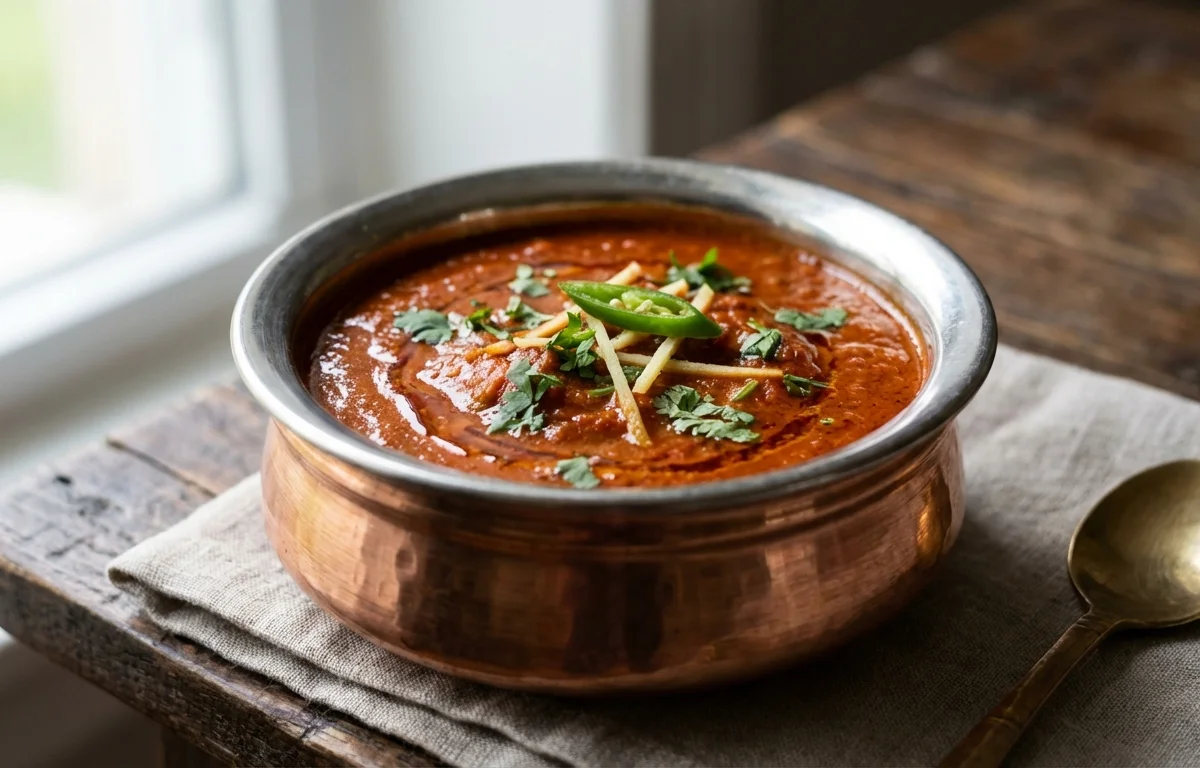
Tomato Curry
A simple yet flavorful North Indian curry made with ripe tomatoes, onions, and everyday spices. This homestyle 'tamatar ki sabzi' is quick to make and pairs perfectly with hot rotis or rice.
For 4 servings
Preparation
- Finely chop the onions. Grate the ginger and mince the garlic.
- Slit the green chilies lengthwise.
- Blend the ripe tomatoes in a blender to make a smooth puree. Set aside.
Temper and Sauté Aromatics
- Heat oil in a kadai or medium-sized pan over medium heat.
- Once the oil is hot, add the cumin seeds and let them splutter for about 30 seconds.
- Add the asafoetida, followed immediately by the chopped onions.
- Sauté the onions, stirring frequently, for 6-7 minutes until they turn soft and golden brown.
- Add the grated ginger, minced garlic, and slit green chilies. Sauté for another minute until the raw aroma disappears.
Build the Masala
- Reduce the heat to low. Add the turmeric powder, Kashmiri red chili powder, and coriander powder. Stir for 30 seconds to toast the spices.
- Immediately pour in the prepared tomato puree and add the salt.
- Increase the heat to medium-low and cook the masala, stirring occasionally. Continue cooking for 8-10 minutes until the mixture thickens and you see oil separating from the sides of the pan.
Simmer the Curry
- Add 1 cup of water and the sugar (if using). Stir well to combine everything.
- Bring the curry to a gentle boil.
- Cover the pan, reduce the heat to low, and let it simmer for 5-7 minutes to allow the flavors to meld together.
Garnish and Serve
- Turn off the heat. Stir in the garam masala and chopped coriander leaves.
- Let the curry rest for 5 minutes before serving.
- Serve hot with fresh roti, paratha, or steamed basmati rice.
What to keep in mind.
5 tips from the recipe — small details that make a real difference to the final dish.
- 1For the best flavor, use ripe, red, and slightly tangy tomatoes.
- 2The key to a flavorful curry is to cook the onion and tomato masala patiently until oil separates. Do not rush this step.
- 3The small amount of sugar is crucial to balance the acidity of the tomatoes; it enhances the overall taste.
- 4For a richer, creamier curry, stir in 2 tablespoons of heavy cream or cashew paste at the end.
- 5Adjust the amount of water to achieve your desired gravy consistency. Add less for a thicker curry and more for a thinner one.
Adapt it for your goals.
Creamy Tomato Curry
Add 1/4 cup of cashew paste or heavy cream along with the water in Step 4 for a rich and creamy texture.
Tomato Curry with PeasTomato Curry with Peas
Add 1/2 cup of fresh or frozen green peas along with the water and simmer until they are cooked through.
Sev Tamatar ki SabziSev Tamatar ki Sabzi
A popular variation from Gujarat and Rajasthan. Prepare the curry as directed and add a generous handful of thick 'sev' (crispy chickpea flour noodles) just before serving. Do not cook the sev in the gravy as it will become soggy.
Punjabi Style Tomato CurryPunjabi-Style Tomato Curry
For a richer flavor, add 1/4 teaspoon of kasuri methi (dried fenugreek leaves), crushed between your palms, along with the garam masala at the end.
Why this is on our healthy list.
Rich in Antioxidants
Tomatoes are an excellent source of lycopene, a powerful antioxidant that helps protect cells from damage caused by free radicals and supports overall health.
Immunity Boosting
The blend of spices like turmeric, ginger, and garlic contains potent anti-inflammatory and antimicrobial properties that can help strengthen the immune system and fight off infections.
Supports Heart Health
This curry is naturally low in saturated fat and cholesterol. The lycopene in tomatoes and potassium from the vegetables have been linked to lower blood pressure and a reduced risk of heart disease.
Frequently asked questions
One serving of this Tomato Curry contains approximately 120-140 calories, making it a light and healthy main dish. The exact count can vary based on the amount of oil used and the size of the vegetables.