
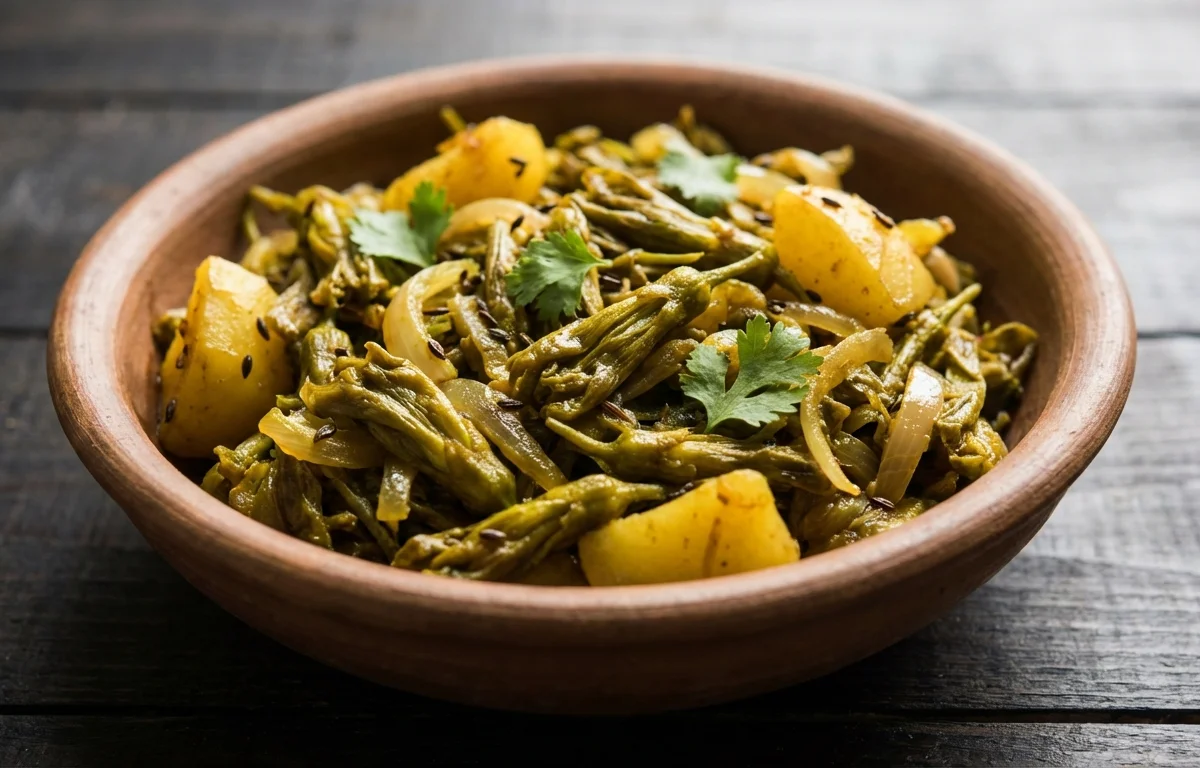
Tita Phool Bhaji
A unique Assamese stir-fry featuring medicinal bitter flowers balanced with potatoes and simple spices. This traditional dish is known for its distinct flavor and health benefits, offering a unique taste of Northeast India.
For 4 servings
5 steps. 15 minutes total.
- 1
Step 1
- a.Prepare the Ingredients (10 mins)
- b.To clean the tita phool, gently remove the hard green calyx (base) and the central stamen from each flower. Rinse the petals under cool water and roughly chop them.
- c.Peel the potatoes and dice them into small, uniform 1/2-inch cubes.
- d.Finely slice the onion, mince the garlic cloves, and slit the green chilies lengthwise.
- 2
Step 2
- a.Sauté Aromatics (3 mins)
- b.Heat the mustard oil in a kadai or a wide pan over medium-high heat. Wait until it becomes fragrant and you see faint smoke, which mellows its pungent flavor.
- c.Immediately reduce the heat to medium-low. Add the panch phoron and let the seeds sizzle and pop for about 30 seconds.
- d.Add the sliced onion, minced garlic, and slit green chilies. Sauté for 2-3 minutes until the onions soften and become translucent.
- 3
Step 3
- a.Cook the Potatoes (8 mins)
- b.Add the diced potatoes to the pan, along with the turmeric powder and salt.
- c.Stir well to ensure the potatoes are evenly coated with the oil and spices.
- d.Cover the pan with a lid and cook on low heat for 8-10 minutes, stirring every couple of minutes to prevent sticking. Cook until the potatoes are fork-tender but still hold their shape.
- 4
Step 4
- a.Add Tita Phool and Finish (4 mins)
- b.Increase the heat to medium. Add the chopped tita phool to the pan.
- c.Gently stir-fry to combine with the potatoes. The flowers will wilt very quickly.
- d.Continue to cook uncovered for another 2-3 minutes, stirring gently, until the flowers are cooked through but not mushy. They should retain a slight bite.
- e.Taste and adjust the salt if necessary. Turn off the heat.
- 5
Step 5
- a.Serve
- b.Serve the Tita Phool Bhaji hot as a side dish with steamed rice and a simple dal for a complete and traditional Assamese meal.
What to keep in mind.
4 tips from the recipe — small details that make a real difference to the final dish.
- 1For an authentic taste, do not skip the mustard oil. Heating it until it just starts to smoke is a crucial step to mellow its sharp flavor.
- 2Avoid overcooking the tita phool. They need just a few minutes to cook; overcooking will make them overly bitter and lose their delicate texture.
- 3If you are new to bitter flavors, you can blanch the flowers in hot salted water for 30 seconds and then drain them before adding to the pan. This will reduce some of the bitterness.
- 4The starchiness of the potatoes is essential to balance the bitterness of the flowers. Ensure they are cooked well before adding the flowers.
Adapt it for your goals.
Ingredient Addition
Add 1/2 cup of diced eggplant (brinjal) along with the potatoes for a softer texture and added flavor dimension.
Flavor VariationFlavor Variation
For a slight tang, add one finely chopped tomato after sautéing the onions and cook until it turns soft.
Add CrunchAdd Crunch
Garnish with a few fried 'bori' (sun-dried lentil dumplings) just before serving for a delightful crunch.
Why this is on our healthy list.
Promotes Digestive Health
Bitter foods like Tita Phool are traditionally known to stimulate the production of digestive enzymes and bile, which can improve digestion, enhance nutrient absorption, and support overall gut health.
Potent Anti-inflammatory Effects
This dish combines turmeric, which contains the powerful anti-inflammatory compound curcumin, with mustard oil. This combination helps combat chronic inflammation in the body.
Rich in Antioxidants
The flowers, garlic, and spices are packed with antioxidants that help neutralize harmful free radicals in the body, protecting cells from oxidative stress and damage.
Frequently asked questions
Tita Phool, scientifically known as Phlogacanthus thyrsiformis, is an edible, bitter flower found in Northeast India, particularly Assam. It is valued in traditional cuisine not only for its unique taste but also for its medicinal properties.