
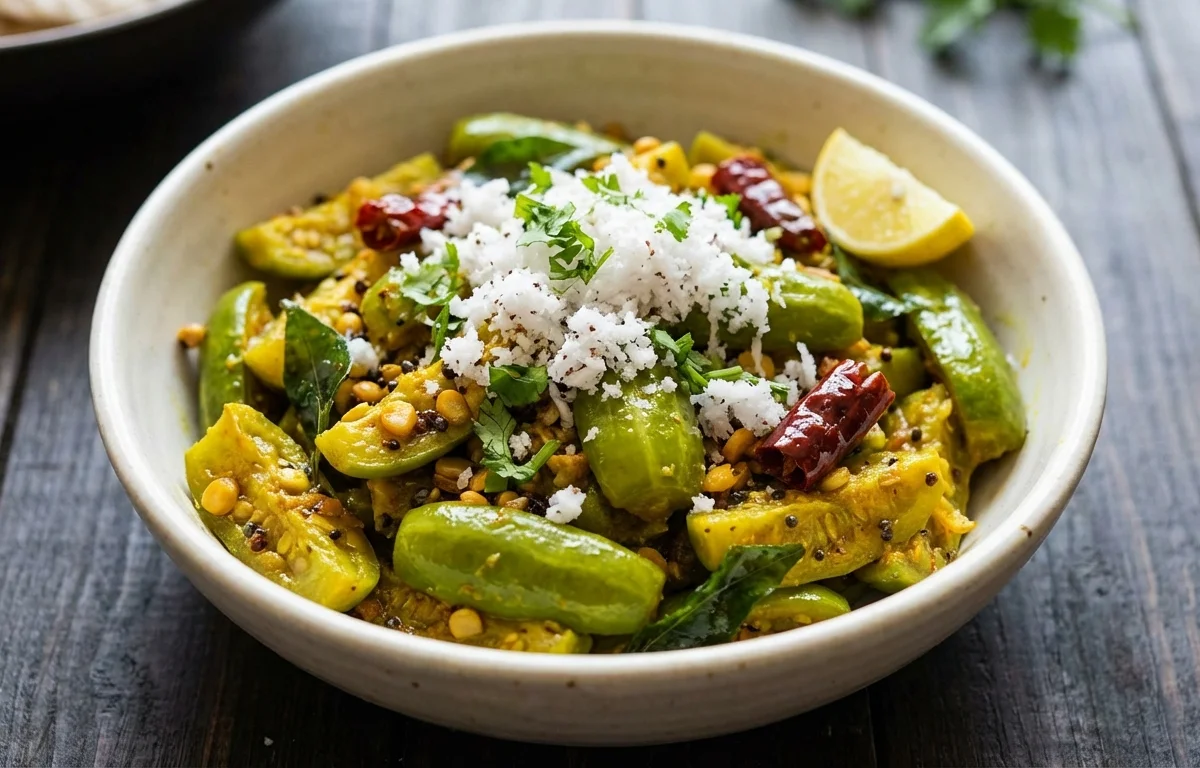
Thondekai Palya
A simple and delicious Karnataka-style stir-fry made with ivy gourd, aromatic spices, and a hint of coconut. This healthy side dish, also known as tendli bhaji, pairs perfectly with rice and sambar or chapati.
For 4 servings
8 steps. 20 minutes total.
- 1
Prepare the Ivy Gourd: Wash the thondekai (ivy gourd) thoroughly
- a.Trim both ends and slice them into thin, uniform rounds, about 1/8-inch thick. Finely chop the onion and set aside.
- 2
Temper the Spices: Heat oil in a wide pan or kadai over medium heat
- a.Once the oil is hot, add the mustard seeds and allow them to splutter. Immediately add the urad dal, chana dal, and broken dried red chilies. Sauté for about 1 minute until the dals turn a light golden brown.
- 3
Step 3
- a.Sauté Aromatics: Add the curry leaves and hing to the pan, and sauté for another 15-20 seconds until fragrant. Then, add the finely chopped onion and cook for 3-4 minutes, stirring occasionally, until it becomes soft and translucent.
- 4
Step 4
- a.Cook the Ivy Gourd: Add the sliced ivy gourd, turmeric powder, and salt to the pan. Mix everything well to ensure the vegetables are evenly coated with the spices.
- 5
Step 5
- a.Stir-fry until Tender: Cover the pan and cook on a low to medium flame for 10-12 minutes. Stir every 2-3 minutes to prevent sticking. The ivy gourd is cooked when it's tender but still retains a slight crunch. Avoid adding water, as this can make the palya mushy.
- 6
Add Spice Powder: Once the ivy gourd is cooked, add the sambar powder
- a.Stir well and cook uncovered for 2 more minutes, allowing the raw aroma of the powder to dissipate and the flavors to meld.
- 7
Finish the Dish: Turn off the heat
- a.Add the fresh grated coconut, powdered jaggery (if using), and fresh lemon juice. Give it a final, gentle mix to combine everything.
- 8
Garnish and Serve: Garnish with freshly chopped coriander leaves
- a.Serve the Thondekai Palya hot with chapati, roti, or as a side dish with rice and sambar or rasam.
What to keep in mind.
5 tips from the recipe — small details that make a real difference to the final dish.
- 1Slice the ivy gourd into uniform thin rounds to ensure they cook evenly and quickly.
- 2Do not overcook the ivy gourd; it tastes best when it retains a slight crunch.
- 3A small amount of jaggery is optional but highly recommended as it beautifully balances the savory and tangy flavors.
- 4Ensure your pan is wide enough. Overcrowding the pan will cause the ivy gourd to steam and become soft rather than stir-fried.
- 5For a no-onion, no-garlic version, simply skip the onion. The flavor profile will be different but equally delicious.
Adapt it for your goals.
Spice Blend
Instead of sambar powder, you can use vangi bath powder, rasam powder, or a simple mix of 1 tsp coriander powder and 1/2 tsp red chili powder.
Add GarlicAdd Garlic
For a different flavor profile, add 2-3 cloves of minced garlic along with the onions and sauté until fragrant.
Nutty CrunchNutty Crunch
Add 1-2 tablespoons of coarsely crushed roasted peanuts or sesame seeds along with the coconut at the end for extra texture and flavor.
With PotatoesWith Potatoes
Add one small potato, peeled and finely diced, along with the ivy gourd for a more filling side dish. You may need to cook it for a few extra minutes.
Why this is on our healthy list.
Aids in Digestion
Ivy gourd is a good source of dietary fiber, which helps regulate bowel movements, prevent constipation, and promote overall gut health.
Supports Blood Sugar Management
Traditionally used in Ayurvedic medicine, ivy gourd is believed to have properties that may help in managing blood sugar levels, making it a suitable vegetable for diabetic-friendly diets.
Rich in Antioxidants
The dish contains spices like turmeric and mustard seeds, which are loaded with antioxidants. These compounds help protect the body against damage from free radicals.
Boosts Immunity
Ivy gourd contains Vitamin C and other essential micronutrients that contribute to a stronger immune system, helping the body fight off infections.
Frequently asked questions
Thondekai is the Kannada name for Ivy Gourd, also known as Tindora, Tendli, or Kovakkai in other Indian languages. It's a tropical vine vegetable known for its crisp texture and slightly tangy taste.