
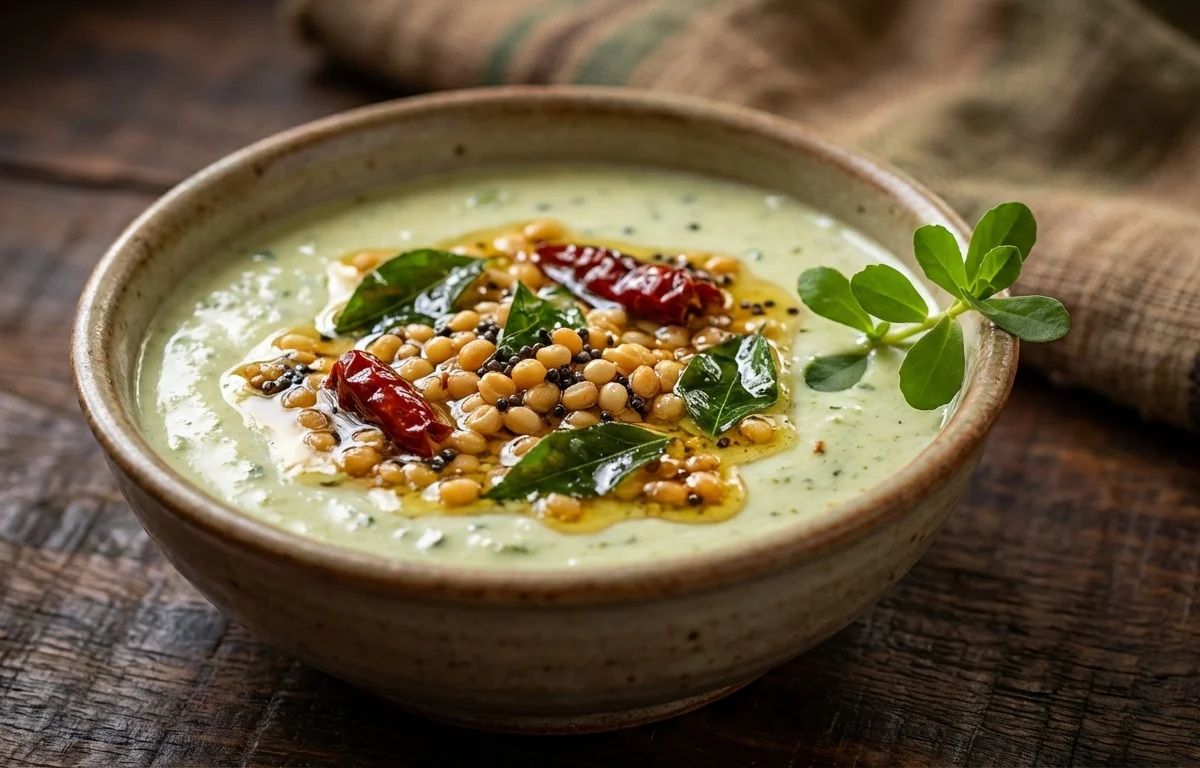
Thimare Tambli
A refreshing yogurt-based curry from Karnataka made with medicinal Brahmi leaves. This cooling dish has a unique herbal flavor, perfect for mixing with hot rice at the start of a meal.
For 4 servings
Sauté the Brahmi Leaves
- Wash the brahmi (thimare) leaves thoroughly and pat them dry.
- Heat 1 teaspoon of ghee in a small pan over medium heat.
- Add the washed leaves and sauté for 1-2 minutes until they wilt completely. This step is crucial to reduce their natural bitterness. Set aside to cool down.
Grind the Herbal Paste
- In a blender or grinder jar, combine the cooled sautéed brahmi leaves, fresh grated coconut, green chilies, and cumin seeds.
- Add about 1/4 cup of water and grind to a very fine, smooth paste. Scrape down the sides as needed to ensure there are no coarse bits.
Prepare the Yogurt Base
- In a medium-sized bowl, whisk the room temperature curd until it is smooth and free of lumps.
- Add the ground brahmi paste and salt to the whisked curd.
- Pour in the remaining 1/4 cup of water (or more) and mix well to combine. The consistency should be thin and pourable, similar to buttermilk.
Prepare the Tempering (Oggarane)
- Heat the remaining ghee in a small tempering pan (tadka pan) over medium heat.
- Once the ghee is hot, add the mustard seeds and allow them to splutter completely, which should take about 30 seconds.
- Add the urad dal and fry until it turns a light golden brown.
- Finally, add the broken dried red chili and curry leaves. Sauté for another 10-15 seconds until the curry leaves turn crisp and aromatic.
Combine and Serve
- Immediately pour the hot tempering over the prepared yogurt mixture.
- Mix gently. Do not heat the tambli after this point.
- Serve the Thimare Tambli immediately with hot steamed rice as the first course of a meal.
What to keep in mind.
5 tips from the recipe — small details that make a real difference to the final dish.
- 1Use fresh, room temperature curd to prevent it from curdling when the hot tempering is added.
- 2Sautéing the brahmi leaves is crucial to reduce their inherent bitterness. Don't skip this step unless you prefer a very strong, bitter herbal taste.
- 3Ensure the ground paste is very fine and smooth for the best texture.
- 4Tambli is best served fresh. It doesn't store well as the yogurt can become increasingly sour.
- 5Serve as the first course with hot rice and a dollop of ghee. This is the traditional way to enjoy it, believed to aid digestion and prepare the palate.
Adapt it for your goals.
Aromatic Twist
Add a pinch of asafoetida (hing) to the hot ghee during tempering for an extra layer of traditional South Indian flavor.
Herb SubstitutionHerb Substitution
If brahmi leaves are unavailable, a similar tambli can be made with fresh mint leaves, coriander leaves, or even curry leaves for a different flavor profile.
Spicier VersionSpicier Version
For more heat, add 1/4 teaspoon of black peppercorns along with the cumin seeds while grinding the paste.
Vegan OptionVegan Option
Replace the dairy curd with a plant-based yogurt like coconut or cashew yogurt, and use coconut oil instead of ghee for a fully vegan version.
Why this is on our healthy list.
Cognitive Support
Brahmi (Thimare) is a celebrated Ayurvedic herb known as a 'brain tonic.' It is traditionally used to enhance memory, improve concentration, and support overall cognitive function.
Promotes Gut Health
The use of curd (yogurt) makes this dish rich in probiotics, which are beneficial bacteria that support a healthy gut microbiome, improve digestion, and boost immunity.
Cooling and Calming
Tambli is a cooling dish, perfect for hot weather. Both yogurt and brahmi have properties that help cool the body and calm the mind, reducing stress and anxiety.
Frequently asked questions
Thimare is the Kannada name for Brahmi leaves (Centella asiatica), a medicinal herb widely used in Ayurveda for its cognitive and health benefits. It is known for its slightly bitter, herbal taste.