
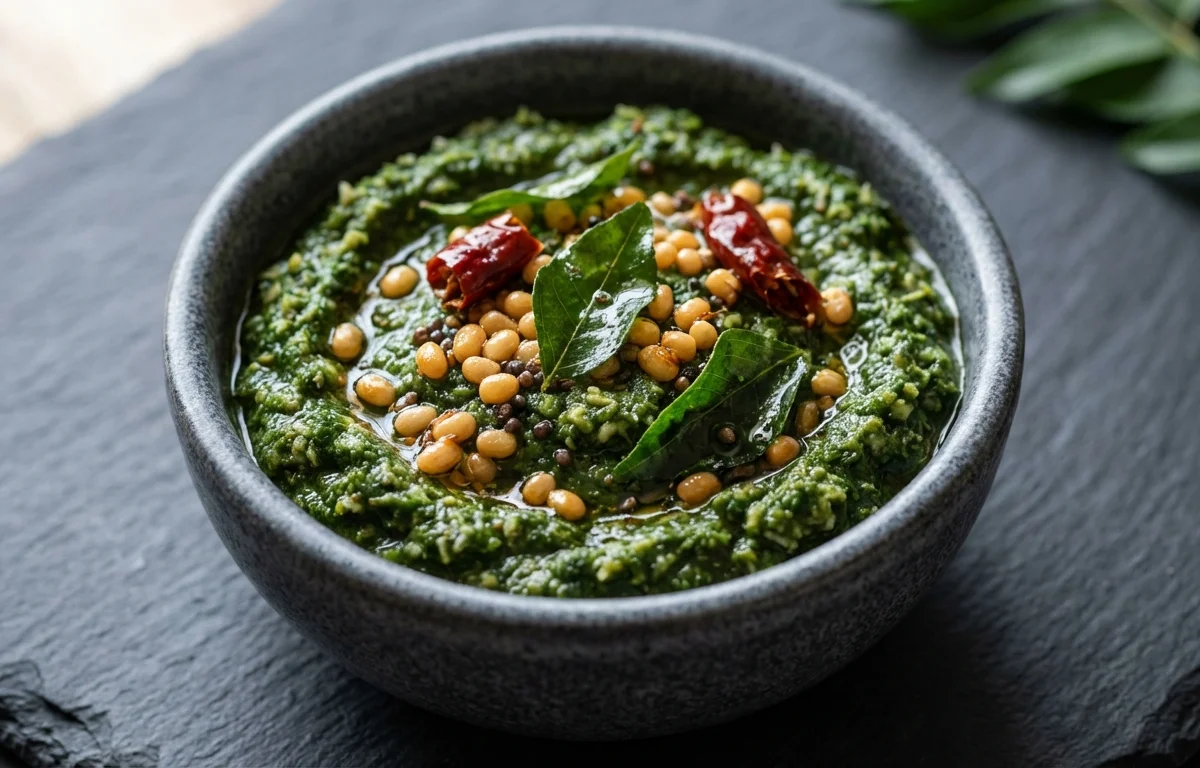
Thimare Chutney
A traditional and healthy herbal chutney from coastal Karnataka, made with medicinal Brahmi leaves (Thimare), fresh coconut, and a hint of tamarind. Its unique, earthy flavor pairs wonderfully with dosas, idlis, or hot rice, offering both taste and wellness.
For 4 servings
3 steps. 5 minutes total.
- 1
Step 1
- a.Grind the Chutney Base
- b.Thoroughly wash the Brahmi (Thimare) leaves to remove any dirt or grit.
- c.In a blender or grinder jar, combine the washed Brahmi leaves, fresh grated coconut, green chillies, tamarind pulp, jaggery powder, and salt.
- d.Add 2 tablespoons of water and grind to a thick, slightly coarse paste. Scrape down the sides of the jar periodically.
- e.If the mixture is too thick to grind, add the remaining 1 tablespoon of water, or more, a teaspoon at a time, until you reach the desired consistency. Avoid making it watery.
- 2
Step 2
- a.Prepare the Tempering (Tadka)
- b.Heat the coconut oil in a small pan (tadka pan) over medium heat. Wait for the oil to shimmer slightly.
- c.Add the mustard seeds and allow them to splutter completely, which should take about 30 seconds.
- d.Add the urad dal and sauté for 30-40 seconds until it turns a light golden brown. Be careful not to burn it.
- e.Add the broken dry red chilli, curry leaves, and hing. Sauté for another 15-20 seconds until the curry leaves turn crisp and aromatic.
- 3
Step 3
- a.Combine and Serve
- b.Transfer the ground chutney from the blender jar to a serving bowl.
- c.Immediately pour the hot tempering over the chutney. You should hear a satisfying sizzle.
- d.Mix well to incorporate the tempering evenly throughout the chutney.
- e.Serve fresh with hot rice, dosa, idli, or akki rotti (rice flour flatbread).
What to keep in mind.
5 tips from the recipe — small details that make a real difference to the final dish.
- 1For the best flavor, use fresh, tender Brahmi leaves. Older leaves can be slightly more bitter.
- 2Do not over-grind the chutney. A slightly coarse texture is traditional and adds to the experience.
- 3The jaggery is key to balancing the natural bitterness of the leaves and the tanginess of the tamarind. Don't skip it.
- 4Adjust the number of green chillies and the amount of tamarind to suit your personal taste for spice and sourness.
- 5Store any leftover chutney in an airtight container in the refrigerator for up to 2-3 days.
Adapt it for your goals.
Nutty Flavor
Add 1 tablespoon of roasted peanuts or white sesame seeds while grinding the chutney for a richer, nuttier taste and texture.
Garlic KickGarlic Kick
For a pungent twist, add 1-2 small cloves of garlic to the blender along with the other chutney ingredients.
Creamier ConsistencyCreamier Consistency
Replace the water with 2-3 tablespoons of plain curd (yogurt) while grinding for a creamier, tangier version of the chutney.
With GingerWith Ginger
Add a small half-inch piece of fresh ginger while grinding for a warm, zesty flavor that complements the Brahmi leaves.
Why this is on our healthy list.
Enhances Cognitive Function
Brahmi (Thimare) is a renowned 'Medhya Rasayana' in Ayurveda, known to support memory, concentration, and overall brain health.
Aids Digestion
The tempering with hing (asafoetida), mustard seeds, and curry leaves helps stimulate digestive enzymes, preventing bloating and improving gut health.
Rich in Healthy Fats
The use of fresh coconut and coconut oil provides medium-chain triglycerides (MCTs), which are a source of readily available energy and support heart health.
Packed with Antioxidants
Brahmi leaves, curry leaves, and coconut are rich in antioxidants that help combat oxidative stress and protect the body's cells from damage.
Frequently asked questions
Thimare, also known as Ondelaga in Kannada, is the Brahmi leaf (Centella asiatica). It is a medicinal herb widely used in Ayurveda for its numerous health benefits, particularly for improving memory and cognitive function.